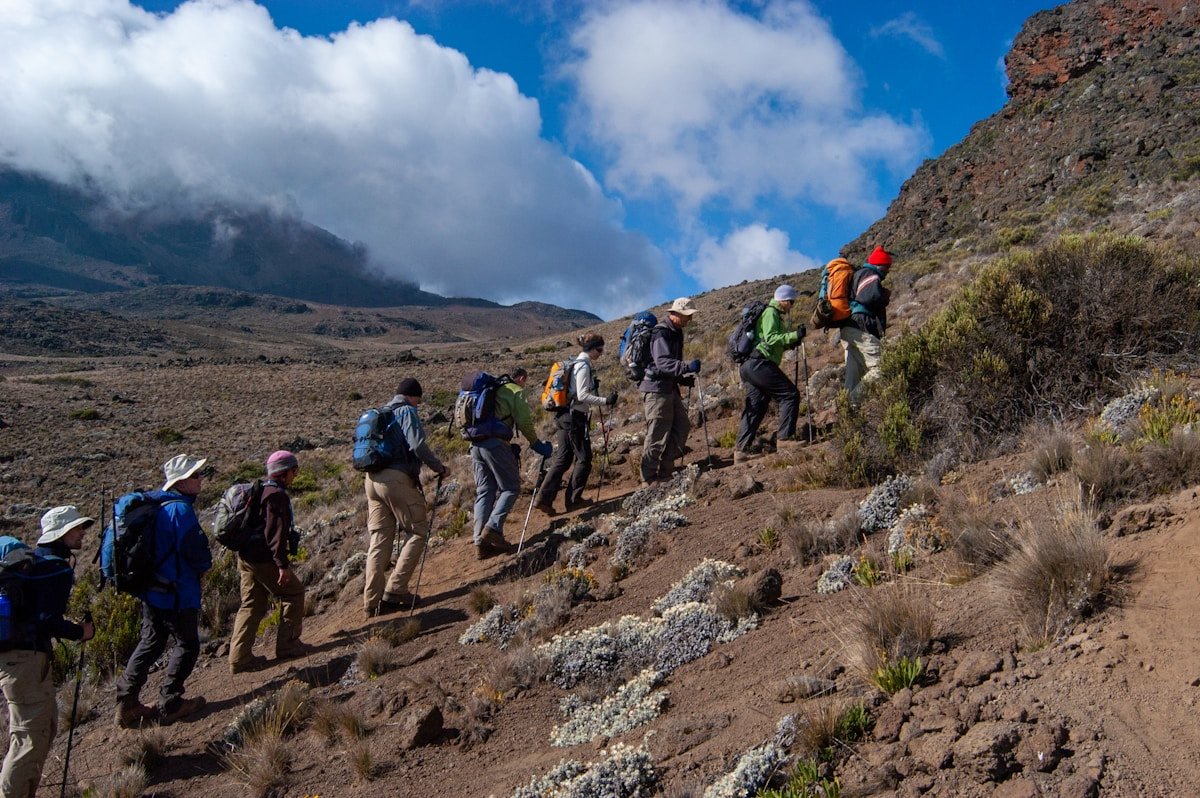
Mount Kilimanjaro rises 5,895 metres above the Tanzanian plains - a free-standing volcanic massif carrying permanent glaciers near the equator. It is the highest point in Africa and one of the Seven Summits. Around 35,000 people attempt the climb each year, and roughly 65% of them reach Uhuru Peak. The rest turn back, usually from altitude sickness rather than a lack of fitness.
We’ve put together this hub guide to help you understand how the mountain works - the routes, the costs, the timing, the operators, and the honest odds - so you arrive at the Marangu or Londorossi gate with a realistic plan.
The Mountain: What You’re Getting Into
Kilimanjaro has three volcanic cones: Kibo (which contains Uhuru Peak at 5,895m), Mawenzi (5,149m), and Shira (3,962m). Trekkers climb Kibo via a series of altitude zones:
- Rainforest (1,800–2,800m) - dense canopy, colobus monkeys, mist
- Heath and moorland (2,800–4,000m) - giant heather, giant groundsel, big skies
- Alpine desert (4,000–5,000m) - cold, dry, sparse vegetation
- Arctic zone (5,000m+) - glaciers, volcanic rock, thin air
You do not need ropes, ice axes, or technical mountaineering skills on any of the standard routes. Kilimanjaro is a high-altitude trekking objective, not a technical climb. What defeats most climbers is ascending too fast: the mountain gains altitude quickly, and your body needs time to adapt.
Uhuru Peak success rates by route (approximate, as of 2026):
| Route | Duration | Success Rate |
|---|---|---|
| Northern Circuit | 9 days | ~90–95% |
| Lemosho | 7–8 days | ~88–92% |
| Machame | 6–7 days | ~70–85% |
| Rongai | 6–7 days | ~72–80% |
| Marangu | 5–6 days | ~50–65% |
| Umbwe | 5–6 days | ~50–60% |
Success rates are higher on longer routes because more days equal better acclimatisation.
The Routes at a Glance
Machame Route - The busiest route on the mountain. Six or seven days via the southern face, with dramatic camp-to-camp scenery. Known as the Whiskey Route for its steeper, more demanding profile compared to Marangu. Best for fit trekkers who want the classic Kilimanjaro experience.
Lemosho Route - A quieter, more scenic approach from the west via the Shira Plateau. Seven to eight days. Excellent acclimatisation profile and the widest variety of landscapes. Joins Machame above Lava Tower on most operator itineraries.
Marangu Route - The only route with sleeping huts (Mandara, Horombo, Kibo) instead of tents. Five or six days. The shortest - and historically least successful - route on the mountain. Good in rainy season because the huts are dry. The summit push from Kibo Hut is the same as Machame and Lemosho.
Rongai Route - The only route that approaches from the north, near the Kenyan border. Six to seven days. Drier than the southern routes, lighter foot traffic, and a different perspective on the mountain’s remote northern slopes.
Northern Circuit Route - The newest and longest route. Nine days. Circumnavigates almost the entire northern flank before summiting, giving the best acclimatisation profile and the highest success rates. Ideal if you have the time and budget.
Umbwe Route - The steepest and least-used route on the mountain. Five to six days via the direct south face. Gains altitude faster than any other route, which makes it appealing to experienced trekkers returning to the mountain but gives it the lowest success rate among the standard routes. Not recommended for first-time Kilimanjaro climbers.
For quick comparisons, read our individual route guides - each includes a day-by-day itinerary, altitude profile, difficulty rating, named operator prices, and packing advice specific to that route.
Kilimanjaro Permits and Park Fees
You cannot climb Kilimanjaro independently. Every trekker must be accompanied by licensed guides, and all fees are paid through registered operators who hold National Park accounts.
TANAPA (Tanzania National Parks Authority) fees as of 2026 include a park entrance fee, camping or hut fee, rescue fee, and crew fees for guides and porters. The total varies by route and duration. Read our full Kilimanjaro costs breakdown for itemised figures and what to expect from operators at different price tiers. You can also browse Kilimanjaro trekking packages to compare certified operators.
Choosing an Operator
The operator you choose determines nearly everything: guide quality, camping equipment, food standards, porter treatment, and emergency protocols. Prices range from approximately $1,500 to $5,000+ per person depending on route, duration, and group size.
Budget end ($1,500–$2,200 per person): Local Moshi operators including Zara Tours and several smaller Arusha companies. Perfectly legal and often used by experienced Kilimanjaro repeaters who know what to check. Verify guide certification, equipment, and porter welfare policies before booking.
Mid-range ($2,200–$3,500 per person): Roy Safaris, Altezza Travel, and Kilimanjaro Experts are consistently well-regarded Tanzanian operators. Good food, certified guides, proper emergency oxygen.
Premium ($3,500–$5,000+ per person): Thomson Safaris and Wilderness Travel (US-based operators with Tanzania ground teams) offer the most comprehensive experience - private camps, dedicated guides, satellite communications, and very experienced rescue protocols.
What to verify with any operator:
- Guide-to-client ratio (ideally 1:2 or better for the summit push)
- Emergency oxygen carried
- Evacuation protocol and whether they have a stretcher
- Porter pay and porter welfare (look for KPAP-registered operators)
- Sleeping bag quality and whether it’s included or rented
Physical Preparation
You do not need to be an elite athlete, but you should not arrive undertrained. Most fitness guides recommend:
- Six months of regular cardio: hiking, cycling, running - at least 3–4 sessions per week
- Weekend hikes with a pack, ideally gaining 600–900m of elevation
- At least two multi-day backpacking trips if you have no trekking experience
- Avoid arriving at the gate with a respiratory infection - even a mild cold can abort your summit
Altitude cannot be trained for at sea level in any meaningful way. What matters is your aerobic baseline and your willingness to pace yourself on the mountain. Most guides say: “pole pole” (slowly slowly) is not a suggestion - it’s the strategy.
Altitude Sickness: The Main Risk
Acute Mountain Sickness (AMS) affects most climbers to some degree above 3,000m. Symptoms include headache, nausea, dizziness, and poor sleep. The key rules:
- Descend if symptoms are severe or worsening
- Never ascend with AMS symptoms
- Diamox (acetazolamide) is commonly used as a preventive - consult your doctor before the trip
- Hydrate well (3–4 litres of water per day on the mountain)
- Walk slowly and rest at each camp
HACE (cerebral oedema) and HAPE (pulmonary oedema) are rare but can be fatal. Know the symptoms: severe confusion, inability to walk a straight line, a persistent wet cough, extreme breathlessness at rest. Descent and evacuation are the only treatments.
What’s Included in Most Operator Packages
Standard Kilimanjaro packages typically include:
- TANAPA park fees
- Licensed guide(s) and porters
- Three meals per day plus snacks and hot drinks
- Camping equipment (tent, sleeping mat, dining tent)
- Emergency oxygen cylinder
- First aid kit
Not typically included: sleeping bag (usually rentable), trekking poles (rentable), travel insurance (essential for altitude trekking), tips for guides and porters.
Tipping: Guides and porters work extremely hard. The KPAP-recommended tip for a 7-day Machame climb is approximately $200–$250 for the lead guide, $80–$100 per assistant guide, and $50–$70 per porter. Bring US dollars in small denominations for the tip ceremony at the gate.
Documents and Logistics
- Nationality: All nationalities may climb Kilimanjaro. A Tanzanian visa is required (available on arrival at Kilimanjaro International Airport or via the e-Visa portal).
- Base town: Most climbers stay in Moshi (30 minutes from the KIA airport). Arusha is also popular (~1.5 hours from most Kilimanjaro gates by road).
- Medical certificate: Not required, but inform your operator of any pre-existing conditions.
- Pre-climb night: Arrive in Moshi at least one night before your trek start date for a proper gear check and pre-climb briefing.
Best Time to Climb Kilimanjaro
Kilimanjaro can be climbed year-round, but two windows offer the clearest skies and most stable conditions:
Peak season 1: January to mid-March. Dry and clear above the cloud layer. Temperatures on summit night are at their coldest (-10 to -20 degrees C), but visibility is excellent and snowfields on the summit are at their most photogenic. This is one of the busiest periods on popular routes like Machame and Lemosho.
Peak season 2: June to October. The main dry season and the most consistently reliable window. Lower humidity, clear summit mornings, and good trail conditions throughout. July and August are the busiest months.
Avoid if possible: March to May. The long rains make trails on the rainforest zone extremely muddy. Cloud cover reduces summit visibility, and some camp areas become waterlogged. The Marangu huts remain usable, but camping routes are more challenging.
November to December: Short rains affect the lower slopes but the upper mountain is often clearer. A viable and quieter option if the main peaks don’t fit your schedule. Read the full best time to climb Kilimanjaro guide for a month-by-month breakdown.
What to Pack for Kilimanjaro
Packing correctly for Kilimanjaro means preparing for four distinct climate zones in the same bag — rainforest, moorland, alpine desert, and arctic.
Layering system:
- Moisture-wicking base layer (top and bottom) — at least 2 sets
- Mid-layer fleece or lightweight down jacket
- Insulated jacket (down or synthetic) for summit night — this is non-negotiable
- Waterproof shell jacket and trousers
Summit night:
- Balaclava or thick beanie that covers ears
- Neck gaiter or buff
- Insulated gloves (waterproof outer layer if possible)
- Hand warmers (chemical, single-use) — useful at -15 degrees C
- Thermal leggings under waterproof trousers
Footwear:
- Waterproof trekking boots broken in before departure (blisters end summits)
- 2 pairs of wool or synthetic trekking socks per day
- Camp sandals or lightweight shoes for evening use at camp
Gear and health:
- Trekking poles — significantly reduces knee strain on descent; most operators rent these for approximately USD 10 per day
- Headlamp with fresh batteries and a spare set (summit starts at midnight)
- 3-litre hydration bladder or water bottles (insulated sleeve for above 4,500m)
- Sunglasses rated UV400 — glacier glare above the cloud layer is severe
- Sunscreen SPF 50+ and lip balm
- Personal first aid: blister plasters, ibuprofen, Diamox (prescribed by a doctor before departure), anti-nausea tablets
What to leave at the hotel: Most operators supply sleeping bags and mattresses, but verify this when booking. Luggage beyond your daypack goes on porters — maximum porter load per KPAP guidelines is 15 kg per porter (including their own kit), so pack a porter bag of no more than 13 kg and carry everything you need immediately in a 20—30 litre daypack.
Search hotels in Moshi on Booking.com
Related Guides
- Machame Route: Day-by-Day Itinerary
- Lemosho Route Guide
- Marangu Route Guide
- Rongai Route Guide
- Northern Circuit Route
- Umbwe Route Guide
- Kilimanjaro Costs: Permits, Operators & Tips
- Best Time to Climb Kilimanjaro
- Kilimanjaro Routes Compared: Which Should You Choose?
- Booking a Kilimanjaro Climb: Operators, Costs and What Is Included