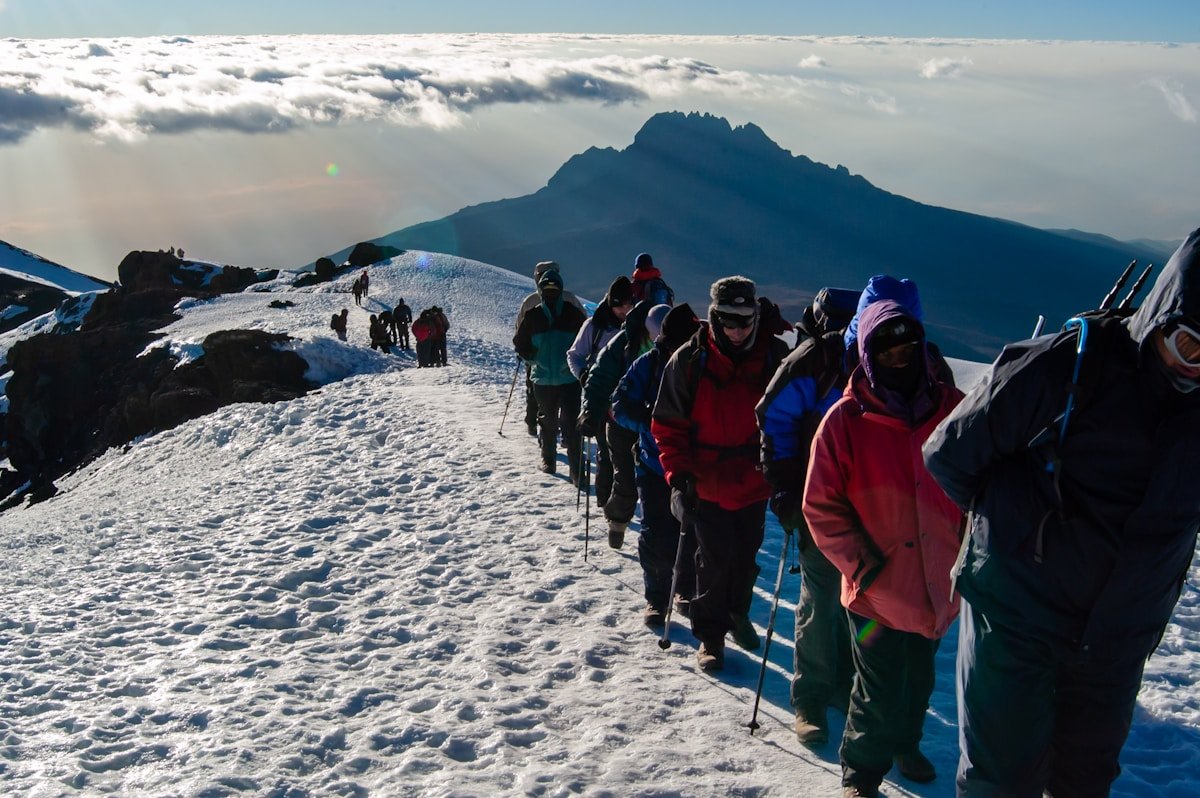
Kilimanjaro is the highest peak in Africa and one of the Seven Summits, yet it requires no ropes, crampons, or technical climbing experience on any of its six standard routes. What it does require is time: enough days on the mountain for your body to acclimatise to an altitude of 5,895 metres. Choosing the right route determines how many of those days you have, and that choice is the single most important factor in whether you reach Uhuru Peak.
This guide covers all six routes in detail, including realistic success rate estimates, cost tiers for 2026, and acclimatisation advice that applies across all of them.
The Six Routes at a Glance
| Route | Duration | Approach | Success Rate | Cost Tier |
|---|---|---|---|---|
| Machame | 6 to 7 days | South | ~85% | Mid |
| Lemosho | 7 to 8 days | West | ~90% | Mid to High |
| Rongai | 6 to 7 days | North | ~85% | Mid |
| Marangu | 5 to 6 days | East | ~65% | Budget |
| Umbwe | 5 to 6 days | South | ~70% | Mid |
| Northern Circuit | 8 to 9 days | West | ~95% | High |
Machame Route (“The Whiskey Route”)
Duration: 6 days minimum, 7 days recommended
Approach: Southern slopes, via Machame Gate
Summit success rate: approximately 85%
Machame is the most popular route on the mountain, accounting for roughly a third of all climbers. The trail is scenic and varied, ascending through rainforest, heath, moorland, and the dramatic Barranco Wall, a steep scramble that looks intimidating but requires no technical skill.
The route uses a high-low-high acclimatisation profile, descending to Karanga Camp before the final push to base camp and the summit. This single loop makes Machame significantly better for acclimatisation than Marangu, and the extra half-day available on a 7-day itinerary makes a meaningful difference to summit rates.
Best for: First-time high-altitude trekkers wanting a varied scenic route with good acclimatisation. Not suitable for those who find crowds on trails off-putting during peak season (July to September).
Cost: approximately USD 2,200 to 3,000 per person (7 days) with a reputable mid-range operator. Budget operators run from USD 1,800 but guide and porter quality varies significantly.
Lemosho Route
Duration: 7 to 8 days
Approach: Western slopes, via Londorossi Gate
Summit success rate: approximately 90%
Lemosho is widely regarded as the best overall route for combining scenery, acclimatisation time, and reasonable crowd levels. The western approach gives you an extra day at lower elevation before joining the Machame route at Shira Plateau, which translates directly into better acclimatisation. The Shira Plateau section offers wide open moorland with excellent views toward the summit.
An 8-day Lemosho itinerary is the single route most likely to get acclimatised trekkers to the summit. The trade-off is cost: an extra day on the mountain means additional park fees, porter wages, and camp costs.
Best for: Trekkers prioritising summit success and willing to spend more time and money. Also the best option for those doing photography-focused climbs.
Cost: approximately USD 2,500 to 3,500 per person (8 days) with a mid-range operator.
Rongai Route
Duration: 6 to 7 days
Approach: Northern slopes, via Rongai Gate near the Kenyan border
Summit success rate: approximately 85%
Rongai is the only route that approaches from the north, making it the driest option (the northern slopes receive less precipitation than the southern and western approaches). It is particularly useful during the April to May rainy season when other routes are significantly muddier.
The route is also quieter than Machame and Lemosho, appealing to those who prefer fewer people on trail. The descent goes via the Marangu route, so trekkers see two different sides of the mountain.
Best for: Trekkers visiting during the wet season, or those wanting a quieter trail without giving up a respectable success rate.
Cost: approximately USD 2,000 to 2,800 per person (7 days) with a mid-range operator.
Marangu Route (“The Coca-Cola Route”)
Duration: 5 to 6 days
Approach: Eastern slopes, via Marangu Gate
Summit success rate: approximately 65%
Marangu is the only route with hut accommodation (Mandara, Horombo, and Kibo huts), making it the most infrastructure-heavy option. It is also the shortest standard route, and that brevity is the reason for its lower summit success rate. Five days does not give most trekkers enough time to acclimatise to 5,895 metres.
The route profile is gentler in gradient than Machame or Lemosho, which appeals to less confident walkers, but the reduced acclimatisation time negates much of that advantage. A 6-day Marangu trip (adding an acclimatisation day at Horombo Hut) improves outcomes considerably and is worth requesting from any operator.
Best for: Trekkers on the tightest budget who are willing to accept a lower summit probability. Also suitable for those who prefer hut accommodation to tents.
Cost: approximately USD 1,500 to 2,000 per person (6 days). Marangu is typically the cheapest route because the hut infrastructure reduces operator equipment requirements.
Umbwe Route
Duration: 5 to 6 days
Approach: Southern slopes, via Umbwe Gate
Summit success rate: approximately 70%
Umbwe is the steepest and most direct route to the summit, gaining altitude faster than any other option. This makes it the most physically demanding and, counterintuitively, one of the less successful: rapid ascent without proper acclimatisation causes more summit failures than any other factor.
The route is genuinely remote and quiet, with few other climbers. The trail through dense rainforest and along an exposed ridge is among the most atmospheric on the mountain. Umbwe suits experienced trekkers who know how their body responds to altitude and who find the other routes too crowded.
Best for: Experienced high-altitude trekkers looking for a challenging, quiet approach. Not recommended for first-time high-altitude climbers.
Cost: approximately USD 1,800 to 2,500 per person (6 days) with a reputable operator.
Northern Circuit
Duration: 8 to 9 days
Approach: Western slopes, via Londorossi Gate (starts like Lemosho)
Summit success rate: approximately 95%
The Northern Circuit is the longest route and consistently posts the highest summit success rates of any option. After joining the Shira Plateau from the west, it circles around the northern side of the mountain (where no other route goes), offering views of the Kenyan plains and the remote northern glaciers before approaching the summit via the Lemosho finish.
The additional days produce superior acclimatisation, and the northern face circuit is spectacularly remote. Trekker numbers are among the lowest of any route. The trade-offs are duration (8 to 9 days is a significant time commitment) and cost.
Best for: Trekkers with the time and budget for the best possible summit odds and the most comprehensive mountain experience.
Cost: approximately USD 3,500 to 6,000 per person (8 to 9 days) depending on operator tier and group size.
Acclimatisation: The Most Important Factor
Whatever route you choose, acclimatisation is more important than fitness. The following principles apply across all routes:
Pole pole (slowly slowly): The Swahili phrase is the mountain’s unofficial motto. Walking slowly enough that you can hold a conversation throughout the day is not optional. Rushing uphill to beat other groups is one of the most reliable ways to fail.
Hydrate constantly: Aim for at least 3 to 4 litres of water daily. Altitude increases respiratory water loss significantly. Diamox (acetazolamide) is taken by many climbers as a prophylactic; consult a doctor before departure.
Sleep low, walk high: Routes that include acclimatisation profiles (descending to sleep at a lower camp before ascending to a higher camp the next day) have measurably higher success rates. Machame, Lemosho, and Northern Circuit all incorporate this principle.
Do not rush the summit night: Summit attempts begin around midnight from base camp at around 4,700 metres. The final ascent to Uhuru Peak at 5,895 metres takes six to eight hours. Guides set a slow pace; trust it even when you feel strong at midnight.
Cost Breakdown (2026)
Park fees paid to the Tanzania National Parks Authority (TANAPA) account for a substantial share of total climb cost:
- Conservation fee: USD 70 per person per day
- Camping fee: USD 50 per person per day (non-Marangu routes)
- Rescue fee: USD 20 per person per climb
- Hut fee: USD 60 per person per night (Marangu only)
For a 7-day climb, park fees alone total approximately USD 890 to 980 per person before any operator costs. This is non-negotiable regardless of operator choice.
Budget tier (approximately USD 1,500 to 2,000): Typically covers Marangu or Rongai routes with smaller, less established operators. Guide and porter standards vary. Inspect the operator’s equipment and insurance documentation before committing.
Mid-range tier (approximately USD 2,200 to 3,500): Covers Machame or Lemosho routes with established operators. Includes quality camping gear, better-fed porters, and more experienced guides. This is where most independent travellers should aim.
Luxury tier (USD 4,000 and above): Private group climbs, high-quality tented camps, gourmet food, additional guides, and usually Northern Circuit or 8-day Lemosho itineraries. Summit rates with serious luxury operators approach 95%.
Choosing an Operator
Operators must be registered with the Tanzania Association of Tour Operators (TATO). Confirm registration and ask to see proof of porter welfare compliance, including KPAP (Kilimanjaro Porters Assistance Project) affiliation. Reputable mid-range operators include Zara Tours, Good Earth Tours, and Thomson Safaris. You can also browse Kilimanjaro climbing packages on GetYourGuide to compare operators by summit success rate, included services, and verified guest reviews.
For the summit approach and the full Kilimanjaro area experience, most trekkers base themselves in Moshi or Arusha before and after their climb.
Planning Resources
- Kilimanjaro Routes Compared: Which Should You Choose? — Marangu vs Machame vs Lemosho vs Northern Circuit compared by success rate, difficulty, and duration
- Kilimanjaro Trekking Guide: Complete Planning Resource — full preparation guide covering fitness, gear, altitude safety, and what to expect on the mountain