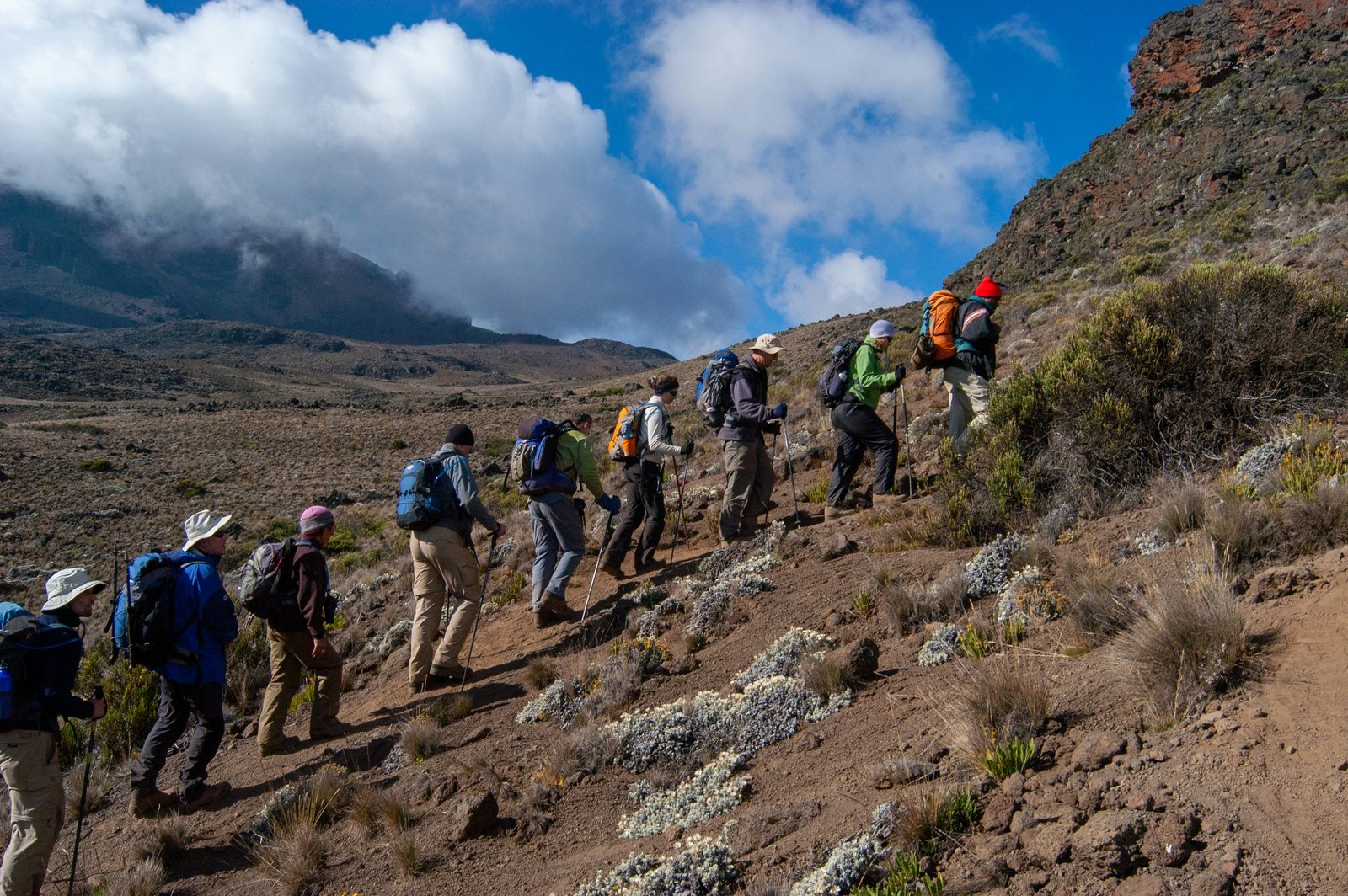
Choosing the right Kilimanjaro route matters more than most climbers realise. The mountain has seven established routes, each with a different acclimatisation profile, scenery, difficulty, duration, and price. The route you choose will strongly influence your chances of reaching Uhuru Peak — the difference between the lowest-success Marangu Route (around 50%) and the Northern Circuit (around 90–95%) is enormous.
This guide compares all main routes so you can choose based on your timeline, budget, and experience level.
The Six Main Routes at a Glance
| Route | Days | Success Rate | Difficulty | Avg Cost (USD) |
|---|---|---|---|---|
| Marangu | 5–6 | ~50–60% | Moderate | $1,400–2,200 |
| Machame | 6–7 | ~75–80% | Strenuous | $1,800–2,800 |
| Lemosho | 7–8 | ~85–90% | Strenuous | $2,000–3,200 |
| Rongai | 6–7 | ~70–75% | Moderate | $1,800–2,600 |
| Northern Circuit | 9 | ~90–95% | Strenuous | $2,600–4,000 |
| Umbwe | 5–6 | ~60–65% | Very Strenuous | $1,600–2,400 |
Costs above are per-person estimates for a complete package including park fees, guides, porters, camping equipment, and meals as of 2026. TANAPA park fees alone are approximately USD 900 per person for a 7-day trek — they account for a large portion of total costs.
Marangu Route: The Coca-Cola Route
Marangu is the only route with permanent hut accommodation — Mandara, Horombo, and Kibo huts sleep trekkers in dormitory-style bunk rooms. This makes it appealing to people who dislike camping, and its relatively gradual gradient earns it a reputation as the “easy” route. That reputation is misleading: Marangu’s problem is not difficulty but speed. The standard 5-day itinerary does not give the body adequate time to acclimatise. Even on 6 days, the ascent profile is compressed.
Best for: Trekkers on a tight budget who are comfortable with lower odds of reaching the summit.
Avoid if: Summit success is a high priority.
The Marangu approach climbs through montane forest, moorland, and alpine desert to the crater rim at Gilman’s Point (5,681m). The final push to Uhuru Peak (5,895m) adds another 45–60 minutes of ridge walking.
Machame Route: The Whiskey Route
Machame is the most popular route on the mountain, used by roughly 40% of all climbers. It approaches from the southwest, crossing multiple ecological zones and offering a “climb high, sleep low” acclimatisation loop around the Shira Plateau. The 7-day version includes an extra acclimatisation day at Barranco Camp and meaningfully improves success rates compared to 6 days.
The Barranco Wall — a 300-metre exposed rock scramble — is the most dramatic section. It requires hands and feet on rock but no technical climbing gear. Most trekkers find it manageable and enjoy it.
Best for: Confident walkers who want a challenging, scenic route at a reasonable price point.
Not ideal for: Anyone with a fear of heights (Barranco Wall) or who cannot do 7+ days.
Lemosho Route: Best All-Round Choice
Lemosho starts at the Londorossi Gate on the western flank, spending two days crossing the Shira Plateau before joining the Machame Route at Lava Tower. The longer approach gives superior acclimatisation — trekkers spend more days above 3,500 metres before making their summit bid.
Scenically, Lemosho offers the widest variety: dense rainforest, open plateau, ridge traverses, and the spectacular Barranco Wall. It is quieter than Machame for the first two days before the routes converge.
Best for: Trekkers who want the best balance of success rates, scenery, and trail diversity.
Operator prices: Reputable operators — including Kilimanjaro guides on GetYourGuide — quote from USD 2,000 to USD 3,200 for a 7-day Lemosho, depending on group size and operator tier.
Rongai Route: Northern Approach, Quieter Trail
Rongai approaches from the north, near the Kenyan border. It is the driest route — the northern slope receives significantly less rainfall, making it the preferred option during the long rains of April–May. It’s also the least crowded of the main routes.
The trade-off is scenery: Rongai offers less dramatic terrain than Machame or Lemosho, and some trekkers find its moorland sections repetitive. The descent is via Marangu, which adds trail variety.
Best for: Trekkers climbing in April–May when southern routes are wet, or anyone who prefers a quieter experience.
Northern Circuit Route: Highest Success Rate
The Northern Circuit shares Lemosho’s start but circles almost entirely around the northern and eastern flanks of the mountain before summiting via the Crater Camp approach. At 9 days, it provides the most acclimatisation time of any route and consistently produces the highest summit success rates.
It is also the most expensive and time-consuming. The additional days are primarily spent above 4,000 metres, which is where acclimatisation gains are maximised. If your goal is genuinely to reach Uhuru Peak and you have 9 days, this is the route to book.
Best for: Experienced high-altitude trekkers and anyone who has previously turned back on a shorter route.
Cost: From USD 2,600 to USD 4,000 depending on operator.
Umbwe Route: For Experienced Trekkers Only
Umbwe is the steepest and most direct route, ascending through dense forest on a sharp ridge to rejoin the Machame Route at Barranco Camp. The ascent profile is compressed, and the short acclimatisation window makes Umbwe the riskiest route in terms of altitude sickness.
It is not recommended for first-time high-altitude trekkers. Experienced alpinists use it as a faster approach, often combining it with an extra acclimatisation day.
How to Book and What to Budget
All trekkers must climb with a licensed operator — independent trekking is prohibited under TANAPA regulations. Operators should be registered with the Tanzania Association of Tour Operators (TATO) and ideally affiliated with the Kilimanjaro Porters Assistance Project (KPAP), which monitors porter wages, equipment, and conditions.
Budget breakdown for a typical 7-day Machame or Lemosho package:
- TANAPA park fees: approximately USD 900 per person (included in all reputable packages)
- Licensed guide: included in package
- Porters: minimum 3 per trekker at ethical operators; porter wages should be a line item you can ask about
- Meals and camping equipment: included in package
- Tipping: USD 200–300 per person is the established norm, distributed to guide and porter team
Prices vary significantly between operators. Budget operations can undercut by cutting porter numbers, wages, or equipment quality — check KPAP’s operator ratings before booking.
Browse verified Kilimanjaro operators and compare itineraries on GetYourGuide.
Recommended Routes by Profile
- First-time high-altitude trekker, 7 days available: Lemosho (7 days)
- First-time, 6 days available: Machame (6 days) — add an extra day if possible
- Budget-conscious, 6 days: Machame 6-day or Rongai 6-day
- Maximum summit odds, 9 days available: Northern Circuit
- Climbing during long rains (Apr–May): Rongai
- Experienced alpinist, fastest route: Umbwe (6 days, accepted risk)
Related Guides
- Kilimanjaro Trekking Guide: Complete Planning Resource — costs, fitness requirements, packing lists, and altitude safety in full detail
- Booking a Kilimanjaro Climb: Operators, Costs and What Is Included — how to compare and choose an operator, what the price covers, and red flags to avoid