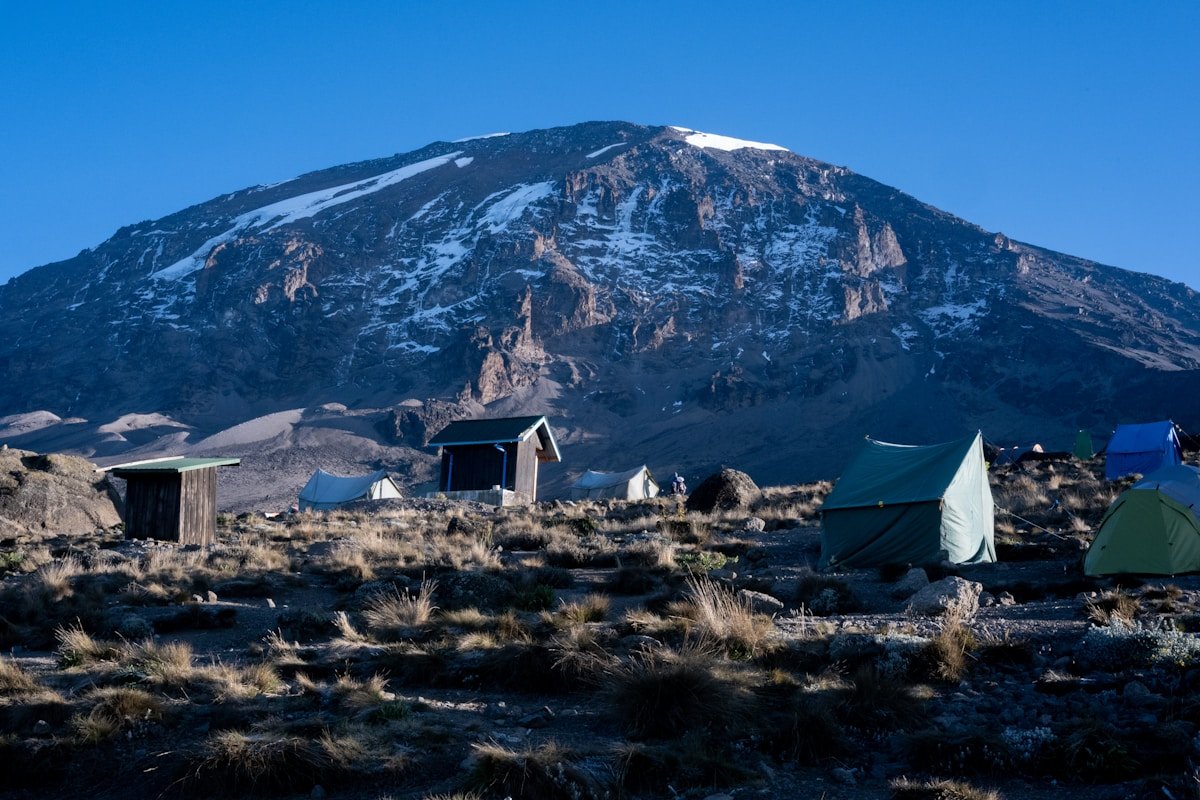
Climbing Kilimanjaro is not cheap. The mountain levies some of the highest trekking permit fees in Africa, operators add costs for crew, food, and equipment, and the tip culture is substantial. Total costs for a full Kilimanjaro climb typically range from $1,500 to $6,000+ per person depending on route, duration, operator tier, and group size.
This guide breaks down every cost category so you know what you’re actually paying for - and where the variation comes from.
TANAPA Park Fees (as of 2026)
All climbers pay fees directly through their registered operator. You do not pay these at the gate - your operator holds a TANAPA account and invoices you in their package price.
| Fee Category | Amount (USD) | Notes |
|---|---|---|
| Park entrance | $70 per person per day | Charged for each day inside the park |
| Conservation fee | $20 per person per day | Added to entrance |
| Rescue fee | $20 per climb | One-time fee per person |
| Camping fee (tent routes) | $50 per person per night | Machame, Lemosho, Rongai, Northern Circuit |
| Hut fee (Marangu) | $60 per person per night | Marangu Route only |
| Guide crew park fees | Variable | Guides and porters also pay park entry |
Total park fees per person by route and duration:
| Route | Days | Approx. Park Fees |
|---|---|---|
| Marangu | 5 days | ~$650–$750 |
| Marangu | 6 days | ~$770–$900 |
| Machame | 6 days | ~$750–$870 |
| Machame | 7 days | ~$880–$1,020 |
| Lemosho | 7 days | ~$900–$1,050 |
| Lemosho | 8 days | ~$1,030–$1,180 |
| Rongai | 7 days | ~$880–$1,020 |
| Northern Circuit | 9 days | ~$1,150–$1,350 |
Note: These are estimates based on current TANAPA rates. Fees are in USD and are payable only in USD. TANAPA adjusts fees periodically; confirm current rates with your operator.
Operator Costs by Route Tier
Every climber must use a licensed Tanzanian operator. Operators handle all TANAPA fee payments, employ licensed guides and porters, provide meals and camping equipment, and organise transfers.
What’s included in a standard Kilimanjaro package:
- All TANAPA park fees
- Licensed chief guide + assistant guides
- Porters (typically 2–3 per trekker)
- All meals while on the mountain (breakfast, lunch, dinner, snacks, hot drinks)
- Camping equipment: tent, sleeping mat, dining tent, kitchen tent, portable toilet tent
- Emergency oxygen cylinder
- First aid kit
- Airport/hotel transfers to and from the gate
Search hotels in Moshi on Booking.com
What’s typically NOT included:
- Sleeping bag (rentable for approximately $20–$40)
- Trekking poles (rentable for approximately $15–$25)
- Travel insurance (see note below)
- Tips for guides and porters
- Tanzanian visa ($50–$100)
- Personal gear (clothing, boots, etc.)
Budget Operators ($1,500–$2,200 per person)
Legitimate local operators based in Moshi and Arusha. Legal, licensed, and often used by experienced trekkers. Prices in this range work on thinner margins, which can affect equipment quality (older tents, smaller portions) and crew wages.
Questions to ask before booking a budget operator:
- What is the sleeping bag quality (or do you provide one)?
- Are your guides Wilderness First Aid certified?
- Do you carry emergency oxygen and know how to administer it?
- Are your porters paid above the KPAP minimum wage ($10/day as of 2025)?
- Are you registered with KPAP (Kilimanjaro Porters Assistance Project)?
Notable budget operators: Zara Tours (Moshi) - one of the longest-established Tanzanian operators. Well-regarded at this price point.
Mid-Range Operators ($2,200–$3,500 per person)
The most common bracket for independent travellers booking direct. Typically includes newer equipment, certified guides, better food, and clear emergency protocols.
Notable operators:
- Roy Safaris (Arusha) - KPAP registered, reliable logistics, well-regarded for guide quality
- Altezza Travel (Moshi) - tech-forward operation with real-time GPS tracking and good reviews
- Kilimanjaro Experts (Moshi) - smaller groups, guides with 10+ years’ experience
Premium Operators ($3,500–$6,000+ per person)
US- and UK-based operators using experienced Tanzanian ground teams. Private campsites, dedicated guides (often 1:1 ratio), satellite communication devices, better food, and highly experienced emergency response.
Notable operators:
- Thomson Safaris (US-based) - long-running premium Kilimanjaro specialist; consistently cited in independent reviews
- Wilderness Travel (US-based) - expedition-grade logistics
- Exodus Travels (UK-based) - well-established in the UK adventure travel market
Solo trekkers: Typically pay a 15–25% solo supplement across all tiers, as your guide and porter costs cannot be shared. Joining a group departure is the most cost-effective way to climb solo - several operators run scheduled group departures at the group rate.
Tips: What You’re Expected to Pay
Tipping on Kilimanjaro is not optional in practice. Your guide team - chief guide, assistant guides, cook, and porters - works extremely hard for low base wages. Tips are the primary way to bring their total earnings to a fair level.
The KPAP (Kilimanjaro Porters Assistance Project) publishes recommended tip ranges. For a 7-day climb, approximate figures:
| Role | Recommended Tip (total, group tip pool) |
|---|---|
| Chief guide | $200–$250 per climb |
| Assistant guide(s) | $80–$100 per guide |
| Cook | $70–$90 |
| Porters | $50–$70 per porter |
How to calculate your tip:
For a group of 4 on a 7-day Machame with 1 chief guide, 2 assistant guides, 1 cook, and 8 porters:
- Chief guide: $250
- 2 × assistant guides: $180
- Cook: $80
- 8 × porters: $480
- Total group tip pool: approximately $990 (approx. $248 per person)
Tips are paid in cash (USD) at the tip ceremony at the park gate after descent. Bring small denomination bills - $10s and $20s. The chief guide typically manages the distribution.
Gear Rental
If you do not own hiking gear, Moshi and Arusha have good rental shops - particularly on the main street around YMCA and at larger operators.
| Item | Rental Cost (approx.) |
|---|---|
| Sleeping bag (−15°C rated) | $20–$40 per trip |
| Trekking poles (pair) | $15–$25 per trip |
| Down jacket (heavy) | $15–$30 per trip |
| Waterproof trousers | $10–$20 per trip |
| Gaiters | $5–$10 per trip |
| Headlamp | $5–$10 per trip |
Boots are not commonly rented. Rental boot quality is unreliable and ill-fitting boots on Kilimanjaro will destroy your summit attempt. Bring your own broken-in waterproof hiking boots.
Travel Insurance
Travel insurance that covers high-altitude trekking (up to 6,000m) and emergency medical evacuation is essential for Kilimanjaro. Most standard travel insurance policies explicitly exclude trekking above 4,000m unless you purchase a mountaineering or adventure sports add-on.
Recommended insurers used frequently by Kilimanjaro trekkers include World Nomads (available globally) and EKTA. You can compare Tanzania-specific plans and buy online via our Tanzania travel insurance link. Confirm that your policy covers:
- Medical evacuation from altitude (helicopter if necessary)
- Emergency hospitalisation in Moshi or Nairobi
- Trip cancellation in case of injury before departure
Prices for adequate Kilimanjaro coverage typically range from $80–$200 for a 2-week trip depending on age and policy.
Total Budget Summary
A realistic all-in budget per person for a Kilimanjaro climb:
| Category | Budget Tier | Mid Tier | Premium |
|---|---|---|---|
| Operator package (7-day Machame) | $1,800 | $2,700 | $4,500 |
| Tips | $200–$250 | $200–$250 | $200–$250 |
| Gear rental | $80–$120 | $40–$80 | Included |
| Travel insurance | $80–$150 | $100–$200 | $100–$200 |
| Visa | $50–$100 | $50–$100 | $50–$100 |
| Gear purchases (if needed) | $200–$500 | $200–$500 | $200–$500 |
| Total (approx.) | $2,410–$3,220 | $3,290–$3,830 | $5,150–$5,550 |
What the Price Difference Buys
The difference between a $1,800 and a $4,500 operator package is real - but it is not the difference between safe and unsafe. Compare Kilimanjaro climbing packages at all price tiers from certified operators. TANAPA park fees are fixed; guides must be licensed; safety protocols are regulated. What varies is:
- Equipment quality and freshness (newer tents, better sleeping mats)
- Food quantity and quality (hot meals vs. cold wraps at lunch)
- Guide-to-client ratio
- Response time and quality in emergencies
- Porter welfare and wages above the minimum
For most healthy, experienced hikers doing a standard route, a reputable mid-range operator ($2,200–$3,000) hits the right balance. The premium tier is most worthwhile if you have limited prior high-altitude experience and want the most attentive safety margin, or if private camping matters to your experience.