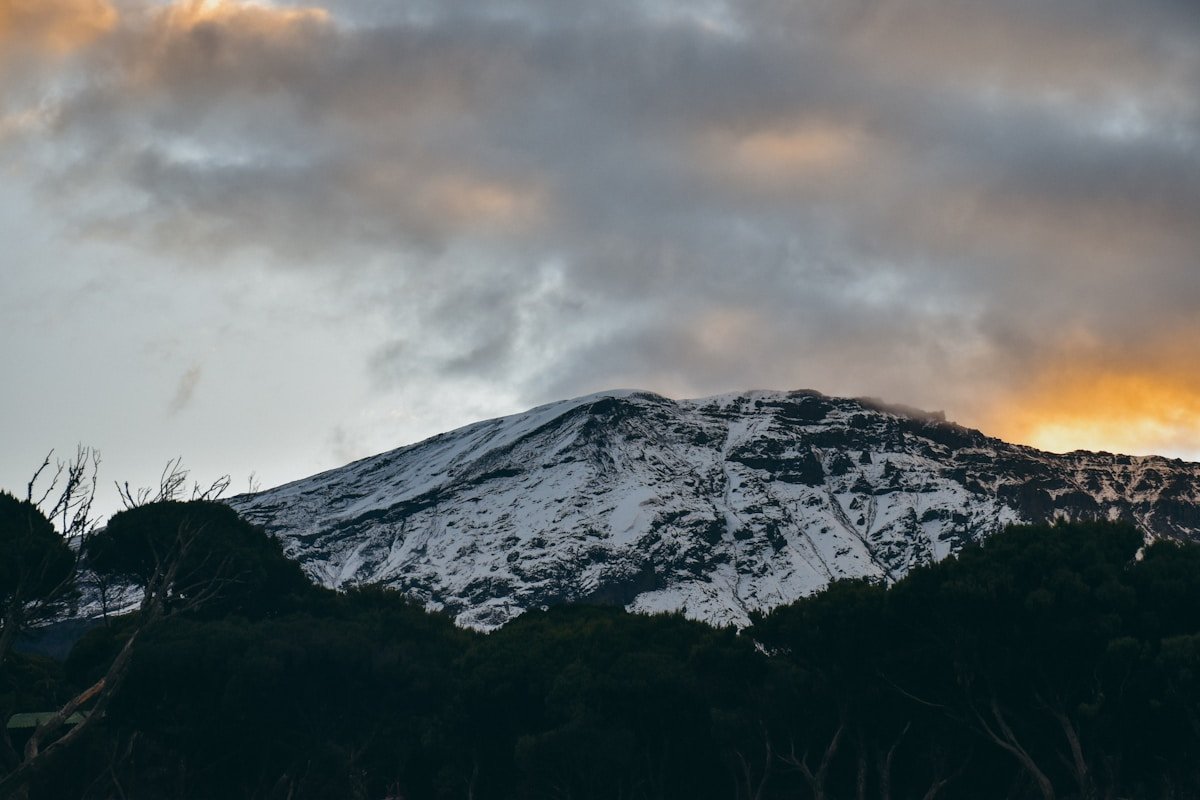
Kilimanjaro can be climbed year-round, but not all months are equal. Weather on the mountain varies significantly through the year, and the choice of when to climb affects trail conditions, summit visibility, crowd levels, and in some cases your summit odds.
Two dry seasons are the primary climbing windows. Outside them, you are climbing in rain, mud, cloud, and - on the higher routes - snow and ice. That does not make it impossible, but it makes it harder.
The Two Dry Seasons
Main Dry Season: June to October
The peak Kilimanjaro climbing window. Clear skies are common above the forest zone, the trails are dry and firm, temperature swings are predictable, and summit visibility is at its best. July and August are the most popular months - school holiday timing in Europe and North America drives a significant share of bookings. Expect full camps at Machame and Lemosho’s popular campsites during peak weeks.
Key features of the main dry season:
- Summit temperatures: −15°C to −25°C at night, −5°C to −10°C in early morning at Uhuru
- Forest zone: dry underfoot, dust on some upper trails in August–September
- Summit views: excellent - Kilimanjaro’s crater rim is visible from camp on clear mornings
- Crowds: high on Machame, Lemosho, and Marangu; manageable on Rongai and Northern Circuit
- Booking lead time: 3–6 months recommended for July/August
Best months within the main dry season:
- Late June and early July - trails are dry but crowds have not yet peaked
- September and October - post-peak, fewer climbers, still clear conditions
Short Dry Season: January to mid-March
A shorter and slightly less reliable dry window between Tanzania’s two rainy seasons. Conditions are often excellent - clear mornings, dry trails, less crowded camps - but the weather is more changeable than the main season. Snow on the summit is common in February. This is our recommended window for travellers who want good conditions without July/August crowds.
Key features:
- Summit temperatures slightly warmer than June–August: −10°C to −20°C
- Forest zone: dry, with some lingering moisture from November–December rains
- Summit views: generally clear but more prone to afternoon cloud
- Crowds: moderate - roughly 40% of peak-season volume
- January is ideal for combining Kilimanjaro with Zanzibar beach recovery time
Month-by-Month Weather Guide
| Month | Conditions | Recommendation |
|---|---|---|
| January | Dry, clear, moderate crowds | Excellent |
| February | Dry to early-season rain, snow possible | Very good |
| March | Transitional - increasing cloud and rain from mid-month | Acceptable early in month; avoid late March |
| April | Long rains peak - wet trails, heavy cloud, poor visibility | Avoid (except Rongai) |
| May | Long rains continue - worst month on the mountain | Avoid |
| June | Rains end, trails drying - good but muddy in forest | Good (improving) |
| July | Main dry season peak - clear, dry, crowded | Excellent (busiest) |
| August | Full dry season - clear skies, peak crowds | Excellent (busiest) |
| September | Post-peak dry season - clear, fewer climbers | Very good |
| October | Dry season ends mid-month - still good early | Very good (early October) |
| November | Short rains begin - trails wet in forest zone | Acceptable with caveats |
| December | Short rains ease - variable, improving toward month-end | Moderate (improving) |
Route-Specific Timing Advice
Machame and Lemosho: Most sensitive to rain. The southern approach routes run through dense rainforest that becomes genuinely muddy during April–May. High-volume camps can also become crowded in July–August. Best in January–February or June–September.
Marangu: Performs relatively better in the wet season than other routes because the huts offer dry sleeping. Still not recommended in April–May - the trail above Mandara becomes slippery and miserable. But November–December is more tolerable on Marangu than Machame.
Rongai: The only route with a legitimate case for the wet season. Rongai’s northern approach is in a rain shadow - it receives significantly less precipitation than southern routes during April–May. Some guides report Rongai success rates barely change between dry and rainy season. Worth considering if your only available dates fall in the long rains.
Northern Circuit: Follows Lemosho for the first three days (southern approach) then traverses the drier northern face. In wet season, the first 2–3 days are muddy but the northern traverse is often clear. A viable option from November–March if you must climb outside the main windows.
Crowd Levels and Booking Lead Times
| Period | Crowd Level | Booking Lead Time |
|---|---|---|
| July–August peak | Very high | 4–6 months |
| January | Moderate | 2–3 months |
| September | Low-moderate | 6–8 weeks |
| June | Moderate | 2–3 months |
| October (early) | Low-moderate | 4–6 weeks |
| Shoulder (Nov, Mar) | Low | 2–4 weeks |
High crowds affect experience more than safety - popular campsites in peak season have 50+ tents. Machame Camp and Barranco Camp are the most affected. Rongai and Northern Circuit camps are reliably quieter year-round.
Summit Conditions by Season
Temperature: The coldest summit conditions occur in July–August (main dry season): −20°C to −25°C at Uhuru at 3am is common. January–February temperatures are slightly warmer: −12°C to −18°C typical. Both require the same insulation kit - a −20°C sleeping bag and summit-rated down jacket.
Snow and ice on the summit: Ice can form on the crater rim approach (Stella Point to Uhuru) after fresh snowfall. Kilimanjaro does not require crampons on any standard route - the scree below the crater rim is loose but walkable - but post-snowfall icy patches occasionally form on the crater rim traverse. Guides are equipped to handle this; most carry ice axes for summit nights when there has been recent snowfall.
Summit visibility: Clearest in the main dry season (June–October). In January–March, summit mornings are often clear but clouds build by 9–10am - giving you a narrow window at the top before the view disappears. This reinforces the value of setting off at midnight (reaching Uhuru by 6–8am).
Combining Kilimanjaro With a Safari or Beach Stay
Tanzania’s two main visitor circuits align well with Kilimanjaro timing:
Safari: The Great Migration in the Serengeti runs year-round but the river crossing spectacle peaks in July–August - coinciding exactly with peak Kilimanjaro season. A 2–3 day Northern Serengeti safari before or after the climb pairs naturally.
Zanzibar: January–February (short dry season) is the best time for Zanzibar beaches - warm, dry, calm sea. Climb Kilimanjaro in January and recover on Zanzibar. This is the combination we recommend most often for travellers with 14–16 days in Tanzania.
Ngorongoro Crater and Tarangire: These parks are excellent year-round. Tarangire is particularly strong in July–October (dry season concentrates wildlife at the river). A 7-day Machame climb combined with 3 days in Tarangire and 2 days at Ngorongoro makes an effective 12-day Tanzania itinerary. Ready to book? Browse Kilimanjaro trek packages and compare operators by route, duration, and price.
Quick Decision Guide
- Want the best overall conditions? → July or August (main dry season), but book early
- Want good conditions with fewer crowds? → January or September
- On a budget and flexible? → September or October - prices are slightly lower and conditions remain good
- Only dates available are April–May? → Consider Rongai Route only; other routes are not recommended
- Want to combine with Zanzibar beach? → January–February is ideal for both
- Returning climber who failed before? → Choose Northern Circuit in January or September for the highest odds