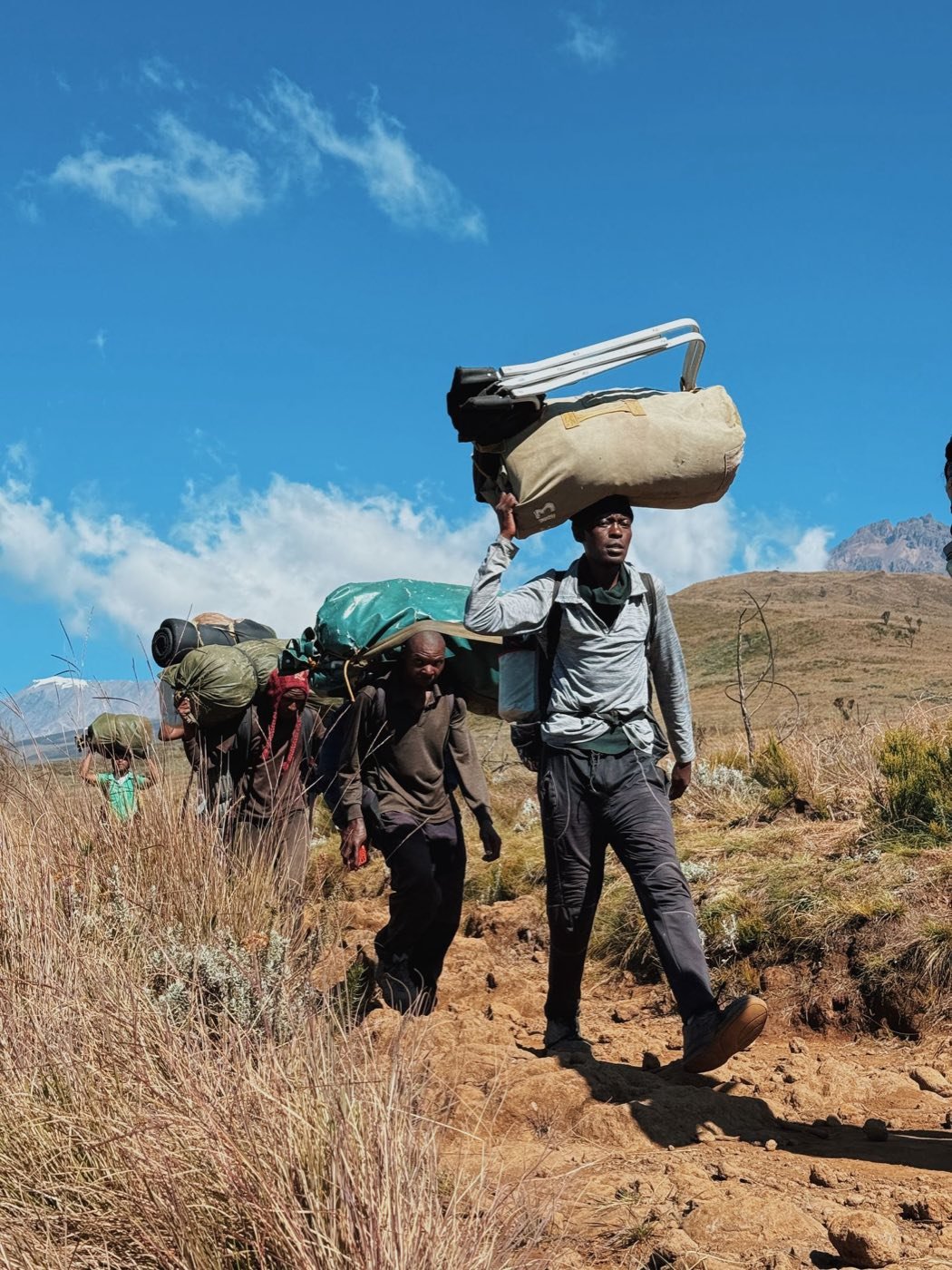
Ready to book a Kilimanjaro climb? Two packages can both say “7-day Machame, all-inclusive” and differ by USD 1,500, because the difference sits in group size, crew ratios, tent quality, food and how the operator handles a climber who struggles at altitude. Start with the bookable guided climbs below, then use the rest of this page to compare packages fairly. For route choice and the full budget, see our Kilimanjaro routes comparison and the full Kilimanjaro costs breakdown.
Kilimanjaro Guided Climb Packages You Can Book Now
| Package | Days | Pace and summit odds | Book |
|---|---|---|---|
| Machame group trek | 7 | Scenic, steady acclimatisation, most popular | Check dates and prices |
| Lemosho group trek | 7 | Quieter start, best odds on 7 days | Check dates and prices |
| Marangu trek with huts | 6 | Hut beds, shortest, lower success rate | Check dates and prices |
| Rongai group trek | 7 | Drier northern approach, gentle gradient | Check dates and prices |
| Marangu route options | 5 to 6 | Compare more operators on the Marangu route | Browse Marangu climbs |
| Rongai route options | 6 to 7 | Compare more operators on the Rongai route | Browse Rongai climbs |
Prices and availability change by departure date, so check the live listing. Before the climb, plan one night in Moshi: hotels in Moshi put you close to operator offices for the gear check, and Springlands is another Moshi-area option for the night before the briefing.
The Four Package Formats
| Format | Typical price (7 days, as of 2026) | Group size | Best for |
|---|---|---|---|
| Budget group departure | approximately USD 1,600 to 2,200 | 6 to 12 | Solo travellers, tight budgets |
| Mid-range small group | approximately USD 2,300 to 3,200 | 2 to 8 | Most first-time climbers |
| Private climb | approximately USD 2,800 to 4,200 | Your party only | Couples, families, fixed dates |
| Premium / expedition | approximately USD 4,000 to 6,500+ | Private | Comfort, medical backup, 8 to 9 day routes |
Prices are per person and assume a standard Machame or Lemosho itinerary. Marangu and Rongai are slightly cheaper; Northern Circuit sits at the top of each band.
Format 1: Budget Group Departures
Operators such as Zara Tours (Moshi) run fixed-date departures where you join other climbers on a shared crew. You get the same mountain, the same park fees, and often the same route as a mid-range climber, but with fewer comforts.
- Typically included: park fees, basic tents, foam mattresses, simple meals, hotel pick-up, one hotel night.
- Typically missing: private toilet tent, pulse oximeter checks twice daily (ask), emergency oxygen, a second assistant guide for each small group.
- Watch for: very low advertised prices. Park fees alone approximately USD 900 to 1,000 on a 7-day trek, so anything far under USD 1,500 has been cut somewhere.
Format 2: Mid-Range Small-Group Packages
This is the sweet spot. Roy Safaris (Arusha) is a KPAP-registered operator commonly used at this level, with smaller departures and consistent guide quality. Expect better food, sturdier four-season tents, a mess tent with chairs, and daily health checks.
What to confirm in the quote:
- Guide-to-climber ratio (one lead guide plus one assistant per 4 to 5 climbers is a good benchmark).
- Whether summit night includes a dedicated assistant guide.
- Portable toilet provided or not.
- Emergency oxygen and a pulse oximeter on every climb.
Format 3: Private Climbs
A private package gives you your own crew, your own pace and your own start date. It suits families and anyone who has worried about keeping up with a group. If you can find 3 or 4 climbers, private mid-range pricing per person often falls close to a small-group departure.
Format 4: Premium and Expedition Packages
Thomson Safaris and Exodus Travels sit in the premium bracket, bundling flights from their home markets, safari add-ons and, in some cases, expedition leaders alongside local guides. You pay for logistics, medical protocols and customer support at home, not a different mountain. For many climbers this is worth it; for those comfortable booking direct with a Moshi or Arusha operator, mid-range packages deliver the same summit.
Side-by-Side: What Changes Between Tiers
| Feature | Budget | Mid-range | Premium |
|---|---|---|---|
| Tent quality | Basic | Four-season | Four-season, larger |
| Daily health checks | Sometimes | Yes | Yes, with oxygen on hand |
| Toilet tent | Rare | Often | Standard |
| Food | Simple | Varied, dietary needs handled | Varied, special requests |
| Crew ratio | Lean | Balanced | Generous |
| Typical summit success | approximately 65 to 80% | approximately 85 to 90% | approximately 90 to 95% |
Success rates reflect route length as much as tier; an 8-day Lemosho package outperforms a 5-day Marangu package at any price.
Add-On Packages: Climb Plus Safari
Many operators bundle a 3 to 4 day northern circuit safari after the climb. The combined price is usually lower than booking separately, and recovery days between the two work well. See the Serengeti safari packages comparison before choosing the safari half.
How to Compare Quotes Fairly
Ask each operator for the same itinerary, same route, same number of days, and then compare:
- Total price in USD and whether park fees are included.
- Named cancellation and rescue terms.
- Porter welfare (KPAP partner status; see KPAP for guidance).
- Crew size per climber.
- Tipping guidance in writing.
The Tanzania National Parks Authority publishes official fees and regulations at tanzaniaparks.go.tz, which is the baseline you should see reflected in every quote. If you want a ready-made option to benchmark against, compare a 7-day Machame package or a 7-day Lemosho package, and browse more Moshi tours for alternatives.
Which Package Should You Book?
- First climb, limited budget: mid-range small group, 7-day Machame or Lemosho.
- Prioritising summit success: 8-day Lemosho or Northern Circuit, any tier.
- Travelling as a couple or family: private mid-range.
- Want a single point of contact from home: premium operator.
For operator names, red flags and route details, see Book a Kilimanjaro Climb, and for timing see the best time to climb Kilimanjaro.