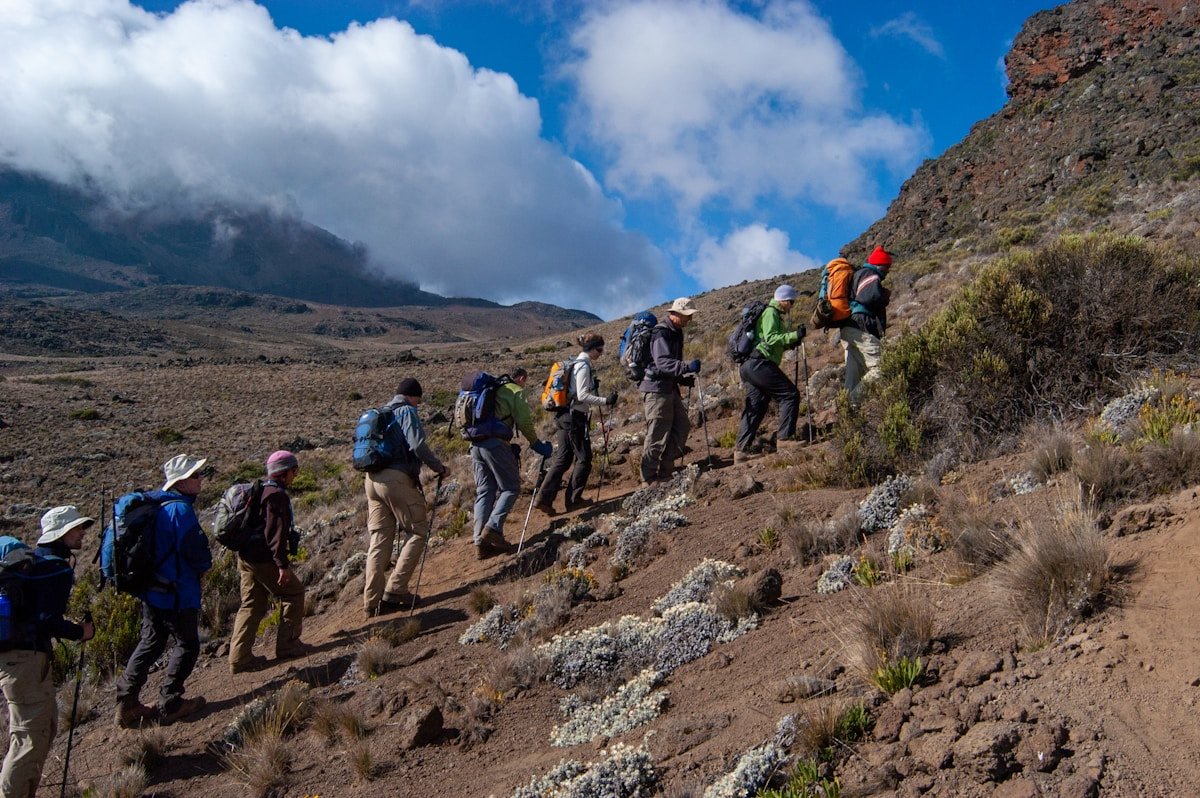
The Kilimanjaro region anchors the northeastern corner of Tanzania, centred on Moshi — the city at the mountain’s southern base — and Kilimanjaro International Airport, which serves as the entry point for much of northern Tanzania’s safari circuit. The mountain itself, at 5,895 m above sea level, is Africa’s highest peak and the world’s tallest free-standing volcano. It is also one of the world’s most accessible high-altitude summits: no technical climbing equipment is required, though the altitude makes the ascent a serious undertaking.
Beyond the mountain, the Kilimanjaro region has its own identity. The lower slopes are fertile coffee and banana farming country inhabited by the Chagga people, whose terraced farms give way to dense cloud forest, then alpine heath, high-altitude desert, and finally the glaciated summit. Moshi is a small, functional, and pleasant city that functions as a climbing logistics hub, with a growing restaurant and café scene catering to the international traffic the mountain brings.
Kilimanjaro National Park
Kilimanjaro National Park (KINAPA) covers the upper mountain from approximately 2,700 m to the summit. Entry fees are set by Tanzania National Parks and are charged per day on the mountain, not per visit. As of 2026, fees for the main routes are:
- Park fee: USD 82 per person per day
- Camping fee: USD 50 per person per night (huts on the Marangu route cost USD 60 per person per night)
- Rescue fee: USD 20 per person (one-off per climb)
- Crew wages (mandatory guide, porters, cook): minimum rates are regulated but typical total crew costs for a 7-day Machame or Lemosho route climb run to approximately USD 500 to 800 per person (included in most operator packages, as of 2026)
The total out-of-pocket cost for a 7-day climb via Machame with a mid-range operator ranges from approximately USD 2,000 to 3,500 per person all-inclusive (as of 2026). Budget packages on the Marangu 5-day route start at approximately USD 1,400 per person.
All climbers must be accompanied by a licensed KINAPA guide. Solo, unguided ascents are not permitted.
The Main Routes
Machame (7 days, most popular): The “Whisky Route” approaches from the southwest through dense forest, crossing three distinct ecological zones before reaching Barafu camp at 4,673 m for summit night. Success rates are higher than the Marangu route because the longer acclimatisation profile gives the body more adjustment time. Spectacular scenery throughout.
Marangu (5 or 6 days): The “Coca-Cola Route” is the only route with hut accommodation rather than tents. It is the most popular choice for climbers on a tight budget. The shorter profile results in lower summit success rates — approximately 50% on the 5-day version — and the trail can feel crowded. Good for those who strongly prefer sleeping in a bed.
Lemosho (8 days): The most scenic route, approaching from the remote western face with views across the Shira Plateau. Fewer climbers, longer acclimatisation, and the highest published success rates among the major routes. Costs slightly more than Machame due to the remote starting point.
Rongai (7 days): The only route approaching from the north (near the Kenya border), making it drier and less affected by the long rains. A good choice for April and May climbs when southern routes are wetter.
Where to Stay
Luxury
Kibo Palace Hotel Moshi is the most comfortable option in Moshi town with a rooftop bar that offers clear views of Kilimanjaro on dry mornings. Rooms start at approximately USD 120 to 180 per night (as of 2026). Rated 9.4 by couples on Booking.com. Well-positioned for pre- and post-climb logistics.
Mid-Range
Aishi Machame Hotel sits 25 minutes from Moshi in the lush Machame village area at the base of the mountain’s lower slopes. Outdoor pool, garden, resident monkeys, and a relaxed atmosphere make this a popular choice for the night before and after a Machame route climb. Rooms from approximately USD 80 to 130 per night (as of 2026).
Budget
Keys Hotel Moshi is a long-established budget favourite in central Moshi, used by climbing groups for decades. En-suite rooms with hot water cost approximately USD 40 to 60 per night (as of 2026). The in-house restaurant serves reliable Tanzanian and international meals.
Where to Eat
Kahawa Shamba on Moshi’s main street is the best café in town, specialising in Kilimanjaro coffee grown on the mountain’s lower slopes. Pour-overs, espresso-based drinks, and a small food menu of sandwiches and pastries. Coffees from approximately USD 2 to 4, open from 7am to 7pm (as of 2026).
Indoitaliano Restaurant is Moshi’s most-recommended dinner venue, a long-running Italian-Indian fusion place that has fed climbing parties for years. Pizza, pasta, and curry dishes run approximately USD 10 to 18 per main (as of 2026). Closed Sundays.
Moshi Farmers’ Market (Saturdays, Moshi town centre) sells fresh produce, roasted Chagga coffee, and street food from approximately USD 1 to 3. An excellent pre-climb or rest-day visit.
Getting There
From Dar es Salaam: Kilimanjaro International Airport (JRO) has direct flights from Julius Nyerere International Airport operated by Precision Air and Air Tanzania. Flight time is approximately 1 hour 20 minutes. Fares start at approximately USD 80 one-way (as of 2026), with direct international flights from Nairobi, Amsterdam, Doha, and Dubai also serving JRO.
From Arusha: Moshi is 75 km from Arusha on the tarmac A23 highway. Shared shuttle buses depart from Arusha’s bus stand and cost approximately USD 5 to 8 (as of 2026), taking 1 hour 30 minutes. Taxis cost approximately USD 50 to 80 for a private transfer.
Kilimanjaro International Airport to Moshi: 30 km, approximately 35 minutes by taxi. Airport taxis charge approximately USD 25 to 40 (as of 2026). Pre-arrange through your hotel for a confirmed rate.
When to Visit
The two main climbing seasons align with Tanzania’s dry periods: January to March and June to October. Summit success rates peak during these windows. The Rongai and northern routes are viable in April to May when southern routes are wetter. January and February bring the clearest summit conditions on most years. Avoid the long rains (April to June) on the Machame and Marangu routes unless you specifically choose the Rongai alternative.