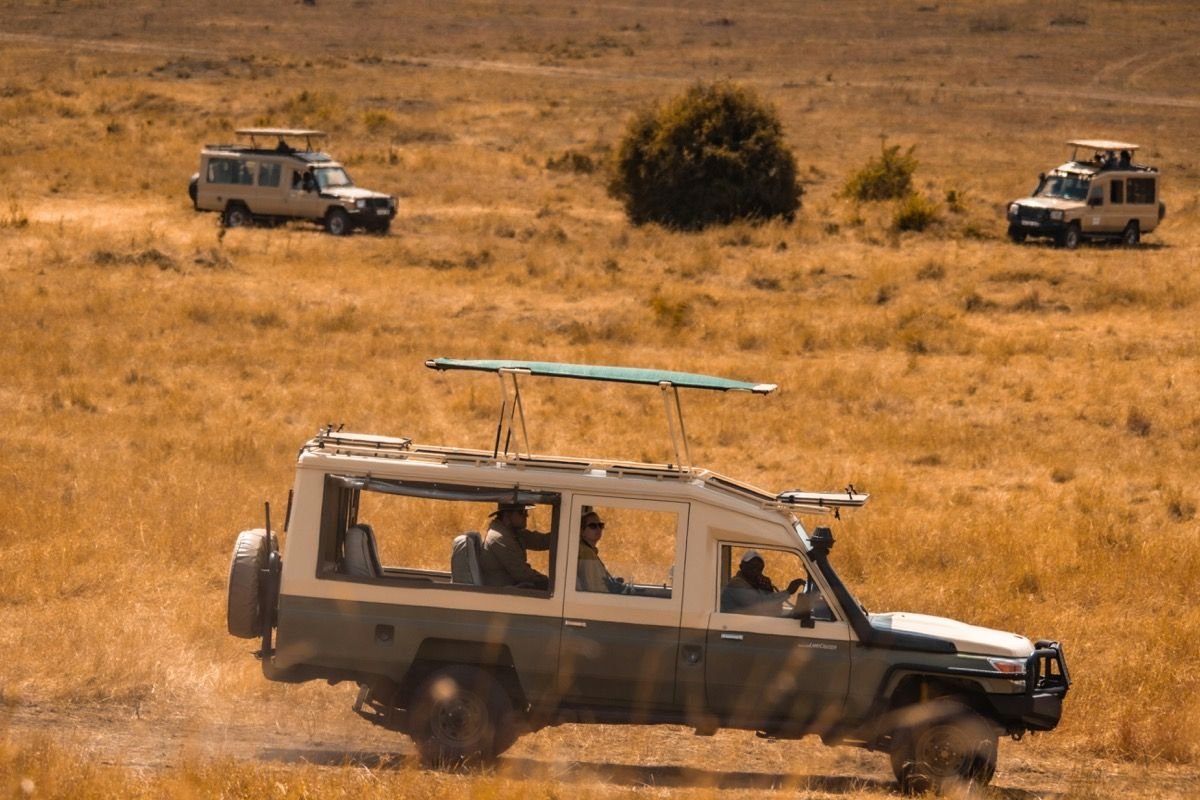
Kenya and Tanzania together form the heart of East Africa safari travel, and both countries make a strong claim on any serious wildlife itinerary. The question of which to choose — or which to prioritise on a limited schedule — depends on what you are optimising for. Wildlife spectacle, ease of travel, cost, specific experiences, and when you are going all push the answer in different directions.
We have run this comparison honestly. Tanzania is our home ground, and our conclusion is that each country genuinely wins on different criteria.
The Core Difference
Tanzania has more protected land, more park variety, and the world’s greatest single-ecosystem safari destinations in Serengeti National Park and Ngorongoro Crater. It also has Mount Kilimanjaro, Zanzibar, and the southern parks (Ruaha, Nyerere) that see a fraction of Kenya’s visitor numbers.
Kenya has better logistics, more competitive pricing at the mid-range level, and the Masai Mara — particularly its private conservancies — which offer a style of safari that Tanzania’s national park rules do not permit. Kenya also has Samburu, where species you will not see in Tanzania (Grevy’s zebra, reticulated giraffe, gerenuk, Beisa oryx, Somali ostrich) are reliably found.
Neither destination is better in absolute terms. They are different, and understanding the differences tells you which one matches your priorities.
Wildlife: Big Five Access
Both countries offer reliable Big Five access (lion, leopard, elephant, buffalo, black and white rhino) in their flagship parks.
Tanzania’s Big Five advantage is scale. The Serengeti’s lion population across the full park is the largest concentration in Africa. Ngorongoro Crater holds 25,000 to 30,000 large mammals including 25 to 30 black rhino — one of the best black rhino sightings in East Africa. A Ngorongoro Crater day trip with game drive from Arusha runs approximately USD 150–200 per person. Elephant herds of hundreds are routine in Tarangire and Ruaha.
Kenya’s Big Five advantage is accessibility. The Masai Mara national reserve is compact (1,510 sq km) and densely stocked. A three-night stay at a good camp almost guarantees all five. The Ol Pejeta Conservancy near Laikipia is one of the few places in East Africa where you can see both black and white rhino in the same game drive.
For cheetah specifically, the Masai Mara’s open short-grass plains are consistently ranked as the best cheetah habitat in Africa. Tanzania’s Serengeti also has excellent cheetah, particularly in the south and central sections, but the Mara’s concentration is generally higher.
Wildlife: The Great Migration
The Great Migration is the single most important factor in timing an East Africa safari, and it crosses both countries.
The migration is not a single event — it is a year-round circuit:
| Period | Location | Highlight |
|---|---|---|
| December to March | Southern Serengeti / Ndutu (Tanzania) | Calving season — 500,000 calves born in weeks |
| April to May | Western Corridor, Serengeti (Tanzania) | Green season, fewer visitors |
| June to July | Central Serengeti, moving north | Herd consolidation, river crossings begin |
| July to October | Northern Serengeti / Masai Mara (both countries) | Mara River crossings |
| November | Serengeti, moving south | Return migration |
The Mara River crossings — where wildebeest plunge into crocodile-filled water in mass waves — happen across both the Tanzanian northern Serengeti (Kogatende, Lamai area) and the Kenyan Masai Mara. For July to early August crossings, Tanzania often sees the action first as the herds cross into Kenya. From August to October, the drama intensifies on the Kenyan side before the return journey south.
For the calving season (December to March), Tanzania wins decisively. The Ndutu area of the southern Serengeti sees no equivalent on the Kenyan side.
Wildlife: Species Unique to Each Country
Tanzania has chimpanzees. Gombe Stream and Mahale Mountains — both on the shores of Lake Tanganyika — are the only places in East Africa where you can track habituated wild chimpanzee communities. No equivalent exists in Kenya.
Kenya has Samburu’s special five. The dry-country species found in Samburu and Buffalo Springs reserves — Grevy’s zebra, reticulated giraffe, gerenuk, Beisa oryx, Somali ostrich — have no presence in Tanzania’s safari circuit.
Park Experience: Crowds and Landscapes
Tanzania’s parks are larger and, outside peak season, less crowded. The Serengeti (14,763 sq km) dwarfs the Masai Mara (1,510 sq km), and the sheer scale means it is possible to spend a full day driving without encountering another vehicle in the northern and western sections. The landscapes vary from the short-grass southern plains to the acacia woodlands of the central Seronera zone to the rocky kopjes of the Loliondo corridor.
The Masai Mara national reserve can become congested in July and August when every camp in the area fills for the river crossings. Convoys of 30 to 50 vehicles around a single lion or cheetah sighting are common at peak times. The private conservancies (Ol Kinyei, Olare Motorogi, Mara North, Mara Naboisho) solve this by limiting vehicle numbers — but at a significant cost premium.
Tanzania’s national park rules prohibit off-road driving, night game drives, and walking safaris within park boundaries. Kenya’s private conservancies permit all three, which changes the character of the experience fundamentally for photographers and wildlife enthusiasts.
Cost Differences
Tanzania is generally more expensive than Kenya for safari travel, for several reasons:
- Park fees in Tanzania’s top parks are approximately USD 70 per person per 24 hours (Serengeti) — among the highest in Africa
- A separate Ngorongoro Conservation Area fee (approximately USD 60 per vehicle per day) adds to Ngorongoro costs
- Internal distances between parks require either long overland drives or charter flights (Arusha to southern Serengeti is a 6-hour drive or 45-minute charter at approximately USD 200 to USD 400 per person per flight)
- Budget camping options exist but are limited and remote
For Kenya:
- Masai Mara National Reserve fees are comparable, but the reserve is more compact and easier to reach from Nairobi (5 hours by road, 45 minutes by scheduled light aircraft)
- Mid-range tented camps in the national reserve start at approximately USD 200 to USD 280 per person per night all-inclusive
- Budget safari options from Nairobi are plentiful; organised group tours to the Mara for USD 150 to USD 250 per person per day exist and are generally well-run
Rough daily budget guides (accommodation + park fees, per person):
- Budget (camping / basic lodge): Kenya USD 150-220 / Tanzania USD 180-260
- Mid-range (tented camp): Kenya USD 250-400 / Tanzania USD 280-500
- Luxury: Kenya USD 600-1,500 / Tanzania USD 700-2,000+
🏨 Search Tanzania safari lodges and camps - Browse hotels in Arusha (safari base)
Best For: Matching the Destination to the Traveller
First-time safari visitors: Kenya has the edge. Nairobi is a major international hub, the Masai Mara is accessible and reliably excellent, and the infrastructure for first-timers (organised tours, budget options, English spoken widely) is stronger. Tanzania is also excellent for first-timers but requires more budget and more planning.
Wildlife photographers: Kenya’s private Masai Mara conservancies, with unrestricted off-road access and no other vehicles at sightings, offer conditions that Tanzania’s national parks cannot match. For Serengeti calving season or balloon safari photography, Tanzania wins. For big cat close-ups and flexibility, Kenya.
Budget travellers: Kenya. More affordable group safaris, cheaper accommodation options, easier logistics from Nairobi.
Serious wildlife enthusiasts (7+ days): Tanzania. More park variety, less-visited southern circuit (Ruaha, Nyerere), chimpanzees, and the calving season are all experiences with no Kenyan equivalent.
The complete Africa bucket list: Combine both. A 10 to 14 day trip covering Masai Mara, Serengeti, Ngorongoro, and Zanzibar hits almost everything East Africa offers.
Kilimanjaro trekkers: Tanzania only. The highest peak in Africa is a Tanzania-exclusive experience, and climbing Kilimanjaro is naturally combined with a Serengeti safari. Browse Kilimanjaro treks and packages for current operator options.
When to Go
Tanzania is best from June to October (dry season, vegetation low, wildlife concentrated at water sources) and December to March (calving season at Ndutu, quieter parks). April and May bring heavy rains — most lodges close or reduce rates significantly.
Kenya peaks from July to October for the river crossings, and January to March is also excellent. The Masai Mara is open year-round, though the “short rains” of November can be variable.
For both countries visited together, July to October is the most popular combination — catching the Mara River crossings on both sides of the border.
Browse Tanzania safari tours — Serengeti tours and multi-day safaris
The Verdict
Tanzania wins for ecosystem variety, wildlife spectacle at scale, the calving season, Kilimanjaro, and destinations with no Kenyan equivalent. Kenya wins for logistics, private conservancy experiences, Samburu’s unique species, and value at the mid-range level.
For most travellers choosing between the two: if budget is the deciding factor, Kenya; if wildlife depth and variety is the priority, Tanzania. If time and budget allow, visit both — the northern Tanzania and southern Kenya circuit is among the finest wildlife journeys in the world.
Related guides: Serengeti National Park — Ngorongoro Crater — Great Migration timing — Kilimanjaro trekking