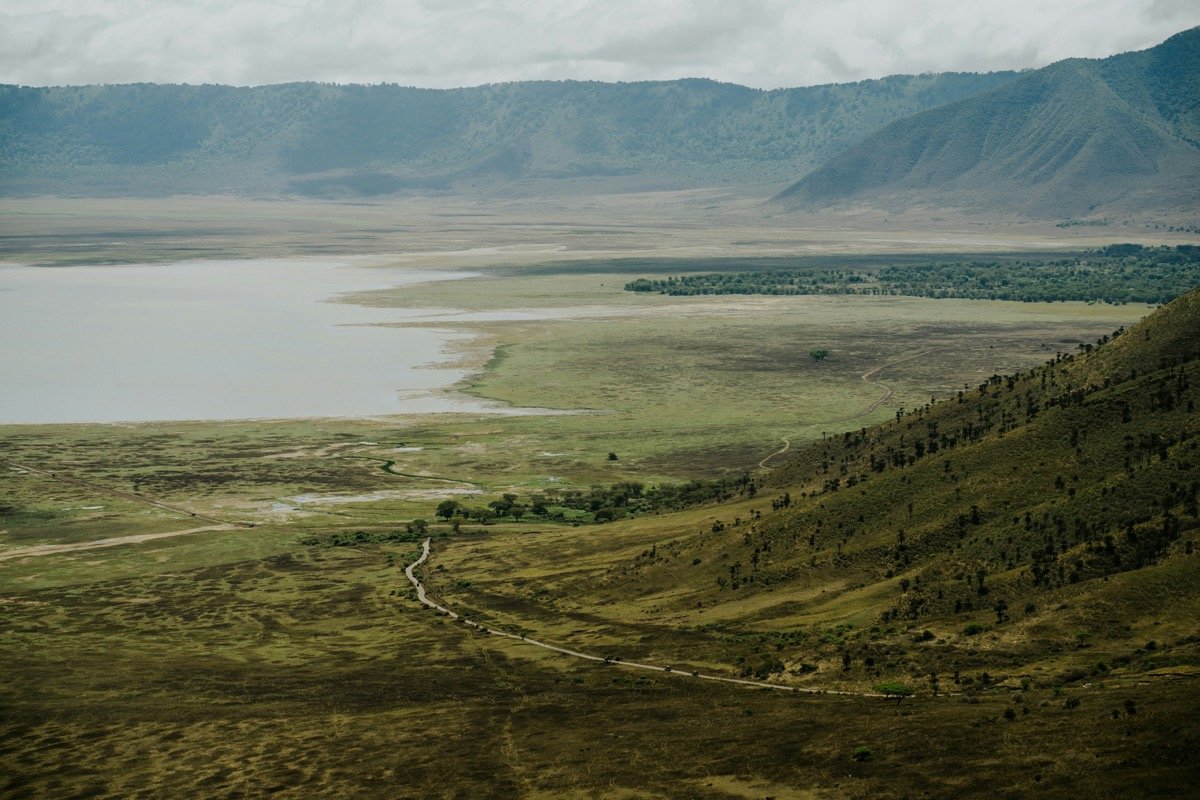
The Ngorongoro Crater is the world’s largest intact volcanic caldera and one of Africa’s most remarkable wildlife environments. Formed approximately three million years ago when a volcano collapsed inward, it created a natural enclosure 20 km across and 600 m deep that functions as a self-contained ecosystem. The steep crater walls act as a soft boundary — most animals can leave, but the resident population is largely permanent, fed year-round by the crater’s reliable water sources and diverse habitats.
The result is wildlife density that almost no open-savannah park can match. A single day on the crater floor consistently delivers lion, elephant, buffalo, spotted hyena, hippo, wildebeest, zebra, and the black rhinoceros — around 25 to 30 individuals as of 2026, making Ngorongoro one of the best places in Africa to see this critically endangered species.
What Makes Ngorongoro Different
Most Tanzanian parks require luck and timing. The Ngorongoro Crater requires almost none. The 25,000 to 30,000 large mammals that reside in the crater do not migrate out seasonally — they stay, compete, breed, and die within the caldera year-round. This permanence means wildlife sightings are exceptionally reliable at any time of year.
The lion density is among the highest recorded anywhere in Africa — approximately 60 to 70 lions live in the crater, representing one of the most studied lion populations on earth. The social dynamics of these prides, including the famous Black Mane lion of Ngorongoro, have been researched continuously since the 1960s.
Black rhino sightings are the crater’s most prized wildlife encounter. The animals tend to move in the open grassland areas of the western and southern crater floor in the early morning. Sightings are not guaranteed but are far more likely here than almost anywhere else in Tanzania.
Entry Fees and Practical Rules
Ngorongoro Conservation Area Authority (NCAA) fees are charged separately from Tanzania National Parks. As of 2026, crater descent fees are USD 295 per vehicle per day (any vehicle holding up to 6 passengers). Each visitor pays an additional NCAA conservation fee of USD 82 per person per day. Total typical cost for a vehicle of two people: approximately USD 459 per day excluding accommodation.
Vehicles must be off the crater floor by 6pm. Only 4WD vehicles are permitted on the descent roads. The main Seneto descent road and Lemala ascent road are one-way — ensure your driver knows the current traffic pattern.
Day visits without overnight accommodation are permitted. Arrange a vehicle from Karatu (the nearest town, approximately 20 km from the crater rim) or book through an Arusha-based operator.
Where to Stay
Luxury
Ngorongoro Serena Safari Lodge sits on the crater rim at an altitude of approximately 2,400 m, with rooms looking directly into the caldera. It is one of the most dramatically positioned hotels in Africa. Rooms start at approximately USD 550 per person per night (full-board, as of 2026). Rated 8.6 on Booking.com.
The Manor at Ngorongoro is set in a 1920s colonial farmhouse at the edge of the Conservation Area near Karatu. It offers 18 en-suite rooms with a heated outdoor pool, spa, and farm-to-table restaurant. Rates start at approximately USD 400 per person per night (full-board, as of 2026).
Mid-Range
Rhino Lodge is the only NCAA-managed accommodation on the crater rim. Basic en-suite rooms cost approximately USD 150 to 250 per person per night (as of 2026) depending on season. The location is unmatched — walk to the crater viewpoint directly from your room — but facilities are simple by comparison to private lodges.
Budget
Simba Campsite is the public campsite on the crater rim, offering the most affordable option at USD 35 per person per night (as of 2026) plus NCAA fees. Basic ablution facilities only. You must be fully self-sufficient with food, water, and cooking equipment.
Where to Eat
Lodge restaurants are the primary dining option near the crater. The Ngorongoro Serena Lodge restaurant serves breakfast and dinner buffets with panoramic crater views — allow approximately USD 50 to 70 per person for a non-resident dinner (as of 2026).
Karibu Restaurant in Karatu is the best option for independent travellers staying in town. The menu covers East African dishes including grilled nyama choma (roasted meat), ugali, and fresh fish from Lake Victoria. Mains cost approximately USD 8 to 15 (as of 2026). Open daily from approximately 7am to 9pm.
In the crater, visitors must carry their own packed lunch. No restaurants or kiosks operate on the crater floor. Most lodge packages include a packed lunch; if arranging independently, purchase supplies in Karatu before descending.
Getting There
From Arusha: The drive to the Ngorongoro crater rim takes approximately 3 to 4 hours on tarmac via the town of Karatu. Distance is approximately 180 km. Shared shuttle buses from Arusha to Karatu cost approximately USD 10 to 15 (as of 2026); a private transfer with a safari company costs USD 80 to 150 for the vehicle.
From Dar es Salaam: Fly to Kilimanjaro International Airport (1 hour 40 minutes, approximately USD 200 one-way, as of 2026), then road transfer to the crater as above.
From Serengeti: The Ngorongoro Conservation Area forms the eastern boundary of the Serengeti. Driving from Seronera takes approximately 3 hours through the NCA (gate entry and fees apply along the route).
When to Go
The crater is accessible and rewarding year-round. The dry season (June to October) brings thinner vegetation and more reliable road conditions on the descent tracks. The green season (November to May) can produce muddy roads but the crater stays lush and predators are highly active. The crater rim frequently receives rain and morning mist even during the dry season — bring layers regardless of when you visit.