Ngorongoro Crater is a single, self-contained 260 km² caldera - the world’s largest intact volcanic crater - and it holds 25,000 large animals within its walls. Black rhino, lion, elephant, flamingo, and virtually every East African species are present in extraordinary density. The accommodation story here is simpler than the Serengeti’s because all lodges sit on the crater rim: you descend each morning for game drives and return before the 18:00 gate closure. Where you sleep shapes the view from your room, the morning fog you wake up to, and how much you’ll pay for the privilege.
The Altitude Factor
The crater rim sits between 2,200m and 2,400m above sea level. This matters practically for two reasons.
First, it gets cold. Nights are 5–10°C, mornings are often misty and 12–15°C, and the crater floor’s warmth (20–25°C by mid-morning) feels like a different climate altogether. Pack layers you can actually rely on - not a thin fleece but something genuinely warm. Most lodges provide blankets and log fires, but you’ll feel the altitude on the walk from your tent to the dining area.
Second, the rim views are spectacular precisely because of the elevation. The better rim lodges are positioned to look directly into the caldera from their terraces and rooms, and waking up to the crater floor appearing through morning mist from 600m above is something that doesn’t leave you quickly.
Luxury Rim Lodges
andBeyond Ngorongoro Crater Lodge
The most photographed lodge in Africa, possibly. The andBeyond Crater Lodge looks like a Maasai manyatta reimagined by an architect with an unlimited budget - soaring ceilings, chandelier, butler service, banana-leaf cladding. Thirty suites split between three camps on the eastern rim, each with floor-to-ceiling windows looking straight into the caldera.
Rates from approximately USD 1,500–2,500 per person per night (2026, full board + activities). Rose-petal baths and champagne pre-game drive are standard. Book 8–10 months ahead for July–August; 6 months for other peak dates.
What makes it worth it beyond the aesthetic - andBeyond’s guiding team maintains tracking networks across the crater for rhino and lion. Crater floor access is guaranteed at gate open (06:00) because the lodge coordinates directly with the Conservation Area Authority.
The Highlands (andBeyond)
A different andBeyond property positioned in the Olmoti area above Ngorongoro, at higher altitude than the crater rim lodges. Eight tented suites suspended between the highland forest and the crater views. Emphasises walking - the highland forests around Olmoti Crater are excellent for birding, and the property is the only one that includes guided walks through Maasai grazing areas as a standard activity.
Rates from approximately USD 1,200–1,800 per person per night (full board + activities).
Ngorongoro Serena Safari Lodge
82 rooms built into the crater rim in a style that references traditional Maasai architecture without being precious about it. The Serena works at scale - it’s the largest property on the rim - but the service and guiding quality hold up. Pool on the crater edge, evening campfire sundowners. From approximately USD 500–800 per person per night (full board).
For families, the Serena is the most practical luxury option - larger rooms, a swimming pool, and reliable buffet dining that doesn’t require four-course commitment every night.
Ngorongoro Sopa Lodge
72 rooms on the eastern rim, honest positioning as a reliable luxury-category property without Crater Lodge’s theatre. The view into the crater from the upper rooms and the restaurant terrace is excellent. From approximately USD 450–700 per person per night (full board).
Mid-Range Options
Ngorongoro Farm House (Tanganyika Wilderness Camps)
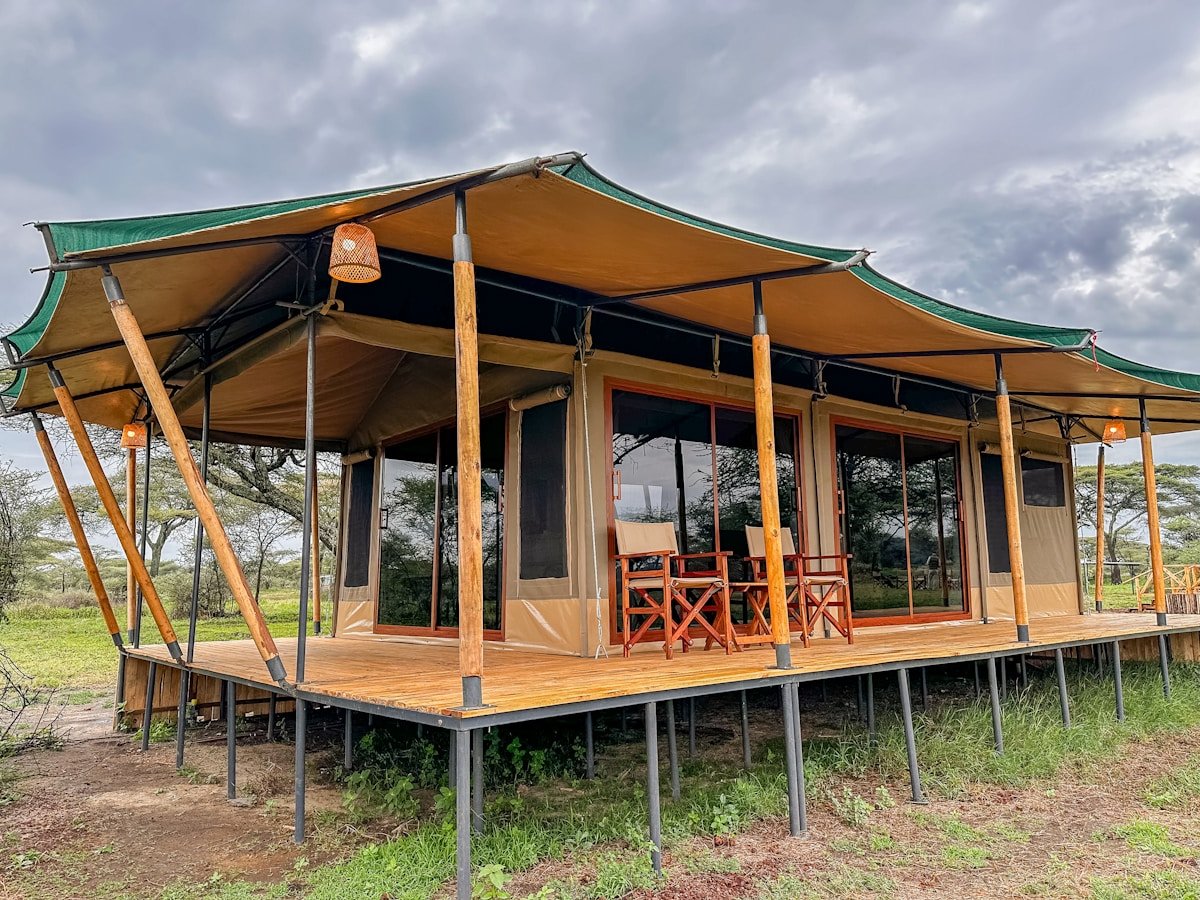
The Farm House sits outside the Conservation Area boundary - 20 minutes from the crater gate - on a working coffee and avocado farm in the highland forest. Forty-three rooms, some in a restored farmhouse (original stone floors, wooden beams) and some in garden cottages. No crater rim views from here, but the setting is genuinely beautiful and rates are significantly lower.
From approximately USD 280–420 per person per night (full board). A practical choice if you’re doing Ngorongoro as part of a longer Northern Circuit trip and don’t need the crater view experience.
Rhino Lodge
Operated by Tanzania National Parks (TANAPA) and positioned closest to the crater descent road on the western rim. Functional rather than atmospheric - eight chalets, central lodge building, simple rooms. But the location means you’re first through the crater gate in the morning, which matters a great deal for big cat sightings and rhino tracking.
From approximately USD 200–320 per person per night (full board, varies by season). Book directly through TANAPA or via a Tanzanian ground operator - international booking agents often don’t list it.
Ngorongoro Wildlife Lodge
A 75-room lodge run by TANAPA on the western rim, older infrastructure but a rim position and competitive pricing. From approximately USD 250–380 per person per night. Often available on shorter booking lead times than the private lodges.
Budget and Camping
Public Campsites (Ngorongoro Conservation Area Authority)
Three public campsites exist within the Ngorongoro Conservation Area, accessed via application to the NCAA (Ngorongoro Conservation Area Authority). Camping fees are approximately USD 30–50 per person per night (2026, verify with NCAA as fees update periodically).
Fully self-sufficient overlanding setup required - tent, food, water, cooking equipment. The crater rim campsites are among the most dramatic in Africa on a clear night, with the caldera visible below. Not suitable for first-time safari visitors without their own vehicle and equipment.
Special Campsites
The NCAA designates several “special” (exclusive-use) campsites that can be booked as a private experience. These are essentially undeveloped sites used by mobile operators - you need a ground operator who runs their own mobile camp infrastructure. Pricing varies widely but expect USD 50–100+ per person per night for the site fee alone, plus mobile camp costs.
Practical Notes
Crater descent vehicle requirement: Only 4WD vehicles are permitted on the crater floor. All lodges arrange this - confirm your lodge includes crater game drives in the rate or factor the cost separately (approximately USD 250–400 per vehicle per day for a private vehicle with guide). Browse Ngorongoro Crater game drive tours if you’re not using a lodge-provided vehicle.
Crater gate hours: The descent gate opens at 06:00 and the ascent closes at 18:00. A full day on the crater floor means 8–9 hours of game driving. Most operators run a morning drive with a picnic lunch on the floor rather than returning to the rim midday.
Conservation fee: The Ngorongoro Conservation Area fee is approximately USD 70 per person per day (2026). Usually included in lodge rates for fly-in guests - confirm this when booking as the fee has changed multiple times in recent years. For transfers between Arusha and the crater rim, private Tanzania transfers can be pre-booked to avoid relying on lodge shuttle schedules.
Booking lead times in practice:
- andBeyond Crater Lodge (July–August): book 8–10 months ahead
- andBeyond Crater Lodge (shoulder season): 4–6 months
- Ngorongoro Serena (peak): 4–6 months
- Ngorongoro Serena (shoulder): 2–3 months
- TANAPA lodges (Rhino, Wildlife Lodge): often 6–8 weeks but confirm with operator
The black rhino question: Ngorongoro Crater is Tanzania’s most reliable location for black rhino sightings - estimates suggest 20–30 individuals are present on the floor at any time. Morning drives starting at gate-open give the best chance. Ask your guide specifically before descending - they’ll have a location lead from the previous day’s guide team.
Which Lodge Should You Choose?
For a special occasion or first safari where budget is flexible: andBeyond Ngorongoro Crater Lodge. The theatre of waking up in those rooms with the caldera below is genuinely hard to match.
For a family or group wanting reliability without the theatre budget: Ngorongoro Serena Safari Lodge. Large enough to absorb groups, excellent pool, and the team is experienced with families.
For travellers doing a self-drive Northern Circuit wanting to minimise lodge spend: Rhino Lodge or Ngorongoro Wildlife Lodge, both TANAPA-operated and positioned well for crater access. Ngorongoro Conservation Area tours with guide and crater descent included are available for travellers not on a lodge programme.
For those who want something quieter than the crater rim scene: Ngorongoro Farm House in the highlands offers a completely different atmosphere and excellent coffee (the farm produces its own).
Whatever you book, confirm lead times early. The Ngorongoro Crater is one of Africa’s most-visited wildlife destinations for very good reason, and the best rim positions sell out faster than most travellers expect.