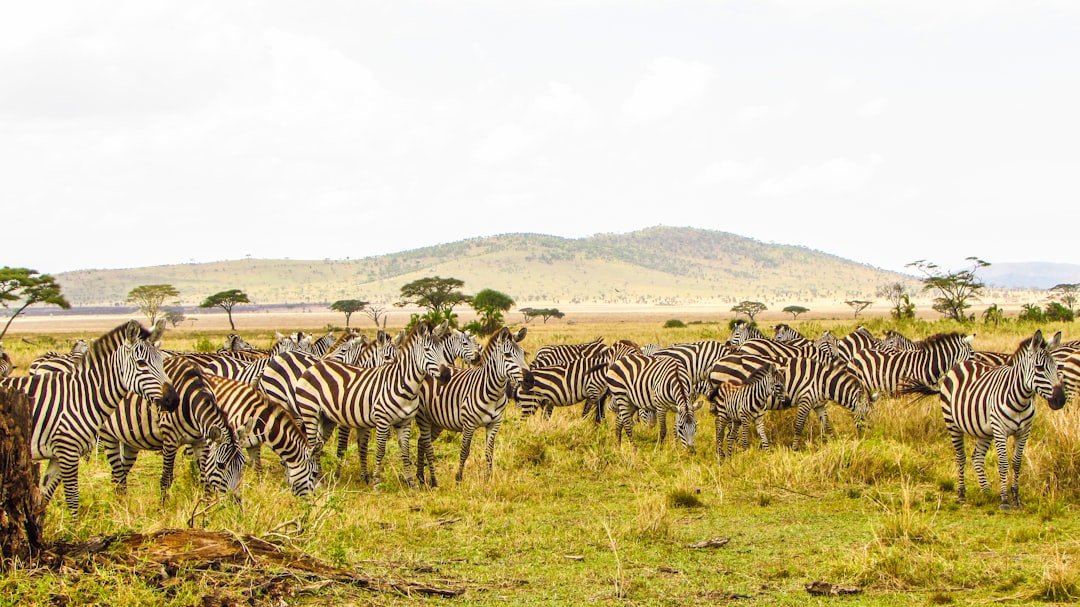
Serengeti and Ngorongoro are the two anchors of Tanzania’s northern safari circuit and they frequently appear together in the same itinerary. But they are genuinely different experiences, and if you are working with limited time or budget, understanding those differences helps you decide where to spend your days. The Serengeti is vast, open, and season-dependent; Ngorongoro is compact, reliable, and extraordinary in ways that require almost no luck.
The Fundamental Difference
The Serengeti National Park covers 14,763 sq km of open savannah, acacia woodland, and riverine forest. Wildlife moves across it constantly, and the best experience depends on being in the right part of the park at the right time of year. The Great Migration — roughly 1.5 million wildebeest and 250,000 zebra moving in a circuit between Tanzania and Kenya’s Masai Mara — is the park’s signature event, and timing your visit correctly gives you access to one of the most dramatic wildlife spectacles on Earth.
The Ngorongoro Crater is something else: a self-contained ecosystem 20km across, created when a volcano collapsed inward approximately three million years ago. The steep walls act as a natural fence. Animals can leave (and some do, particularly elephants) but the resident population is largely permanent. The crater floor holds approximately 25,000 to 30,000 large mammals including the densest population of lions in Africa, black rhino (around 25 to 30 individuals, making Ngorongoro one of the best places in Tanzania to see them), elephant, hippo, spotted hyena, and tens of thousands of wildebeest and zebra that do not migrate. A single day in the crater almost always delivers all five of the Big Five.
Wildlife
Serengeti wildlife is exceptional when you are in the right place. The central Seronera area has resident lion prides, leopard, cheetah, and large elephant herds year-round. Away from Seronera, the park becomes progressively wilder and less crowded. The northern Lamai and Kogatende areas (accessible July to October) give you the Mara River crossings, where thousands of wildebeest attempt to cross crocodile-filled water simultaneously — arguably the most dramatic wildlife spectacle in Africa. The southern Ndutu area (November to March) attracts the calving herds, when roughly 500,000 wildebeest calves are born within a few weeks, drawing every predator in the area.
Ngorongoro wildlife is reliable in a way that no open savannah park can match. The crater’s enclosed ecosystem means you drive across relatively small distances and encounter wildlife at high frequency. Black rhino — critically endangered and reliably viewable at only a handful of African locations — are here. The lion density (approximately 62 lions per 100 sq km compared to 2 to 5 per 100 sq km in typical savannah) means you are likely to see multiple prides in a single day’s game drive. The flamingo populations at the soda lake in the crater centre fluctuate but can number in the tens of thousands.
Winner on wildlife guarantee: Ngorongoro. The Serengeti can have spectacular days and quiet ones; Ngorongoro is almost never disappointing.
Winner on wildlife spectacle: Serengeti, when the timing is right. Nothing matches a Migration river crossing.
Practical Logistics
Serengeti requires planning around the calendar. A visit without knowing what the Migration is doing, or which area of the park to target, risks a perfectly fine safari that misses the extraordinary. Entry fees as of 2026 are approximately USD 70 per person per 24 hours for non-SADC visitors. Lodge rates inside the park vary widely: public campsites run approximately USD 30 to USD 50 per person per night; mid-range lodges and tented camps run USD 200 to USD 400 per person per night all-inclusive; luxury properties like Singita, &Beyond, or Four Seasons Serengeti charge USD 800 to USD 2,000 per person per night.
Ngorongoro is easier to plan. The crater can be visited at any time of year and delivers strong wildlife viewing consistently. Day visits from lodges on the crater rim are the standard format. Entry fees are approximately USD 70 per person per visit (a visit covers one day drive from 6am to 6pm). Conservation area fees (separate from park entry) add approximately USD 60 per vehicle per 24 hours. Rim lodges — Ngorongoro Crater Lodge, Serena, Sopa — charge USD 200 to USD 1,000 per person per night depending on tier. There are no lodges on the crater floor; all accommodation is on the rim, which is cold at altitude (2,300m).
Most visitors combine both in a single northern circuit itinerary. The drive from Arusha to Ngorongoro takes approximately three hours; from Ngorongoro to the central Serengeti takes a further three to four hours by road, or 45 minutes by charter flight.
Winner on logistics: Ngorongoro for simplicity; Serengeti for those who plan around the Migration.
Experience and Atmosphere
The Serengeti experience is about space. When you are deep in the northern or southern sections, away from the Seronera traffic, the landscape stretches to the horizon without visible human infrastructure. The sheer scale of the plains, the quality of light at dawn and dusk, and the time it takes to simply drive through the park all contribute to something that does not exist on a crater floor.
Ngorongoro is more intimate but also busier at the crater floor level. A popular day in the crater can see 30 to 50 vehicles gathered around a lion sighting. The conservation authority limits vehicle numbers but the crater’s fame draws heavy visitor loads, particularly in July and August. The experience is still magnificent — but it is shared.
Winner on atmosphere and space: Serengeti.
Arusha as a Base
Both destinations are accessed from Arusha, 45 minutes to an hour by road from Kilimanjaro International Airport. Most northern circuit safari itineraries combine Tarangire, Ngorongoro, and the Serengeti over five to eight days, departing from Arusha. A three-day minimum is needed to do both parks justice; five to seven days gives the Serengeti proper time, particularly if you are chasing Migration timing.
The Great Migration Timing Guide
| Period | Location | What to See |
|---|---|---|
| December to March | Southern Serengeti / Ndutu | Calving season, predator concentrations |
| April to May | Western Corridor | Long grass makes viewing harder |
| June to July | Central Serengeti, moving north | Herd movement, scattered crossing attempts |
| July to October | Northern Serengeti / Kogatende | Mara River crossings, peak drama |
| November | Serengeti, moving south | Return migration begins |
Best For
- First-time Tanzania safari visitors: Do both, minimum five days. If forced to choose one, Ngorongoro for reliability.
- Great Migration river crossings: Northern Serengeti, July to October. Book at least six months ahead.
- Black rhino sightings: Ngorongoro. It is one of the best places in East Africa.
- Budget safari travellers: Ngorongoro can be done as a day trip from a budget lodge on the rim; the Serengeti is harder to do cheaply given internal distances.
- Photographers: Serengeti for open-light plains landscapes; Ngorongoro for density and diversity in a single day.
- Time-limited visitors (2-3 days): Ngorongoro is the stronger single-destination choice for a short Tanzania safari.
The Verdict
Serengeti wins for scale, spectacle, and the Great Migration — if you see the Mara River crossings, it will be among the most extraordinary wildlife experiences of your life. Ngorongoro wins for consistency, density, and efficiency — it is the world’s best single-day safari destination and never fails to deliver.
Together, they form Tanzania’s safari core. Plan at least five days for the northern circuit if you want to do both properly, and time your Serengeti days around the Migration calendar above.