The Serengeti and Kruger National Park are two of Africa’s most iconic wildlife destinations. They are also, in almost every meaningful way, opposites. The Serengeti is a vast, remote Tanzanian wilderness best experienced through a guided safari from a tented camp. Kruger is an accessible South African park where you arrive by hire car, sleep in a rest camp chalet, and drive yourself along tar roads to find lion, elephant, and leopard. Both are exceptional. Neither is better in absolute terms - the right choice depends on what you want from a safari.
We are based in Tanzania, so our instinct is to advocate for the Serengeti. We have tried to write this comparison honestly, and where Kruger wins, we say so.
Scale and Landscape
The Serengeti National Park covers 14,763 square kilometres of open savannah, acacia woodland, kopje-dotted granite outcrops, and riverine forest. It takes three to four hours by road to drive from the southern entrance at Naabi Hill Gate to the northern Kogatende sector. The landscape shifts as you move through ecological zones, from the short-grass southern plains to the long-grass western corridor and the riverine north.
Kruger National Park is larger still - approximately 19,485 square kilometres, making it roughly the size of Wales. It stretches 350 kilometres from north to south and encompasses a wider range of vegetation zones: mopane scrub in the north, mixed bushveld in the centre, and more open thornveld in the south. The southern third of the park, between Skukuza and Lower Sabie, is where wildlife density is highest and where most visitors spend the majority of their time.
Both parks feel genuinely wild. The key difference is access: Kruger has 2,600 kilometres of maintained roads, rest camps every 50 to 100 kilometres, and a visitor infrastructure designed for independent travel. The Serengeti has roads concentrated near Seronera and in the migration corridors, camp-to-camp distances of an hour or more by light aircraft, and no facilities outside of lodges and camps.
Winner on landscape variety: Kruger. Winner on wilderness feeling: Serengeti.
Wildlife: Big Five and Beyond
Both parks deliver the Big Five - lion, leopard, elephant, buffalo, and rhino - but with important differences in reliability.
Lion: Both parks have large resident populations. The Serengeti is estimated to hold over 3,000 lions, among the highest concentrations in Africa. Kruger’s population is estimated at 1,600 to 2,000. Lion sightings are common in both parks in peak season.
Leopard: Reliable in both. The Serengeti’s Seronera valley has habituated individuals often visible in daytime. Kruger’s Sabie River area between Skukuza and Lower Sabie is one of the most productive leopard areas in Africa - car-based sightings are frequent because the cats are accustomed to vehicles.
Elephant: Kruger has the larger population - approximately 20,000 elephants, more than the entire Serengeti ecosystem. Herds are regularly seen at waterholes in the south and central regions. The Serengeti also has good elephant numbers, concentrated especially in the western corridor and around Ndutu.
Rhino: This is where Kruger has a clear edge. Kruger holds both white and black rhino in meaningful numbers - southern white rhino in particular are seen regularly in the southern third of the park. Tanzania’s Serengeti has a very small black rhino population, mostly in the Moru Kopjes area, and sightings are uncommon. For a genuine chance at rhino, Kruger is the stronger choice.
Buffalo: Abundant in both. Kruger’s central and southern regions see large herds at waterholes in the dry season.
Cheetah: The Serengeti’s open short-grass southern plains are among the best places in the world for cheetah sightings, especially during calving season. Kruger’s cheetah population exists but numbers are lower and sightings less predictable in the denser bushveld.
Wild Dog: Kruger is one of the best places in Africa to see African wild dog - one of the continent’s most endangered carnivores. The Serengeti has a small population, but wild dog sightings are rare and unpredictable. If wild dog is on your list, Kruger wins.
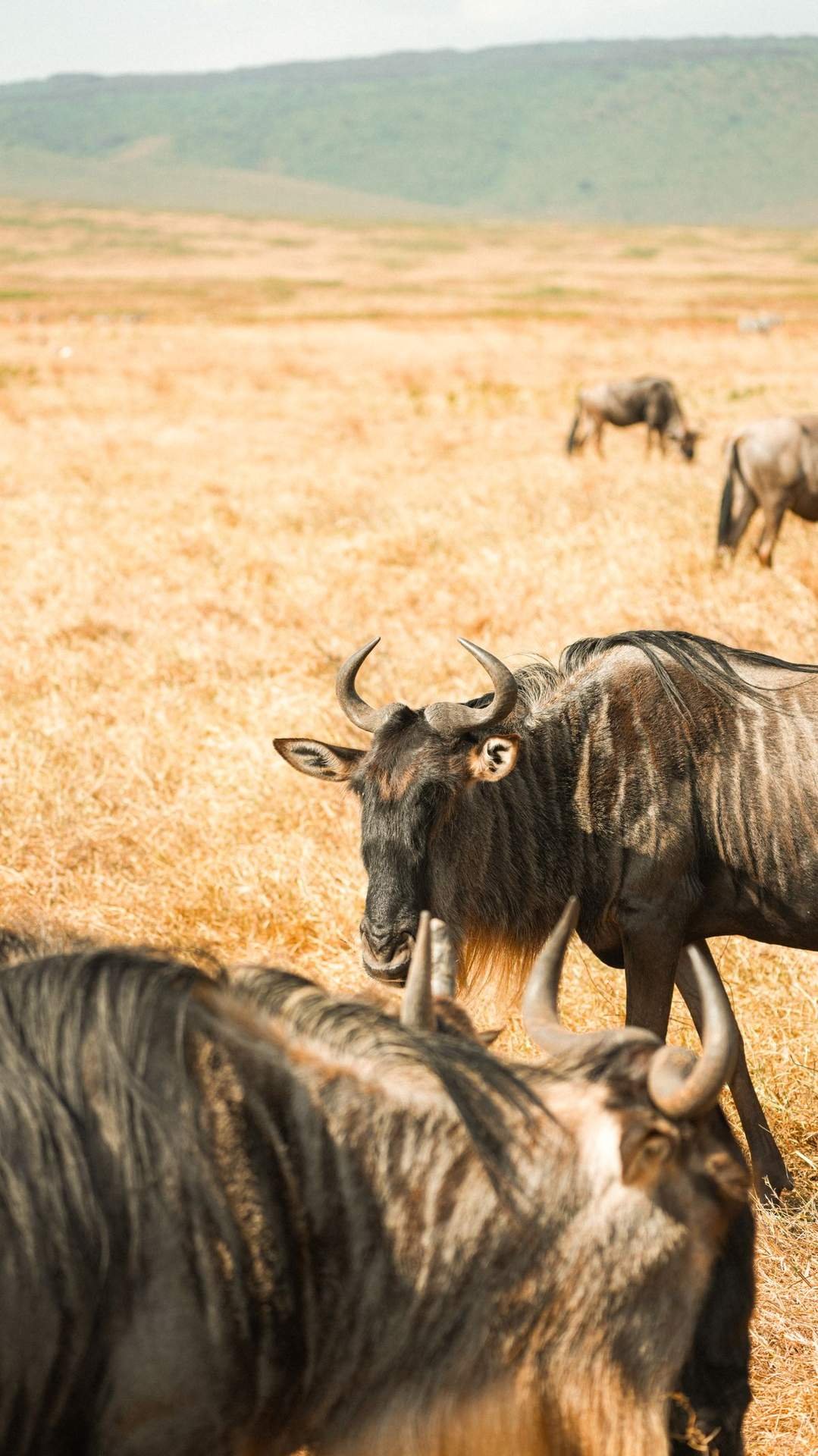
The Great Migration: The Serengeti is home to the largest wildlife spectacle on the planet - the annual movement of approximately 1.5 million wildebeest and 250,000 zebra across the Tanzania-Kenya ecosystem. There is nothing comparable in Kruger or anywhere else in southern Africa. This single factor is the defining reason many travellers choose Tanzania over South Africa.
Winner on rhino and wild dog: Kruger. Winner on migration, cheetah, and sheer wildlife density: Serengeti. Winner on Big Five overall reliability: Even - both deliver, with different strengths.
The Migration: Serengeti’s Exclusive Advantage
No comparison between these two parks is complete without spending time on the migration, because it is simply unlike anything that exists in Kruger.
From December to March, roughly 500,000 wildebeest calves are born on the short-grass plains of the southern Serengeti and Ndutu area. The concentration of predators drawn to the calving - lion, cheetah, leopard, spotted hyena, and wild dog - makes this the most intense predator-prey landscape in Africa. Lion and cheetah hunt in full daylight with no trees to obscure the view.
From July to October, the northern Serengeti and Kenya’s Masai Mara see the Mara River crossings - thousands of wildebeest plunging simultaneously into crocodile-filled water. The Serengeti’s Kogatende sector sees the first crossings from late June to August; the Masai Mara side peaks from August to October.
If witnessing the migration is your primary goal, the Serengeti is the only park on this list that can deliver it.
Winner on migration experience: Serengeti - Kruger has no equivalent.
Cost: Budget and Luxury Ranges
This is where the parks diverge most sharply, and where Kruger’s appeal to budget and mid-range travellers becomes clearest.
Kruger (self-drive, South African National Parks):
- Park entry fee: approximately USD 20 to USD 25 per person per day (ZAR 400–500 as of 2026)
- SANParks rest camp accommodation (Skukuza, Lower Sabie, Satara): approximately USD 80 to USD 150 per chalet for 2 people per night
- Budget total per couple per day (entry + camp + food bought at camp shop): approximately USD 130 to USD 200
- Private game lodge on Kruger’s western boundary (Sabi Sands, Timbavati): USD 600 to USD 1,800 per person per night all-inclusive, with off-road driving and night drives
Serengeti (guided, all-in):
- Park entry fee: approximately USD 70 per person per 24 hours (among Africa’s highest)
- Budget/camping safari (group tour, rooftop tent, shared vehicle): approximately USD 200 to USD 280 per person per day all-inclusive
- Mid-range tented camp (Serengeti Serena, Sopa, Lake Masek): approximately USD 300 to USD 500 per person per night all-inclusive
- Luxury camps (Four Seasons Serengeti, Lemala Kuria Hills, Sayari, Singita): USD 700 to USD 2,500+ per person per night all-inclusive
There is no Serengeti equivalent of a USD 150-per-night self-drive chalet. The minimum spend to spend a night inside the Serengeti - in a basic tented camp - is roughly USD 250 per person. Add internal charter flights (typically USD 300 to USD 700 per person per sector) and the costs mount quickly.
Budget winner: Kruger - significantly and unambiguously. Value for money at luxury tier: Both comparable; Kruger’s Sabi Sands private reserves offer off-road and night drive access that the Serengeti’s national park framework restricts.
🏨 Search Serengeti camps and lodges - Browse hotels in Arusha (Tanzania safari gateway)
Accessibility: Getting There and Getting Around
Serengeti: Fly into Kilimanjaro International Airport (JRO) or Dar es Salaam. Arusha is the safari gateway, 45 minutes from Kilimanjaro. From Arusha, you can road-transfer to the Serengeti (5 to 7 hours via Ngorongoro) or charter a light aircraft to one of multiple Serengeti airstrips (45 minutes to 2 hours depending on destination). All game drives must be conducted by a licensed guide in a registered vehicle - no self-driving.
Logistics inside the Serengeti require planning and usually agency coordination. Moving between the south (Ndutu), centre (Seronera), and north (Kogatende) typically involves domestic charter flights between camps, adding USD 300 to USD 700 per person per sector.
Kruger: Fly into Johannesburg OR Tambo International (JNB), then either:
- Domestic connection to Kruger Mpumalanga International Airport (MQP, ~1 hour) or Hoedspruit Airport (HDS), then hire car to the park, total journey 30 to 90 minutes
- Drive from Johannesburg in 4 to 5 hours via the N4
Inside Kruger, self-driving on paved and gravel roads is straightforward. Fuel, food, and accommodation are available at rest camps throughout the park. No guide or tour operator required for a self-drive safari.
Winner on accessibility and ease of logistics: Kruger - by a wide margin.
Safari Experience: Guided vs Self-Drive
The Serengeti and Kruger offer fundamentally different experiences, not just different parks.
Serengeti - guided immersion: Your guide drives, tracks, and interprets. Knowledgeable naturalist guides bring the landscape to life - identifying birds, reading animal behaviour, knowing where the kills were yesterday. The experience is curated. You are a guest in a wilderness that makes few concessions to independent access.
Kruger - self-drive independence: You control the pace. You choose which roads to take, how long to wait at a sighting, whether to drive to the far north or stay near the Lower Sabie waterhole. There is real satisfaction in spotting a leopard yourself, in the silence of a private car with no other tourists around. For many travellers, this is a deeply personal wildlife encounter.
Kruger’s private reserves on the western boundary (Sabi Sands, Timbavati, Manyeleti) offer guided game drives with off-road access and night drives - experiences the Serengeti’s national park cannot match due to Tanzania’s park regulations prohibiting both. If off-road photography and night drives are important to you, Kruger’s private reserves deliver this at a fraction of the cost of the Masai Mara conservancies that offer equivalent access on the East African side.
Winner for guided immersion and bucket-list feel: Serengeti. Winner for independent travel and off-road/night-drive access: Kruger private reserves.
Best Time to Visit
| Month | Serengeti | Kruger |
|---|---|---|
| January to March | Calving season, southern Serengeti; excellent predators | Hot and wet; lush but dense vegetation - harder sightings |
| April to May | Long rains; low season, discounted rates, quiet | Hot and wet; less productive |
| June | Herd consolidation, northern migration builds; dry | Dry season begins - good sightings start improving |
| July to August | Northern Serengeti crossings; very strong | Dry season peak - waterhole sightings, excellent Big Five |
| September to October | Crossings continue; excellent overall | Peak dry season - the best month in Kruger overall |
| November | Return migration southward; green season begins | Rains return; still reasonable but vegetation thickens |
| December | Southern Serengeti herds building; calving imminent | Summer; hot and wet, lush; good for birding |
Best single month for Serengeti: December to February (calving season) or July to August (crossings). Best single month for Kruger: August to October (dry season peak; waterholes, dense wildlife, clear sightlines).
Who Each Park Is Best For
Choose the Serengeti if:
- You want to witness the Great Migration - calving or river crossings
- This is your first major Africa safari and you want a classic, guided East Africa experience
- Photography is a priority and you want trained guides who know the animals
- You are happy with a higher budget in exchange for a more immersive wilderness feel
- You are combining Tanzania with Zanzibar (easy to do; 45-minute flight)
Choose Kruger if:
- Budget is a significant factor - self-drive Kruger is Africa’s most accessible major safari
- You value independence and the satisfaction of finding wildlife yourself
- You want a reliable rhino sighting or a serious chance at wild dog
- You are travelling as a family with children who would benefit from the flexibility of a hire car
- You are combining a safari with Cape Town (easy to do; Johannesburg to Cape Town is a 2-hour flight)
- Night drives and off-road access matter to you (available at Kruger’s adjacent private reserves)
The Verdict
The Serengeti is the more awe-inspiring experience. The Great Migration, the vast scale of the plains, the intensity of the calving season predator-prey dynamics - these are things that exist nowhere else on the planet. If Tanzania is within your budget and the migration is the draw, the Serengeti is not just better than Kruger; it is in a different category.
Kruger is the more practical and accessible safari. The self-drive model, the affordability, and the strong Big Five offer make it the best entry point to African wildlife travel for budget-conscious travellers, families, and independent travellers who want wildlife encounters on their own terms.
For most travellers visiting Africa for the first time with a budget under USD 300 per person per day: Kruger. For most travellers who can stretch to USD 400 per person per day or more and want to see the migration: Serengeti. For travellers who want both experiences: two to three weeks covers both with an internal flight connection via Johannesburg.
Related guides: Serengeti National Park — Kenya vs Tanzania safari — Serengeti vs Masai Mara — Tanzania safari packages