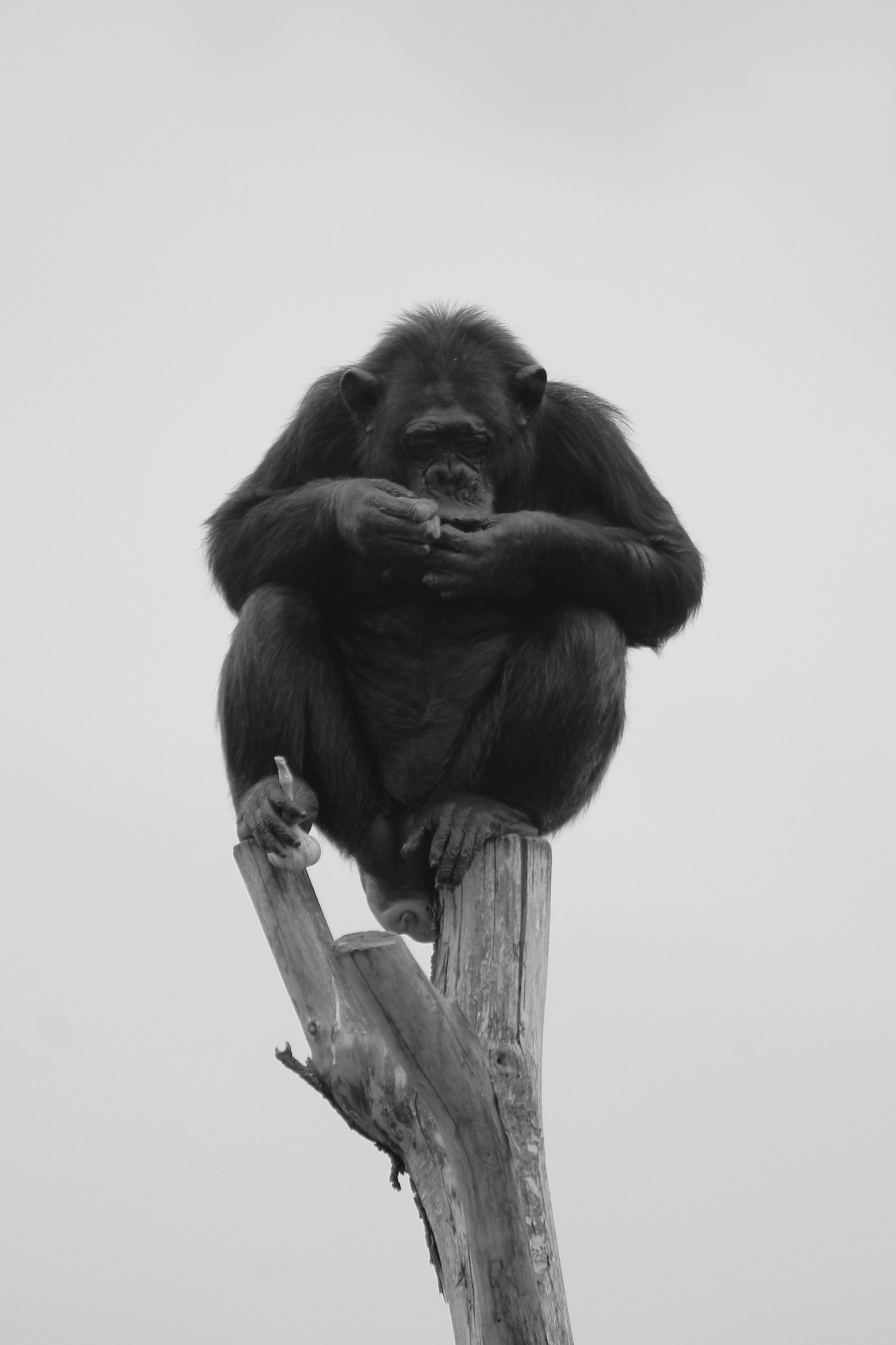
Mahale Mountains National Park occupies a narrow strip of western Tanzania on the eastern shore of Lake Tanganyika, one of the world’s deepest and oldest lakes. The park protects a population of over 800 chimpanzees in montane rainforest that drops steeply to the lakeshore. Several communities have been habituated to human presence over decades of research, beginning with Japanese primatologist Toshisada Nishida and his Kyoto University team in the 1960s.
The result is one of the most extraordinary wildlife encounters available anywhere: a small group of visitors sitting quietly on the forest floor while a habituated chimpanzee community goes about its morning - infants nursing, adolescents chasing each other through the canopy, an alpha male’s slow territorial patrol. All of this against the backdrop of a lake so large it has its own weather systems.
Chimp trekking permits cost USD 100 per person per visit as of 2026. Groups are capped at four people per community, per visit - a fraction of the permit volumes at Bwindi in Uganda or even nearby Gombe.
The Chimpanzees
The M-group community at Mahale has been studied continuously since the 1960s and is one of the most well-documented chimpanzee populations in the world. Habituation is complete: the animals do not regard human observers as a threat, and they move, forage, and interact normally during the one-hour viewing window.
The research record here is substantive. Observations at Mahale produced some of the first documentation of chimpanzee tool use, social bonding, and inter-community conflict. The park’s scientific significance is matched by the experience on the ground - you are watching animals whose individual life histories span decades of detailed study.
Trek times vary by season. In the dry months (June–October), chimps descend to lower forest and tracking times average 2–3 hours from camp. In the wet season, they range higher and treks can take 4–6 hours of steep climbing. Most visitors who come specifically for chimps should target the dry season.
For a full guide to trekking logistics, group sizes, and what to expect on the trail, see our Mahale chimpanzee trekking guide.
Lake Tanganyika
Tanganyika is the world’s second-deepest lake, reaching 1,470 metres at its maximum depth. It contains approximately 16% of the world’s available surface freshwater and is home to over 350 species of cichlid fish, most of them found nowhere else on earth. At the surface it reads as a brilliant turquoise expanse, calm on most mornings, with the mountains of the Democratic Republic of Congo visible across the water.
The water at Mahale is safe for swimming and snorkelling. The clarity in the shallows is exceptional - visibility to 10–15 metres on a good day. Cichlids in vivid blues, yellows, and reds are visible at shallow depths from the shore. Camps provide snorkelling equipment; kayaks are available at Greystoke Mahale for exploring the coastline. Sunset from a kayak on Tanganyika, with the forest behind you and the mountains on the far shore in the last light, is a reliable highlight of any visit.
Getting There
Mahale has no road access. The only practical option for most visitors is a light aircraft.
From Dar es Salaam: Charter or scheduled flights from Julius Nyerere International Airport to Mahale airstrip take approximately 2.5 hours. Coastal Aviation operates seasonal services; charter prices depend on group size and aircraft type. Expect to pay USD 600–900 per person one-way on a small shared charter. Book well in advance for peak season.
From Kigoma: The nearest town is Kigoma, accessible by a 90-minute flight from Dar. A charter from Kigoma to Mahale takes approximately 20–30 minutes, which reduces one-way flight time and cost if you are building an itinerary that includes Kigoma. A local government ferry connects Kigoma to the Mahale area but runs infrequently and is not practical for time-limited visitors.
Combining parks: The standard combination is Mahale and Katavi National Park, connected by a short light aircraft hop (approximately 30 minutes). Katavi adds a bush game experience - hippo pools, predators, open floodplains - that contrasts sharply with Mahale’s forest trekking and lakeside setting. Many operators build a four- to six-night western circuit: two nights Mahale, two nights Katavi, return via Dar.
When to Visit
June to October: The dry season and the standard visitor window. Chimpanzee tracking is most reliable, treks are shorter, and the lakeshore weather is stable. Camps are open and fully staffed during this period. July and August are peak months.
November to May: Most camps close in November as the rains arrive, and they do not reopen until June. Visiting outside the dry window requires advance confirmation that your chosen camp is operational. The forest in the wet season is spectacular - dense, green, and full of birds - but logistics are more complicated and trekking is considerably more physically demanding.
Where to Stay
Accommodation at Mahale is limited to two established camps. The park’s remote location and the restriction on visitor numbers mean this will always be a small-inventory destination.
Greystoke Mahale (Nomad Tanzania): The defining Mahale experience. Six open-fronted tents on the lakeshore, built around enormous fig trees. No electricity beyond solar; no vehicles (all movement on foot or by boat). The guiding team has worked here for many years and knows individual chimpanzees by face. Every stay includes guided treks, lake activities, and forest walks. Rates from approximately USD 1,400–1,600 per person per night all-inclusive in peak season. It is consistently ranked among the top ten safari camps in Africa by operators who cover the continent seriously.
Kungwe Beach Lodge: A more accessible price point on the same stretch of lakeshore, with eight tents and a slightly more structured programme. Good chimp-trekking access and a reliable option for visitors who want Mahale’s core experience at lower cost. Rates from approximately USD 600–800 per person per night all-inclusive. Check availability early - capacity is small and the lodge fills quickly in July and August.
All rates are indicative for 2026 peak season. Contact the camps or a specialist Tanzania operator for current pricing.
Planning a Visit
Minimum stay: Two nights is workable; three is better. The first trek can take longer than expected depending on where the chimps ranged overnight. A third night gives you a second or third trek and time to recover and enjoy the lake.
What to bring: Lightweight long trousers and long sleeves for trekking (vegetation is dense and can scratch), waterproof boots, a rain jacket even in dry season (the forest generates its own moisture), and a telephoto lens. Bags must be left at camp - nothing goes into the forest that might interest a chimpanzee.
Budget: Three-night all-inclusive packages from Dar, including flights, accommodation, park fees, and trekking permits, typically run USD 5,000–8,000 per person depending on camp. This reflects both the remoteness of Mahale and the small accommodation inventory. See our Tanzania safari costs guide for context on how Mahale compares to other Tanzania safari pricing.
For wildlife detail beyond the chimps - forest birds, colobus, other primates present in the park - see our Mahale wildlife guide.