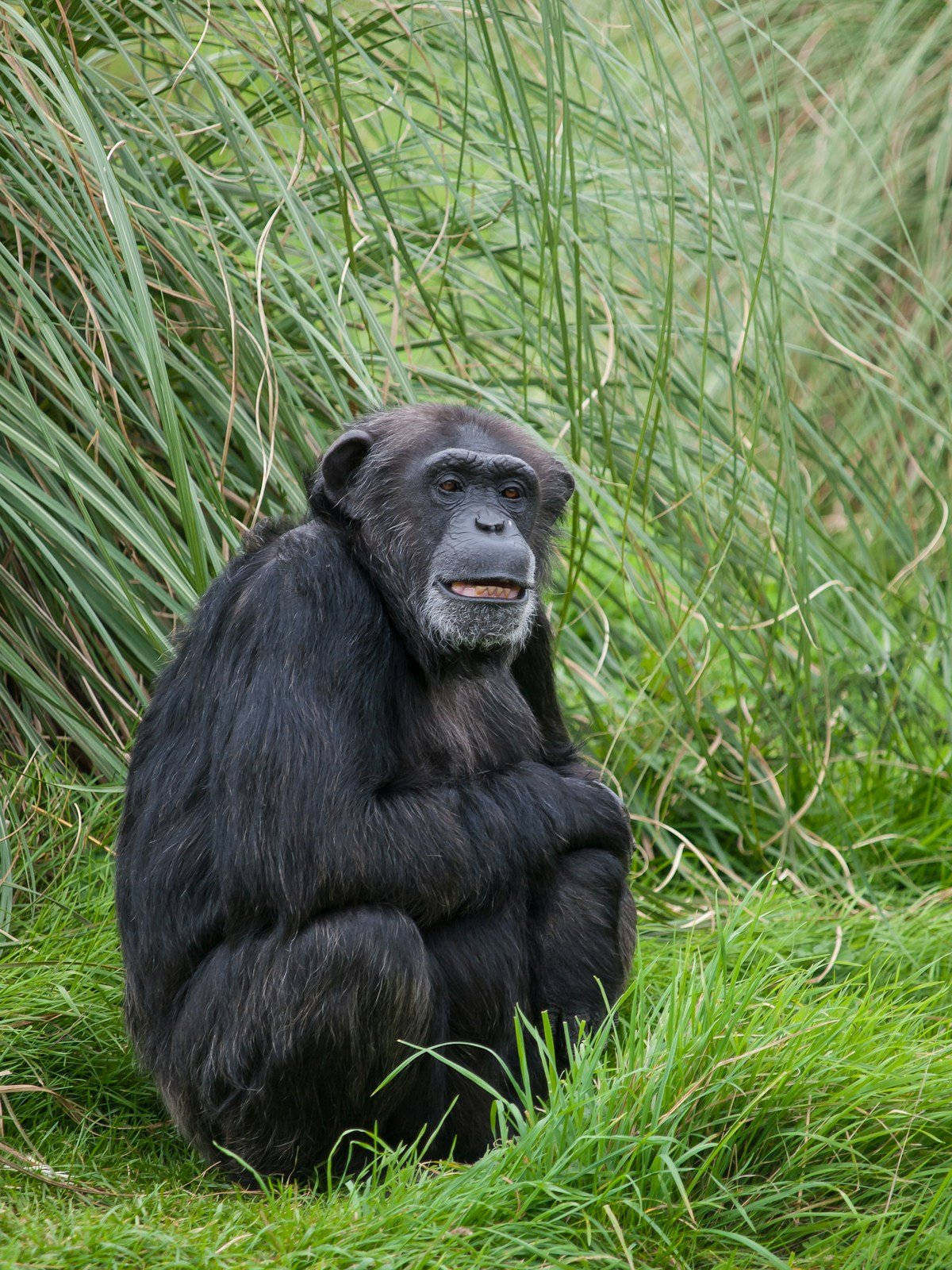
Tanzania has two of Africa’s finest chimpanzee-tracking destinations - Gombe Stream and Mahale Mountains. Both are genuinely remote, genuinely wild, and genuinely different from each other. Neither appears on most Tanzania itineraries because they are hard to reach and expensive to visit. That remoteness is precisely their appeal: you share a forest with habituated chimpanzees and almost no one else.
Gombe Stream National Park
Gombe is one of the smallest national parks in Africa - just 52 square kilometres of steep, forested hills above Lake Tanganyika - and it is where Jane Goodall began her landmark 60-year study of wild chimpanzees in 1960. The research station still operates. Around 150 chimpanzees live in several communities across the park.
Getting to Gombe
There is no road to Gombe. You reach the park by boat from Kigoma, a town in western Tanzania on the shore of Lake Tanganyika. Kigoma is connected to Dar es Salaam and Arusha by air (approximately 2 hours, with connections). The lake crossing by motorboat takes roughly 2 hours from Kigoma.
Options from Kigoma:
- Local water taxi (dalla dalla boat): approximately TZS 15,000–20,000 per person (as of 2026) - shared journey, slow, no fixed schedule
- Speedboat charter from Kigoma: approximately USD 100–150 for the boat (2–6 people)
- Lodge-organised transfers: included with some Gombe lodge packages
Permits and Fees (as of 2026)
- Park entry fee: USD 100 per person per day (non-residents)
- Chimpanzee tracking permit: USD 100 per person per hour (maximum 1 hour in the chimp community)
- Research station visit: included
- Video permit: USD 50 additional
Most visitors spend two nights at Gombe - enough for two tracking sessions and a visit to the beach on Lake Tanganyika.
Where to Stay at Gombe
Search hotels in Kigoma on Booking.com
Gombe Forest Lodge - The main lodge option, with 10 bandas (stone cottages) set among fig trees near the lake shore. Rates from approximately USD 350–450 per person per night, full board and including boat transfer from Kigoma. The location is directly adjacent to the forest and walking trails.
TANAPA guesthouses - Budget accommodation run by Tanzania National Parks, with basic self-catering facilities. Rates from approximately USD 50–80 per person per night. Bring food from Kigoma.
Camping - Possible with TANAPA permission, basic facilities. Approximately USD 30 per person per night plus park fees.
What to Expect Tracking at Gombe
Habituated chimpanzees at Gombe are accustomed to human presence from decades of research - they will often approach to within a few metres. Groups are found by trackers who radio their location each morning. Walking into the steep forest typically takes 30–90 minutes before contact.
Once with the community, you spend a maximum of 1 hour observing. Common behaviours include grooming, foraging, male displays and - if you’re lucky - tool use (chimps at Gombe were the first wild population ever documented using tools). Permit numbers are limited to 4–6 visitors per chimp group per session.
The steep terrain is challenging - some paths are genuinely vertical on loose soil. Walking poles help considerably.
Mahale Mountains National Park
Mahale is deeper wilderness than Gombe - further south along Lake Tanganyika, harder to reach, with no roads, no vehicles, no electricity grid, and one of the finest luxury camps in Tanzania. The park holds around 800–1,000 chimpanzees across several communities, of which one large community of approximately 60 individuals is fully habituated and tracked daily.
Getting to Mahale
Mahale is approximately 120 kilometres south of Kigoma. You reach it by:
Small charter aircraft - Fly from Arusha, Dar es Salaam or Kigoma to Mahale’s grass airstrip (weather permitting). Flight time from Kigoma approximately 35 minutes, from Dar approximately 2.5 hours with connections. This is the most common approach for lodge guests. Charter costs vary; most lodge packages include the Kigoma–Mahale leg.
Lake boat - A seasonal ferry (MV Liemba) runs south from Kigoma, taking approximately 8–12 hours to reach Mahale. Comfortable overnight cabin berths are available. This is an adventure in itself and works well for travellers who want to experience Lake Tanganyika properly.
Permits and Fees at Mahale (as of 2026)
- Park entry fee: USD 100 per person per day
- Chimpanzee tracking permit: USD 150 per person per session
- Maximum group size: 6 visitors per habituated group per session
- Age minimum: 12 years (Gombe is also 12 minimum)
Where to Stay at Mahale
Greystoke Mahale - The defining camp, with eight large bandas on a beach of white sand backed by forest. Rates from approximately USD 1,200–1,400 per person per night, fully inclusive including local flights from Kigoma. Limited to a maximum of 16 guests, which means the chimp community often has no more than 6–8 visitors on a given day. The camp’s dhow sailing on the lake and snorkelling in Lake Tanganyika’s clear water add considerable value.
Chimpanzee Forest Guesthouse - A more affordable option with basic accommodation and self-catering. Rates from approximately USD 80–120 per person per night, exclusive of park fees. Bring food and supplies from Kigoma.
Mahale Chimpanzee Tracking Experience
The chimps at Mahale are tracked on foot, moving through genuinely steep forest - elevation changes of 300–500 metres in a single session are typical. Searches can last from 30 minutes to four or more hours depending on where the community has moved. Once located, time with the group is again capped at 1 hour.
Mahale’s forest is denser than Gombe’s, which makes photography harder but the experience more immersive. The absence of any roads or vehicles means the park is completely silent. You wade streams, push through undergrowth and suddenly find yourself five metres from a resting female and her infant - which remains one of the most disarming wildlife encounters available anywhere.
Gombe vs Mahale: Which to Choose?
| Factor | Gombe | Mahale |
|---|---|---|
| Accessibility | Easier - 2hr boat from Kigoma | Harder - flight or 12hr lake boat |
| Accommodation quality | Budget to mid-range | Mid-range to ultra-luxury |
| Terrain | Steep but manageable | Steep and demanding |
| Chimp population | ~150 (research station present) | ~1,000 (one habituated group) |
| Price level | Lower | Higher |
| Lake beach | Limited | Excellent white-sand beach |
| Other wildlife | Red colobus, baboon, birdlife | Same, plus hippo, buffalo |
Both parks can be combined on a western Tanzania loop with Katavi National Park, a remote, rarely-visited park known for massive buffalo herds and dense hippo concentrations during the dry season.
Best Season for Chimpanzee Tracking
Both parks can be visited year-round, but tracking is easier in the dry season (June–October) when forest paths are less muddy and chimps spend more time in lower-elevation fruit trees.
The rains (March–May) make paths slippery and access more difficult, but park fees and lodge rates are lower, and the forest is dramatically lush.
Practical Tips
- Book permits at least 3 months ahead for peak season. Greystoke Mahale books out 9–12 months in advance for June–October.
- Bring dull-coloured clothing - chimps are not spooked by humans but bright colours are unnecessary. Long sleeves protect against scratches and insects.
- Walking fitness matters - this is not flat ground walking. A reasonable level of cardiovascular fitness makes the difference between enjoyment and suffering.
- Malaria prophylaxis is essential - Lake Tanganyika’s shores are highly endemic. Consult a travel health clinic before departure.
- Do not visit if you have a respiratory illness - chimpanzees are highly susceptible to human colds and flu. This is seriously enforced at both parks.
- Photography inside the forest is difficult - fast lenses (f/2.8 or wider) are important given low light under canopy.
Both parks are remote and require medical evacuation insurance - travel insurance for Tanzania covering repatriation and evacuation is essential for western Tanzania travel. For Tanzania wildlife experiences to combine with a western circuit trip, Tanzania tours covers operators who run Katavi–Mahale–Gombe combinations. Keep data access on the road with an eSIM for Tanzania, which works in Kigoma and Dar es Salaam even when local SIM availability is limited.