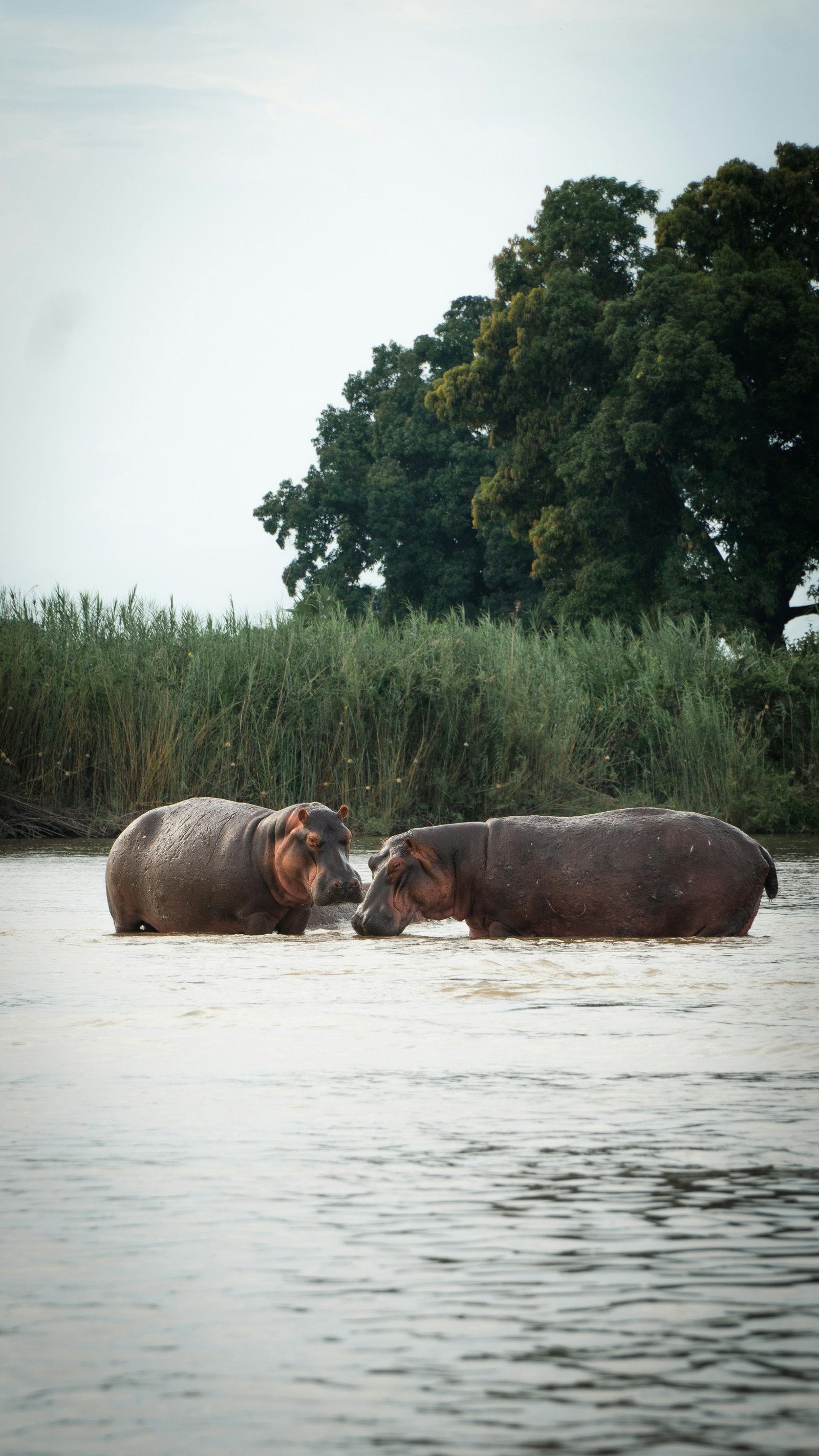
Katavi National Park is Tanzania’s great secret. At 4,471 square kilometres, it is the country’s third largest national park — yet fewer visitors pass through its gate in a month than cross through Serengeti’s Seronera entrance in a single morning. No other park in Tanzania offers comparable wildlife density with such complete solitude.
The park’s remoteness in Tanzania’s far west is both its defining characteristic and its main barrier: getting here requires either a budget-busting bush charter or a grinding 10+ hour overland drive from Dar es Salaam. Those who make the journey find a park that feels frozen in an earlier era of African wildlife — the era before queue-at-crossing game drives and trophy-photo Instagram stops. At Katavi, the wildlife is the entire context.
The Hippo Spectacle
Nothing prepares first-time visitors for the Katuma River in August. As the dry season advances and water levels drop, Tanzania’s hippopotamus population concentrates into the Katuma’s remaining pools with extraordinary density. Pods of 200, 300, even 400 individuals have been documented — a writhing, bellowing mass of pink and grey that fills shallow pools bank-to-bank. The noise carries a kilometre. The smell carries further.
This concentration effect is unique to Katavi among Tanzania’s parks. In the Serengeti, hippos are seen in water sources but rarely in numbers exceeding 20–30 per pool. The Katuma’s geography — a long, slow-flowing river that shrinks dramatically from November through to October — creates a bottleneck that forces the park’s hippo population (estimated at 4,000+) into an ever-smaller number of viable pools.
The result is Africa’s finest hippo viewing by a considerable margin.
Alongside the hippos, the pools attract enormous crocodile populations. In early morning, crocodiles line the sandbanks in their hundreds, basking before retreating to the water. A single pool in August might contain 30+ crocodiles and 300+ hippos simultaneously.
Lions and Large Predators
Katavi’s lions have a reputation across Tanzania’s safari community for unusual boldness. In parks with high visitor pressure, lions learn to ignore vehicles quickly. At Katavi, vehicle encounters are infrequent enough that lions maintain alert, curious behaviour — they assess the vehicle, sometimes approach it, occasionally use it for shade. For wildlife photographers, this translates into frame-filling eye-contact and genuinely behavioural shots that are difficult to replicate in busier parks.
The park holds multiple lion prides centred on the Katuma and Katisunga floodplains. In the dry season when buffalo herds of 1,000+ concentrate on the residual grassland, lion activity peaks — large pride hunts are occasionally witnessed. The park also supports a healthy leopard population (difficult to see but present) and one of Tanzania’s more reliable wild dog populations. The Katavi wild dog packs cover enormous home ranges across the western miombo woodland, making sightings unpredictable but possible.
Beyond the Floodplains
The Katisunga and Chada floodplains dominate most itineraries, but Katavi extends well beyond the river systems. The surrounding miombo woodland (a type of dry deciduous forest found in southern and western Tanzania) holds different species from the open plains: sable antelope, roan antelope, puku, and Defassa waterbuck move through these areas alongside elephant and giraffe. Walking safaris in the woodland fringe — where vehicle access is impossible — provide a completely different perspective on the park.
Fishing for tigerfish on the Katuma (where permitted by the guide) is an unusual add-on available through some camps.
Getting There
By air: The most practical option. Coastal Aviation operates scheduled flights from Dar es Salaam via Mpanda to Katavi airstrip. Flight time is approximately 2.5–3 hours including the Mpanda stop. Fares run from approximately USD 350–500 one-way as of 2026; prices fluctuate seasonally. Safari Air Link operates similar routes. Book directly with operators or through your safari company.
Charter flights from Dar es Salaam to Katavi direct cost approximately USD 900–1,400 for a small charter (3–4 seats). From Arusha or Ruaha, charter routes are available. Most luxury camps arrange charter packages bundled with accommodation.
Overland from Dar es Salaam: The drive is approximately 10–12 hours in a suitable 4WD via Dodoma, Singida, and Mbeya. Roads include long sections of unpaved track. Not recommended during the wet season. Fuel availability between Mbeya and Katavi is unreliable — carry extra.
Where to Stay
Katavi has very limited accommodation, which contributes to the low visitor density.
Chada Katavi (managed by Nomad Tanzania) is one of Tanzania’s finest remote bush camps — canvas-floored tents under giant shade trees within walking distance of a Katuma pool. Open July–October only. Rates from approximately USD 700–900 per person per night, all-inclusive (meals, game drives, walking safaris). The camp’s guiding standard is exceptionally high.
Katavi Wildlife Camp (Foxes African Safaris) offers a more accessible price point from approximately USD 350–500 per person per night, with knowledgeable resident guides and a strong track record for hippo-pool game drives.
Katavi National Park public campsites offer basic camping (bring all equipment) at approximately USD 30–50 per night plus park fees. Self-sufficient overland travellers use these, but facilities are minimal.
Park Fees and Costs
TANAPA park fees as of 2026 (subject to change — verify before travel):
- Park entry: approximately USD 45 per person per day
- Vehicle fee: approximately USD 40 per vehicle per entry
For a 3-night / 4-day stay, park fees alone total approximately USD 540 per person. Budget accordingly when comparing Katavi to other Tanzania parks — the higher total cost reflects the park’s large size and low visitor infrastructure.
A typical Katavi safari (3 nights at a mid-range camp, flights from Dar es Salaam, all game drives included) comes to approximately USD 2,000–3,000 per person total. Luxury camps push this to USD 3,500–5,500 per person. The price is high by global standards, but the experience — an African national park with genuinely no crowds — is increasingly difficult to find. For multi-park Tanzania itineraries that include Katavi alongside the northern circuit, GetYourGuide’s Tanzania safari listings include fly-in packages for planning reference.
Best Season Summary
| Period | Conditions | Wildlife |
|---|---|---|
| July–October | Dry, roads accessible | Peak — hippo concentrations, bold lions, large buffalo herds |
| November–December | Short rains begin | Transitional — roads may soften, animals disperse |
| January–March | Green season | Migratory birds arrive; birdwatching exceptional; hippo viewing reduced |
| April–June | Long rains | Roads impassable; most camps closed |
The park is typically open from July to November for the majority of its permanent camps. Visit before mid-October for the best hippo-pool spectacle; the period from late October onwards sees rains begin to refill the river.