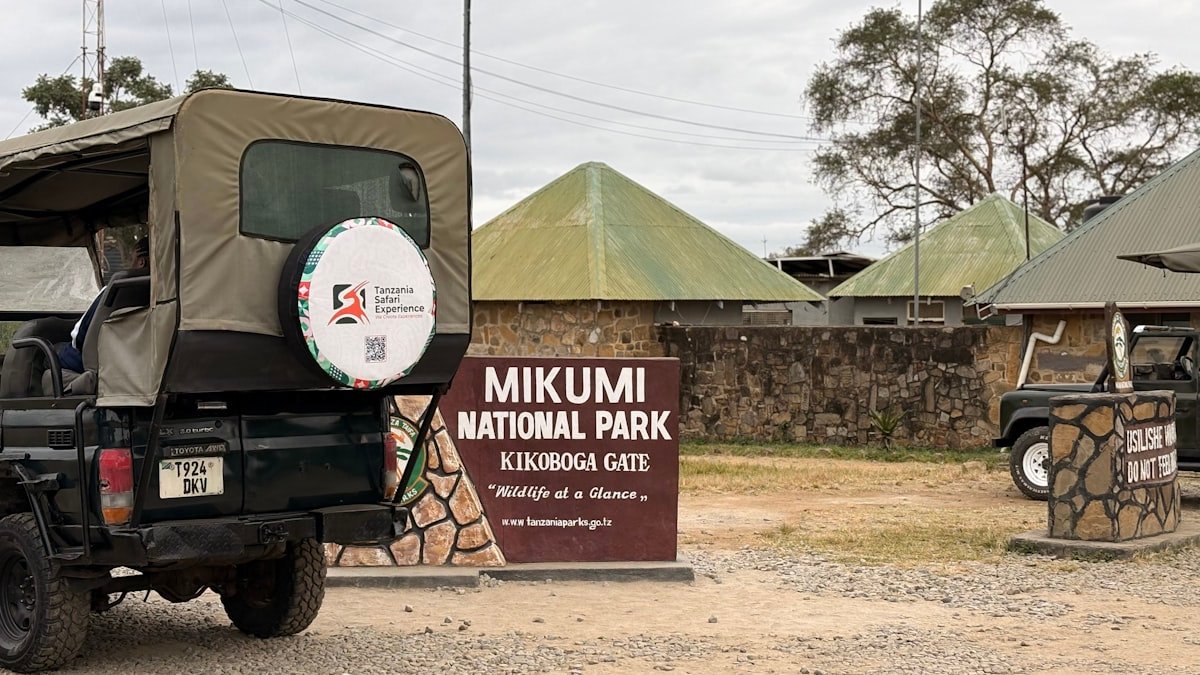
Mikumi National Park is the fourth-largest national park in Tanzania and one of the most underused. It sits 283 kilometres southwest of Dar es Salaam on the A7 highway — a paved road all the way, no bush-track logistics, no light aircraft required. You can be watching a lion from a game drive vehicle three hours after leaving your Dar hotel.
That accessibility is Mikumi’s defining quality. The northern circuit parks — Serengeti, Ngorongoro, Tarangire — demand a flight to Arusha, lodge bookings months in advance, and budgets that rule out most independent travellers. Mikumi doesn’t. A 2-night safari here, including accommodation, game drives, and park fees, can be arranged for under USD 300 per person.
What you get in return is genuine bush: open floodplains called the Mkata Plain, where lion prides hunt zebra and wildebeest with no other vehicles present, and hippo pools where the resident pods number in the dozens.
The Wildlife
Mikumi sits at the northern edge of the Selous–Mikumi ecosystem, one of the largest protected wildlife areas in Africa. Animals move freely between Mikumi and Nyerere National Park (the renamed Selous Game Reserve) to the south, which means the wildlife base is far larger than the park’s 3,230 square kilometres suggest.
Lions: Mikumi has one of the healthiest lion populations in Tanzania’s southern parks. Prides regularly work the Mkata Plain, and lion sightings are consistent year-round — not just in peak season. Early mornings in the first hour after gate opening frequently yield lion on or near kills.
Elephants: Large herds move through Mikumi seasonally, particularly congregating around the Mkata River and the floodplain pools in the dry season (June–October). Groups of 20–40 animals are routine. Bulls are resident year-round.
Buffalo: Buffalo are extremely common in Mikumi — large herds of 100–200 animals are seen regularly on the open plain. Old dagga boys (solitary bulls) are found resting in mud wallows near the hippo pools.
Zebra and wildebeest: The Mkata Plain supports large concentrations of common zebra and blue wildebeest. These migratory herds thin out in the wet season but are present year-round in the core grassland areas.
Hippos: The Mkata Hippo Pool is Mikumi’s most photographed spot — a permanent pool where resident hippos, crocodiles, and waterbirds occupy the same stretch of water. The pool is accessible on most game drive routes and visible from the road in some sections.
Giraffe: Mikumi’s Maasai giraffe are numerous and photogenic — the mixed acacia-grassland landscape suits them well, and they are easy to spot from a distance.
Leopard: Present in the park but elusive. Rocky outcrops and dense riverine vegetation along the Mkata River are the most likely areas. Multiple nights significantly improve the odds.
African wild dogs: Occasional rather than regular. Wild dog packs from the Nyerere ecosystem sometimes range north into Mikumi, particularly in the dry season. Sightings are not something to plan around, but they happen.
Birds: Over 400 species recorded, including the lilac-breasted roller, southern ground hornbill, martial eagle, bateleur, and a full complement of East African savannah species. The Mkata Plain is one of the better birding locations in southern Tanzania.
Big Five Odds at a Glance
| Species | Likelihood in Mikumi | Notes |
|---|---|---|
| Lion | High | Regular year-round sightings on Mkata Plain |
| Elephant | High | Herds present year-round; large aggregations in dry season |
| Buffalo | Very high | Large herds on the open plain |
| Leopard | Low | Present; requires luck and multiple game drives |
| Rhino | None | Not resident — Ngorongoro for black rhino |
Best Time to Visit
June–October (dry season): The recommended window. Vegetation is low, animals concentrate around permanent water, and tracks are firm. Lion sightings on the Mkata Plain are at their most consistent. Temperatures sit around 20–28°C — warm but manageable.
November and February–March (shoulder): The short rains (November–December) and long rains (March–May) thin crowds to almost nothing. The landscape greens up dramatically, bird numbers spike, and newborn calves attract predator attention. Tracks can become difficult in heavy rain — check conditions before visiting.
December–January: Mikumi receives visitors even through the wet season, unlike some remote southern parks that close entirely. Roads within the park are generally passable outside peak rainfall weeks.
April–May: The core long-rains period. Some camps reduce operations. Visitor numbers drop to their lowest point of the year, which has its own appeal — the park is as quiet as it ever gets.
Getting There from Dar es Salaam
By road (standard): Take the A7 (Morogoro–Iringa highway) from Dar es Salaam. The park’s Kikoboga Gate is approximately 283 km from the city. Drive time is 3–4 hours depending on traffic leaving Dar. The road is entirely tarmac — no 4WD required to reach the gate. Inside the park, a 4WD or high-clearance vehicle is recommended during and after the rains.
Public bus: Buses from Ubungo bus terminal in Dar run regularly to Morogoro and Iringa, passing through the town of Mikumi adjacent to the park gate. Journey time from Dar to Mikumi town is approximately 3.5–4 hours. Arrange park transport with your lodge in advance — you cannot enter the park without a vehicle registered for wildlife viewing.
Organised day trip from Dar: Multiple Dar-based operators run day trips, typically leaving at 5:30–6am and returning by 8–9pm. This is viable but exhausting. Recommend only if your Dar schedule genuinely can’t accommodate an overnight.
From Zanzibar: Take the ferry or a short flight to Dar es Salaam, then drive the A7. Zanzibar–Mikumi in a day is doable — ferry at 7am, in the park by early afternoon.
Park Entry Fees (as of 2026)
| Category | Fee |
|---|---|
| Non-resident adults | USD 45 per person per day |
| Non-resident children (5–15) | USD 10 per person per day |
| Resident adults | TZS 10,000 per day |
| Vehicle fee | Approximately USD 40–50 |
Fees are paid through the TAZAMA online payment system managed by Tanzania National Parks (TANAPA). Arrange payment before arrival — card payments at the gate are available but sometimes slow. Always verify current rates at tanzaniaparks.go.tz as fees are subject to annual revision.
Tour Operators and Prices
Several Dar es Salaam-based operators specialise in Mikumi day trips and overnight packages:
Coastal Travels — One of Tanzania’s most established operators, running Mikumi itineraries from approximately USD 350–500 per person for a 2-night package (inclusive of accommodation, game drives, and park fees). Full-service, reliable guides.
Easy Travel Tanzania — Mid-market operator with consistent Mikumi departures, particularly popular for weekend safari packages. 2-night rates from approximately USD 280–420 per person depending on accommodation tier.
Nomad Tanzania — Premium operator with strong conservation credentials. Runs guided Mikumi packages from approximately USD 500–700 per person for 2 nights, including private vehicle use.
Tanzania Safari Experience — Smaller operator known for small-group departures (max 6 per vehicle). 2-night Mikumi packages from approximately USD 300–450 per person. Good reputation for guiding quality.
For independent budget travellers, booking a banda (self-catering accommodation) at the TANAPA rest camp and hiring a local guide at the gate is the most economical option — total costs can come in under USD 150 per person for 2 nights including fees.
All prices listed are approximate as of 2026 and subject to change. Always request written quotes from operators.
Where to Stay
Budget
Search hotels in Morogoro on Booking.com
TANAPA Bandas (inside the park): Tanzania National Parks operates basic self-catering bandas within Mikumi. Rates from approximately USD 40–60 per person per night. Bring your own food and cooking supplies. Basic ablutions. The location — inside the park, with wildlife walking past at night — is genuinely excellent for the price.
Mikumi Wildlife Camp: Located just outside the park boundary. Comfortable tented accommodation with meals included. Rates from approximately USD 90–150 per person per night. Good base for budget-conscious travellers who want meals provided.
Mid-Range
Stanley’s Kopje Lodge: Perched on a kopje (rocky outcrop) overlooking the Mkata Plain, Stanley’s has well-appointed cottages with veranda views across the grassland. Rates from approximately USD 220–350 per person per night, inclusive of meals and one game drive. The views are exceptional — lions on the plain visible from the lodge.
Vuma Hills Tented Camp: A well-regarded camp in the hills adjacent to the park, with mountain views and cooler temperatures than the floodplain camps. Rates from approximately USD 250–400 per person per night, fully inclusive. Stronger focus on guiding quality than many mid-range options at Mikumi.
Luxury
Angalia Tented Camp: One of the most respected options in the Mikumi area. Intimate camp (6–8 tents), strong guiding team, excellent food. Rates from approximately USD 450–600 per person per night, fully inclusive. Often sold out in peak season months in advance.
Mikumi vs the Serengeti
Mikumi is not trying to be the Serengeti. The migration doesn’t come through, the lion numbers are lower per hectare, and the accommodation options top out well below the ultra-luxury tier of northern circuit lodges.
What Mikumi offers instead:
- Accessibility: 3 hours from Dar es Salaam vs. flying to Arusha and a further drive or flight to the Serengeti. No internal flights needed.
- Price: Non-resident park fees of USD 45/day vs. USD 82/day in the Serengeti. Camp rates are substantially lower at every tier.
- Crowds: Even in peak season, Mikumi is quiet. Two vehicles at a lion kill is unusual. Two hundred is a Serengeti reality.
- Flexibility: Day trips are possible from Dar. Zanzibar travellers can add a 2-night Mikumi leg without flying back through Arusha.
For first-time Tanzania safari visitors on a schedule based in Dar — or budget-conscious travellers who can’t justify northern circuit costs — Mikumi closes the gap significantly.
Frequently Asked Questions
Browse Tanzania safari tours for operators running Mikumi packages and multi-park circuits through the south. For independent travellers driving from Dar, car hire in Tanzania covers 4WD hire options suitable for the park. Given Mikumi’s distance from any major hospital, travel insurance for Tanzania with medical evacuation cover is strongly recommended before any safari in the region.