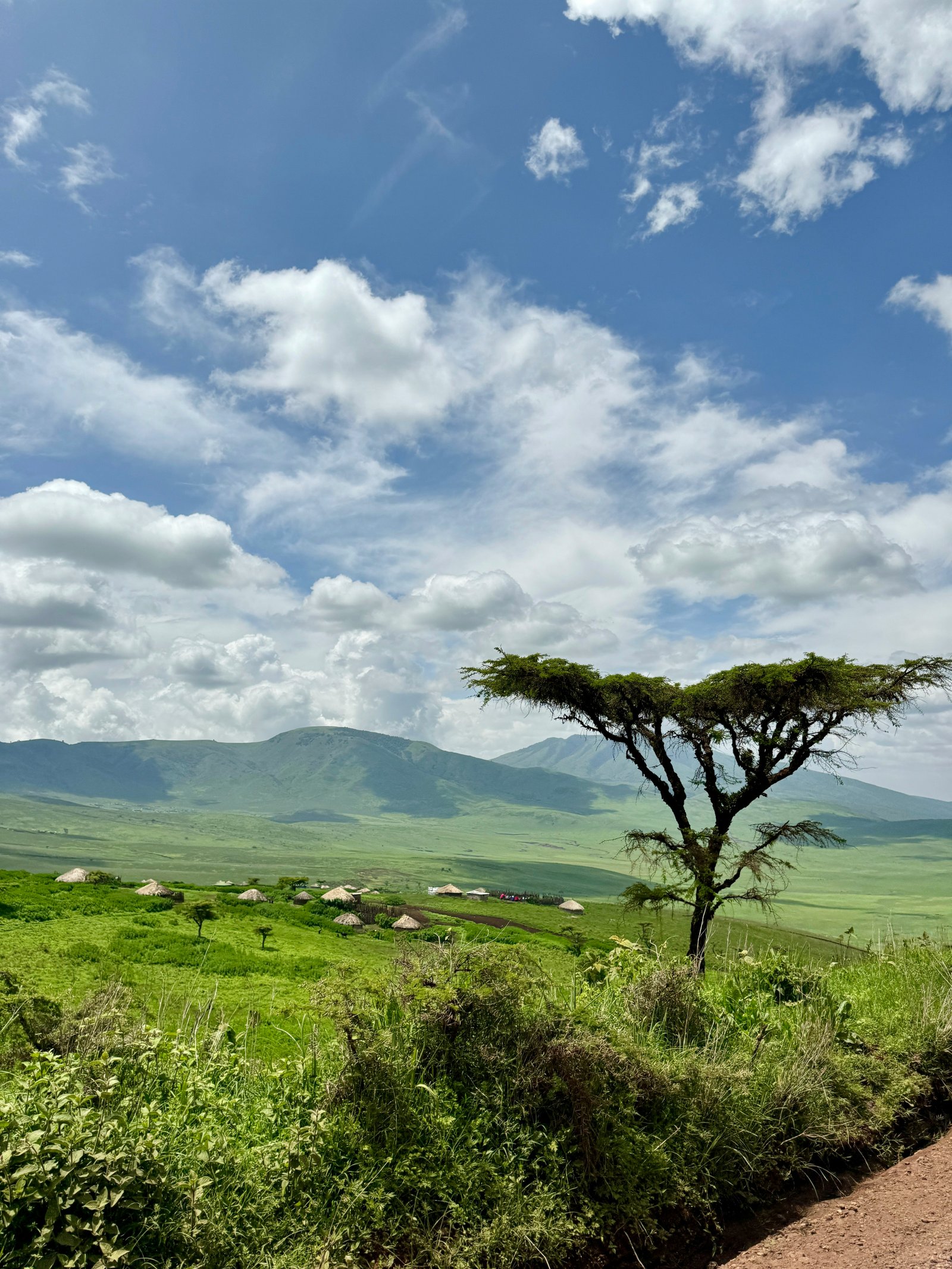
Arusha National Park sits 21 kilometres east of Arusha town — close enough that you can be watching black-and-white colobus monkeys leap through montane forest before your overnight bus from Nairobi has cleared the border. It is Tanzania’s most accessible wildlife park, and for travellers arriving in Arusha before or after the northern circuit, it offers a genuine half-day or full-day wildlife experience without the logistics and cost of the larger parks.
The park covers 542 square kilometres, but the diversity packed into that area is disproportionate. In a single day you can walk through fig tree forest alive with colobus monkeys, watch flamingos feed on the alkaline Momella Lakes, peer into the caldera of the Ngurdoto Crater, and see Mount Meru — Tanzania’s second highest peak at 4,566 metres — rising sharply above the treeline. Few parks anywhere in East Africa offer this combination within a 45-minute drive from a major town.
Getting There from Arusha
The main Momella Gate entrance is 21 km from Arusha, reached via the Moshi Road and a signposted turn-off. Most operators drive the route in 40 to 50 minutes. Self-drivers will find the tarmac approach in reasonable condition; a 4WD is not strictly required for dry-season visits but is recommended for the inner park tracks.
Shuttle transfers from Arusha town cost approximately USD 15 to USD 25 per person return through most guesthouses and tour companies. If you are combining the park visit with a Kilimanjaro or Meru trek transfer, many operators will route through the park gates at no extra cost.
What to See: Habitats and Wildlife
Montane Forest Zone The lower slopes of Mount Meru and the Ngurdoto Crater rim support dense montane forest. This is where you find the park’s most photographed residents: black-and-white colobus monkeys, which travel in large groups and are bold enough to be reliably visible year-round. Blue monkeys and olive baboons are also common in the forest zone.
Ngurdoto Crater The Ngurdoto Crater is a shallow caldera roughly 3 kilometres across, its rim at around 1,800 metres. No vehicle or foot access is permitted into the crater floor, which has remained an undisturbed sanctuary since the park’s establishment — an unusual arrangement that means the buffalo herds inside can only be viewed from the rim through binoculars or a telephoto lens. The rim viewpoints offer one of the most striking vistas in northern Tanzania: a forested bowl dropping away to open grassland, with nothing moving on it but wildlife.
Momella Lakes The seven Momella Lakes are shallow alkaline lakes fed by underground springs. Lesser and greater flamingos feed on the algae blooms in significant numbers; the shade of pink varies by season and concentration. The lakes also attract hippos, which spend daylight hours in the water and are visible from the shoreline tracks. Buffalo, giraffe, zebra, and warthog graze the open areas between the lakes.
Mount Meru Zone The upper zones of the park transition into heath and moorland above 3,000 metres. This area is primarily accessed by Meru trekkers rather than day visitors, but the mountain’s slopes provide the park’s dramatic backdrop from almost any vantage point.
Walking Safaris
Arusha National Park is one of the few Tanzania parks where guided walking is built into the experience — rangers at the Momella Gate offer accompanied walks for approximately USD 20 per person in addition to the entry fee (as of 2026 — verify rates at the gate). The trails through the forest and around the lake edges are well-worn and safe for visitors of moderate fitness. Walking brings you closer to the colobus monkeys and bird life than any vehicle can, and the park’s compact size means you are never far from the vehicle if conditions change.
Operators and Day-Trip Packages
Most Arusha-based tour operators and guesthouses offer standardised day-trip packages. Representative pricing as of 2026:
Group day trip (shared vehicle) — approximately USD 85 to USD 120 per person, including transport, park fees, driver-guide, and packed lunch. Suitable for solo travellers who want to join a group.
Private full-day safari — approximately USD 180 to USD 250 for 2 people, including private 4WD, guide, fees, and lunch. Better value for couples or pairs who want a flexible itinerary.
Half-day trip (morning, 07:00 to 12:00) — approximately USD 65 to USD 90 per person, covering the Momella Lakes and forest zone. Suitable if you have an afternoon flight or other commitment.
Recommended operators in Arusha: Roy Safaris, Ahsante Safaris, Nature Discovery, and most mid-range guesthouses on Sokoine Road or in the CBD area can arrange same-day bookings for small groups. You can also browse and book Arusha National Park day trips on GetYourGuide to compare packages and read recent visitor reviews.
Entry Fees and Park Rules
TANAPA charges approximately USD 45 per non-resident adult per day as of 2026. Children aged 5 to 15 pay USD 10. Fees are payable by VISA, Mastercard, or mobile money at the Momella Gate. Cash (USD) is also accepted. Private vehicle fees apply additionally; most tour operators’ vehicle costs are included in quoted prices.
Photography of wildlife is unrestricted within the park. Feeding animals — including the colobus monkeys, which will approach vehicles — is strictly prohibited.
Best Time to Visit
Arusha National Park is genuinely year-round. The montane forest holds its canopy and wildlife regardless of season, making it viable even during the March to May long rains when the northern circuit parks can be challenging. Dry season (June to October) gives clearer views of Mount Meru and better track conditions. November and December bring short rains with green vegetation and active bird life — reasonable for visiting.
Combining with Other Destinations
Arusha National Park fits naturally before or after the northern safari circuit. An arrival-day visit to the park — arriving into Kilimanjaro International Airport in the morning, spending the afternoon in Arusha NP, and departing the next morning for Serengeti National Park — is a practical way to ease into Tanzania without losing a day. Alternatively, use it as a buffer day between Ngorongoro Crater and your departure flight, based from Arusha city.
The park is also a useful acclimatisation step for Kilimanjaro trekkers who arrive a day or two early — the forest zones at 1,500 to 2,000 metres give the legs a moderate workout and the lungs a gentle introduction to altitude before the main event.