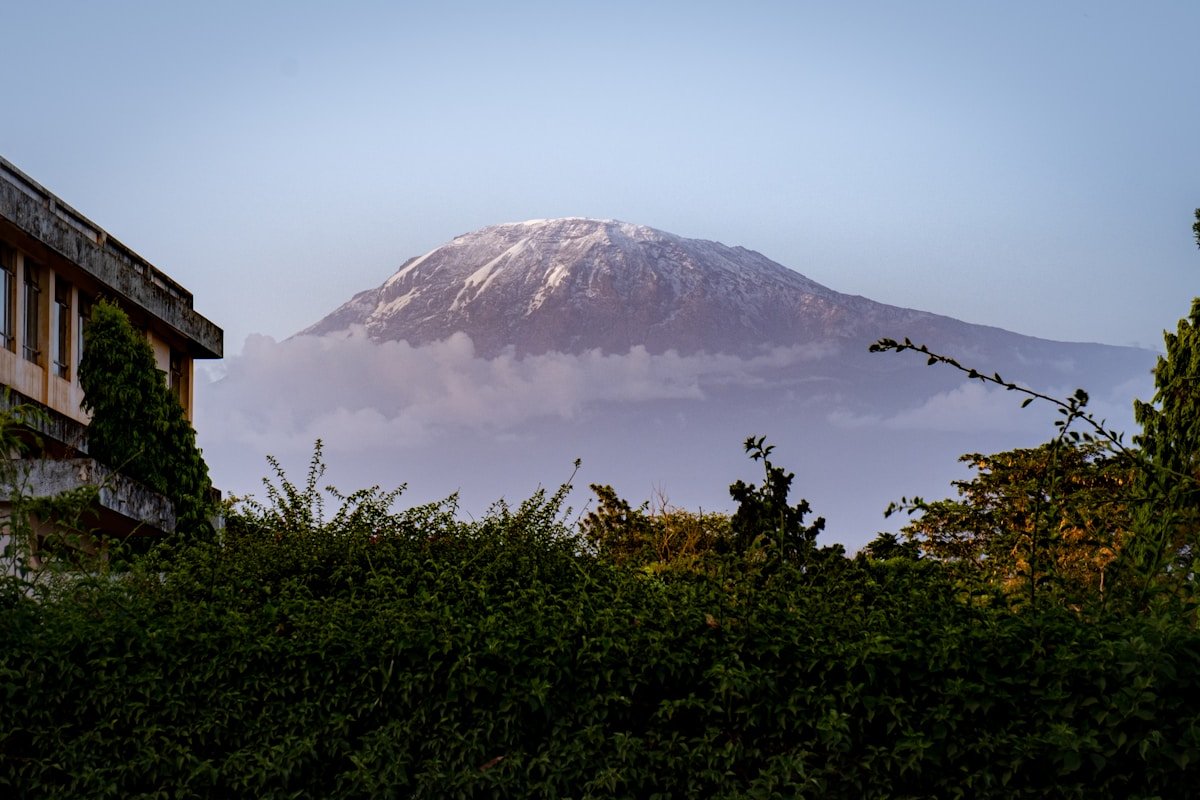
The Marangu Route is Kilimanjaro’s oldest established path - and the only one where you sleep in permanent huts rather than tents. For that reason alone it attracts a certain type of trekker: those who want shelter from the elements, a bunk to sleep in, and the shortest possible route to Uhuru Peak. Five days up and down the same trail. Done.
What the brochures often understate is that Marangu’s five-day version has the lowest summit success rate on the mountain - approximately 50–65%. The route is not easier than Machame; it’s shorter, which leaves less time for acclimatisation. The six-day version is significantly better, and we recommend it without hesitation.
Difficulty: Moderate (terrain), challenging (altitude acclimatisation) Duration: 5 days (minimum) or 6 days (recommended) Success rate: 50–65% (5-day), 65–75% (6-day) Approach: Southeastern face via Marangu Gate (1,879m) Summit: Uhuru Peak (5,895m) via Gillman’s Point and Stella Point Descent: Same trail as ascent (Marangu)
The Huts
Unlike every other Kilimanjaro route, Marangu provides communal sleeping huts with bunk beds, blankets, and basic dining facilities. This is a significant comfort advantage in wet or cold conditions.
| Hut | Altitude | Capacity |
|---|---|---|
| Mandara Hut | 2,720m | 60 people |
| Horombo Hut | 3,720m | 120 people |
| Kibo Hut | 4,703m | 60 people |
The huts are run by TANAPA and maintained to a basic but functional standard. Each complex includes toilets and water access. You sleep in a shared dorm with 4–8 bunk beds per room; some operators book private hut rooms for groups. Blankets are provided but most operators recommend sleeping in your own sleeping bag liner.
Kibo Hut at 4,703m is a concrete block building on the volcanic scree beneath the summit crater. Wind is intense. Sleep is difficult. Most trekkers lie awake for hours before the midnight summit push.
Altitude Profile
| Location | Altitude | Night |
|---|---|---|
| Marangu Gate | 1,879m | Arrival day |
| Mandara Hut | 2,720m | Night 1 |
| Horombo Hut | 3,720m | Night 2 |
| Horombo Hut | 3,720m | Night 3 (6-day only) |
| Kibo Hut | 4,703m | Night 3/4 |
| Uhuru Peak | 5,895m | Summit night |
| Horombo Hut | 3,720m | Final night |
| Marangu Gate | 1,879m | Descent |
The critical difference between five and six days: the extra night at Horombo Hut (3,720m). That additional 24 hours at high altitude does real work on your red blood cell count and gives your body measurably more time to adapt before facing Kibo’s 4,703m. If your operator offers a 6-day option and you have the flexibility, take it.
Day-by-Day Itinerary
Day 1: Marangu Gate (1,879m) → Mandara Hut (2,720m)
Distance: 8km | Time: 3–4 hours | Gain: +841m
The closest gate to Moshi - roughly 45 minutes by road. Check-in and park registration at the gate takes 30–60 minutes. The trail enters dense montane rainforest immediately, passing giant ferns and dense vegetation. The path is wide, well-maintained, and relatively gentle on Day 1. Mandara Hut is a collection of hexagonal A-frame chalets in a forest clearing. The first hut complex most trekkers arrive at, and often the most pleasant.
Day 2: Mandara Hut (2,720m) → Horombo Hut (3,720m)
Distance: 12km | Time: 5–7 hours | Gain: +1,000m
The longest day in terms of elevation gain. You exit the forest into the moorland zone, where giant lobelia and giant groundsel appear and the path becomes more exposed. The Saddle - a wide, high-altitude plain between Mawenzi and Kibo - comes into view as you approach Horombo. First views of Mawenzi peak (5,149m), Kilimanjaro’s second summit, are dramatic from the upper sections.
Horombo is the largest hut complex on the mountain, with a capacity of 120 trekkers. It sits in the giant heather zone with unobstructed views. Headaches and mild AMS symptoms are common here for the first time.
Day 3 (6-day): Acclimatisation Day at Horombo Hut (3,720m)
The extra day. Options include a day hike toward Mawenzi Tarn (4,330m) - a return excursion of 4–5 hours that helps acclimatisation without accumulating extra distance toward the summit. Alternatively, rest, hydrate, eat, and let your body do its work. This is not a “free” day - it is a physiologically important rest that directly increases your summit odds.
Day 3/4: Horombo Hut (3,720m) → Kibo Hut (4,703m)
Distance: 10km | Time: 5–7 hours | Gain: +983m
You cross the Saddle - a high-altitude plain between Mawenzi and Kibo that feels like a moonscape. Vegetation has nearly disappeared. The air is noticeably thinner. Kibo Hut appears at the end of a long, exposed traverse. Temperature at Kibo Hut rarely rises above 5°C during the day; at night it drops well below freezing.
At Kibo Hut, a basic dinner is served. Lights out by 7–8pm. Wake call at midnight.
Summit Night: Kibo Hut (4,703m) → Uhuru Peak (5,895m)
Distance: 6km | Time: 6–8 hours ascent, 3–5 hours descent
The summit trail from Kibo Hut is the longest single push on any Kilimanjaro route - approximately 1,192 vertical metres of volcanic scree and rock in darkness. The trail zigzags on loose gravel past Hans Meyer Cave (5,150m) and the William Point (5,500m) before reaching Gillman’s Point (5,685m) on the crater rim.
Gillman’s Point is a valid summit certificate destination for TANAPA, but Uhuru Peak is 45–90 minutes further west along the rim. The extra walk from Gillman’s is on snow and volcanic rock at −15°C to −25°C. Many trekkers who were fine to Gillman’s find the extra distance feels enormous at this altitude.
Stella Point (5,756m) is the next marker. Then Uhuru Peak (5,895m) - the highest point in Africa.
Descend to Kibo Hut, collect your pack, and continue all the way to Horombo Hut (3,720m) for your final night. The descent is long and your legs will be exhausted.
Final Day: Horombo Hut (3,720m) → Marangu Gate (1,879m)
Distance: 20km | Time: 6–8 hours | Loss: −1,841m
The same trail you climbed, now in reverse. The forest section at the end can feel interminable when your knees are spent. At the gate: summit certificate collection, tip ceremony, transfer back to Moshi.
Who Marangu Suits
- Trekkers who prefer shelter over camping - the huts are a genuine comfort advantage in bad weather
- Groups with a narrower window who cannot do 7+ days
- Experienced altitude trekkers doing a “fast” attempt with acclimatisation elsewhere first
- Trekkers on a tighter budget (Marangu hut fees are often lower than camping fees per night on other routes)
Who should consider Machame or Lemosho instead:
- First-time high-altitude trekkers without prior experience above 4,000m
- Anyone wanting to maximise summit odds
- Trekkers who want more varied scenery
Named Operators and Prices (as of 2026)
| Operator | 6-Day Price (approx.) | Notes |
|---|---|---|
| Zara Tours | $1,500–$1,900 | Most affordable option; experienced |
| Roy Safaris | $2,000–$2,400 | Reliable guides; KPAP registered |
| Altezza Travel | $2,200–$2,700 | Good emergency protocols |
| Thomson Safaris | $3,500–$4,500 | Premium; attentive service |
Marangu is typically the cheapest Kilimanjaro route because the hut infrastructure removes tenting costs. The saving over Machame is roughly $200–$400 per person depending on operator. Browse Kilimanjaro Marangu route tours to compare operators and book your climb.
Acclimatisation Tips
Marangu’s acclimatisation margin is thin. These habits matter more here than on any other route:
- Drink 3–4 litres of water daily from Day 1
- Walk extremely slowly from the gate - the rainforest section tricks many trekkers into a comfortable pace that proves too fast by Horombo
- Book the 6-day option if at all possible
- Take the Mawenzi Tarn day hike on your acclimatisation day
- Diamox (125–250mg twice daily) - consult your doctor; it’s particularly useful on the short Marangu timeline
- If you feel significantly worse at Kibo Hut than at Horombo, tell your guide; some trekkers are better served resting an extra night at Horombo and rejoining the schedule
Packing List
Standard layering system applies - see the Machame Route guide for the full list. Key Marangu-specific notes:
- You do not need a full camping tent, but do bring a sleeping bag rated to −15°C (the hut blankets are insufficient in cold months)
- Bring a sleeping bag liner as a backup layer
- The huts have charging points at some stations (Mandara and Horombo) - bring a power bank for Kibo Hut
- No trekking poles are strictly necessary on Marangu’s wide trail, but they significantly help on the summit scree and descent