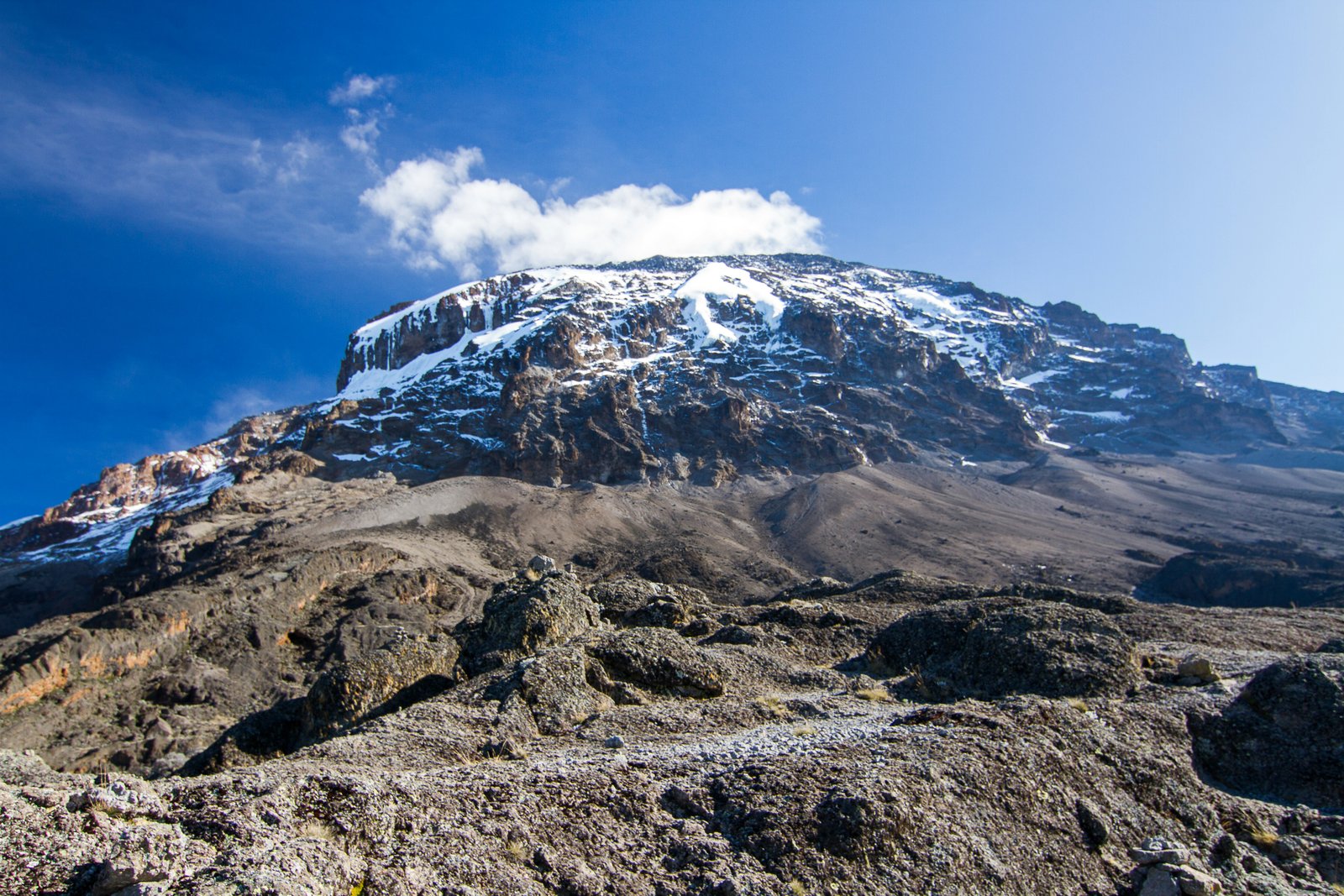
Most Kilimanjaro routes are designed to be accessible. They take the scenic way, add extra days for acclimatisation, and keep gradients manageable so a fit person with no prior altitude experience has a reasonable chance of reaching Uhuru Peak. The Umbwe Route takes a different philosophy entirely. It goes straight up.
The Umbwe is the most direct and demanding route on the mountain. It gains elevation faster than any other established path, cuts through the forest zone with minimal switchbacks, and places trekkers at high altitude before their bodies have had time to adjust. That’s its appeal - and its challenge. Here’s what you need to know before choosing it.
Why Experienced Trekkers Choose the Umbwe
The Umbwe Route attracts a specific kind of climber. Not necessarily stronger or fitter than those on Machame or Lemosho, but someone who wants a quieter mountain, a more direct line, and the psychological satisfaction of taking the harder path.
Solitude: The Umbwe sees a fraction of the foot traffic on the southern routes. During peak season (July–September) you’ll encounter other groups, but the ridge camps feel genuinely isolated compared to the crowded platforms at Shira Camp on Lemosho or Machame Camp.
Directness: There’s no meandering. The route takes the most direct available line to the Southern Icefields and the summit crater. For trekkers who prefer a purposeful ascent over a scenic wander, this is a real advantage.
The ridge experience: Above Umbwe Cave Camp, the trail climbs a narrow forest ridge with drops on both sides. It’s not technical - there are no fixed ropes or scrambling requirements - but the exposure and the physical demand are unlike anything on Machame. This section is one of Kilimanjaro’s more memorable walking experiences.
Umbwe vs Machame vs Lemosho
The three southern routes are often compared directly:
| Feature | Umbwe | Machame | Lemosho |
|---|---|---|---|
| Duration | 5–6 days | 6–7 days | 7–8 days |
| Difficulty | Very high | Moderate-high | Moderate |
| Success rate | ~60–70% | ~80–85% | ~85–90% |
| Traffic | Low | High | Moderate |
| Acclimatisation | Limited | Good | Best |
| Scenery | Dense forest + ridge | Varied | Most varied |
Machame and Lemosho both join the same upper mountain route via the Barranco Wall and Lava Tower. The Umbwe joins this network at Barranco Camp on day 3 or 4, bypassing the Lava Tower acclimatisation detour entirely - which is precisely where acclimatisation suffers on shorter Umbwe itineraries.
If your primary goal is reaching Uhuru Peak and you have no prior high-altitude experience above 4,000 m, choose Lemosho or Machame. If you’ve climbed at altitude before - Aconcagua, Rwenzori, high-altitude trekking in Nepal - and you want a more challenging ascent with fewer people, Umbwe is worth considering.
Day-by-Day Itinerary (6 Days)
Day 1: Umbwe Gate to Umbwe Cave Camp
Elevation: 1,640 m → 2,940 m | Distance: approx. 8 km | Time: 5–7 hours
You enter the park at Umbwe Gate on the southern slopes and immediately enter the montane rainforest. The vegetation here is dense and dripping: giant heather, hagenia trees draped in Spanish moss, and patches of bamboo on the lower slopes. The trail is well-defined but steep from the start - there are no introductory flat sections on this route.
The first day follows a narrow ridge trail that climbs continuously. After about 4 hours you reach the Umbwe Cave, a large natural rock overhang with a stream nearby and space for tents. This is Umbwe Cave Camp at 2,940 m. The camp feels remote. Evening temperatures drop quickly.
Day 2: Umbwe Cave Camp to Barranco Camp
Elevation: 2,940 m → 3,976 m | Distance: approx. 7 km | Time: 5–7 hours
This is the defining day on the Umbwe Route. The trail continues up the same narrow ridge, still in the upper forest and then heather-moorland transition zone. The gradient is relentless. Sections of the trail require using hands for balance; the exposure on the ridge is real - not dangerous, but enough to demand attention.
Views open progressively as the tree cover thins. By the time you reach the moorland at around 3,400 m, the forest has given way to giant groundsels and giant lobelias - the extraordinary afroalpine vegetation that defines Kilimanjaro’s middle elevations.
You descend slightly to reach Barranco Camp at 3,976 m, set in a broad bowl beneath the Barranco Wall. This is the convergence point with the Machame and Lemosho routes - from Barranco onwards, the mountain experience is shared. The camp can feel busy after the solitude of the first two days. Arriving here at altitude after two hard days of steep climbing is the first real test of how your body is handling the ascent.
Day 3: Barranco Camp - Barranco Wall and Karanga Camp
Elevation: 3,976 m → 3,963 m (via 4,200 m) | Distance: approx. 5 km | Time: 4–5 hours
The Barranco Wall is the route’s most technically interesting section - a 300 m scramble up steep volcanic rock that requires hands and feet. It’s exposed but not technical in a climbing sense: the holds are large, the path is well-worn, and guided groups move up it daily. The summit of the wall reveals a panorama of the Southern Icefields and the glaciated upper mountain.
After the wall, the trail traverses the southern face of the mountain, descending slightly into the Karanga Valley before climbing to Karanga Camp. This undulating section gives some of the best views of the summit from the southern side.
Some operators combine Barranco and Karanga into a single long day (arriving at Karanga the same day you climb the wall). This is manageable but demanding. Splitting it is better for acclimatisation if your itinerary allows.
Day 4: Karanga Camp to Barafu Camp (High Camp)
Elevation: 3,963 m → 4,673 m | Distance: approx. 4 km | Time: 3–4 hours
A shorter day with a single, clear objective: reach Barafu Camp and rest. The ascent through the alpine desert is steady rather than steep - the terrain has opened into an exposed plateau of scree and volcanic rock. No trees, no shrubs, just rock and the shrinking sky.
Barafu Camp at 4,673 m is the staging point for all summit attempts on the southern and western routes. It’s large, exposed to wind, and sits directly beneath the summit zone. Arrive by early afternoon, eat a full hot meal, and sleep by 18:00–19:00. You’ll be woken between midnight and 01:00 for the summit push.
Day 5: Summit Night - Barafu to Uhuru Peak, Descent to Mweka Camp
Elevation: 4,673 m → 5,895 m → 3,100 m | Time: 10–14 hours total
Summit night begins in darkness and cold. Temperatures at Barafu range from -5°C to -15°C; the wind chill at the crater rim can push it to -25°C. The climb from Barafu to Uhuru Peak takes 6–8 hours at altitude pace - slow, deliberate, and often exhausting. The gradient is sustained but not steep.
Stella Point (5,756 m) is the first landmark - the crater rim. Many trekkers who don’t reach Uhuru still count this as a significant achievement. From Stella, the trail circles the crater to Uhuru Peak (5,895 m), an additional 45–90 minutes depending on conditions.
After photographs and the obligatory sign, the descent begins. You return to Barafu for a break and meal, then continue down the Mweka Route - a completely different path from Umbwe - through alpine desert and moorland to Mweka Camp at around 3,100 m. This descent, when your legs are already spent from 10+ hours of climbing, is where knees start complaining.
Day 6: Mweka Camp to Mweka Gate
Elevation: 3,100 m → 1,640 m | Distance: approx. 9 km | Time: 3–4 hours
The final descent through the rainforest to Mweka Gate. This is where certificates are issued - Kilimanjaro National Park provides a summit certificate at the gate office. A vehicle transfers you to Moshi or your next accommodation.
Search hotels in Moshi on Booking.com
Operators and Costs
The Umbwe Route requires a licensed operator. TANAPA (Tanzania National Parks) regulations prohibit independent ascents - you must have a registered guide, and porters are mandatory above a certain ratio per climber.
What to budget (as of 2026):
A reputable 6-day Umbwe package runs approximately USD 1,800–2,500 per person depending on group size, operator tier, and what’s included. Solo climbers pay more than those in a group of 4–6.
Key operators with Umbwe experience:
- Zara Tanzania Adventures - one of the largest and most established operators in Moshi, runs all routes including Umbwe regularly. Their 6-day Umbwe package runs from approximately USD 1,950 per person (group rates)
- Roy Safaris - well-regarded for guide quality and equipment standards, typically USD 2,100–2,400 for the 6-day Umbwe
- Kilimanjaro Expedition - competitive pricing at around USD 1,800 for 6 days; smaller operation with strong reviews for guide:porter ratios
- Altezza Travel - runs a higher-end product with more generous camping equipment and meals, pricing from USD 2,300
Questions to ask any operator before booking:
- What is the guide:client ratio? (1:2 is good; 1:4 is acceptable minimum)
- Are sleeping bags and trekking poles provided, or are these rented separately?
- What happens if I need emergency evacuation? Is the cost covered or extra?
- How many porters per trekker? (Standard is 1 guide + 2 porters per client minimum)
Avoid operators offering packages significantly below USD 1,600 - this almost always reflects underpaid porters, substandard equipment, or guides with limited high-altitude experience.
Acclimatisation on a Short Timeline
The central risk on the Umbwe Route is altitude sickness. The 6-day itinerary gains nearly 4,300 m of net elevation in five days of climbing - faster than any other route on the mountain.
Diamox (acetazolamide): Most experienced trekkers and guides recommend starting Diamox the day before the climb and continuing through summit day. The standard dose is 125–250 mg twice daily. Consult your doctor before the trip - Diamox is a sulfa-based drug with contraindications. It increases urination and may cause tingling in the extremities; neither is dangerous.
Hydration: Drink 3–4 litres of water per day throughout the climb. Dehydration accelerates altitude sickness symptoms.
Pace: The phrase guides use - “pole pole” (slowly, slowly in Swahili) - is not just advice, it’s physiology. Your cardiovascular system needs time to adapt. Trust your guide on pace and resist the urge to move faster than the group when you feel strong on days 1 and 2. Burning energy early is the most common cause of summit failures.
Knowing when to turn back: Acute Mountain Sickness (AMS) symptoms - severe headache unresponsive to ibuprofen, vomiting, loss of coordination, confusion - are grounds for immediate descent regardless of proximity to the summit. Guides are trained to identify these; listen to them. Cerebral or pulmonary oedema is rare but life-threatening and develops quickly at altitude.
Packing for the Umbwe
The steep sections on days 1–2 change the gear calculus slightly:
Trekking poles: More important here than on any other Kilimanjaro route. The descent from the ridge on day 2 and the long Mweka descent on day 5 both benefit significantly from pole support. Bring your own or confirm rental availability with your operator.
Gloves (two pairs): Light liner gloves for the forest zone; insulated waterproof gloves for summit night. The Umbwe ridge and the summit crater have wind exposure that makes temperature management critical.
Waterproof gaiters: The Umbwe forest sections are wetter than the northern routes. Muddy paths and rain-soaked vegetation mean standard hiking boots fill with debris without gaiters.
Headlamp with extra batteries: Summit night is 6–8 hours in darkness. Lithium batteries handle cold far better than alkaline - bring lithium.
Summit-weight down jacket: Temperatures at Barafu and the crater rim require a dedicated insulated layer, not just a fleece. A 700-fill down jacket rated to -15°C is the standard.
Layer system for the summit:
- Moisture-wicking base layer (merino or synthetic)
- Mid-layer fleece
- Softshell wind layer
- Insulated down jacket
- Waterproof outer shell
The Honest Assessment
The Umbwe Route will not get you to Uhuru Peak more reliably than Machame or Lemosho. Its success rate is lower, its margin for error is smaller, and it provides less time to acclimatise. What it offers is a harder, quieter, more direct line to the top - and a genuinely distinct experience on the lower mountain.
For the right trekker, that’s exactly the point.
If you’re choosing Umbwe because it sounds impressive, choose Machame instead. If you’re choosing it because you’ve climbed at altitude before, you understand the acclimatisation tradeoffs, and you want fewer people on the trail - then the Umbwe Route delivers exactly what it promises.
Ready to book? Browse Kilimanjaro treks and tours to compare licensed operators, route options, and group departures.