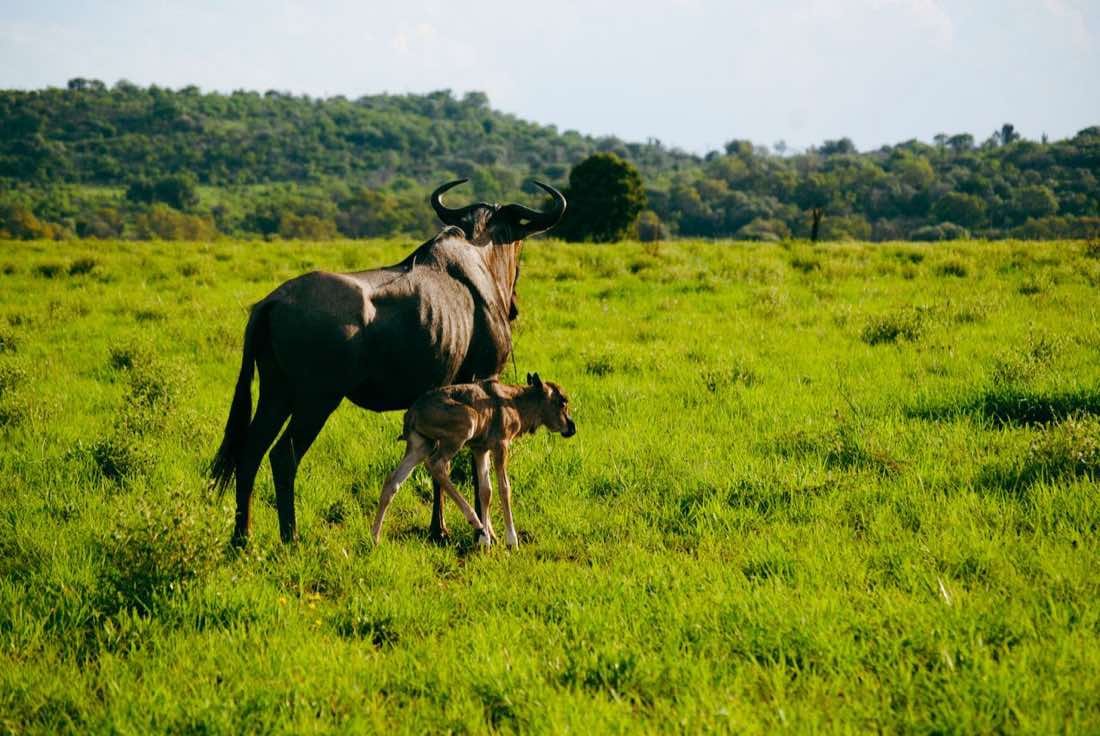
If you want a safari that is about birth, predators and open grass rather than river crossings, the Serengeti calving season is the one to plan. Every year between late January and mid-February, around 400,000 to 500,000 wildebeest calves are born on the short-grass plains around Ndutu, and the predators arrive to meet them. This guide covers when to go, where to stay, what it costs as of 2026, and how to keep the trip realistic. For the biology behind the event, read our companion piece on what the calving season at Ndutu is and why it matters. For the wider yearly loop, see the Great Migration guide.
When the Calving Season Actually Happens
The short rains between November and December green up the southern plains, and the herds, which have moved south from the central Serengeti, arrive by December. Births begin from late December in small numbers, then surge. The practical window is:
- Late December to mid-January: herds arrive, first calves appear, the plains are green and lodges are at Christmas prices. Good if you cannot travel later.
- Late January to mid-February: the true peak. A single wildebeest cow can give birth in a few minutes, and a calf stands within roughly 5 to 10 minutes. Expect thousands of newborns in view at once.
- Late February to March: the herds are still on the plains but calves are mobile, the grass is thinning and predators remain active. Cheaper, quieter and often still excellent.
- April onward: the long rains begin and the herds start moving north-west. Many camps close.
No one can promise the exact week, because the births follow the rains. If the short rains arrive early, peak births come earlier. Ask your operator what the herds did that week before you commit to a late departure.
Where to Base Yourself: Ndutu vs the Central Serengeti
The calving grounds sit around Lake Ndutu and Lake Masek, on the border of the Serengeti National Park and the Ngorongoro Conservation Area. Staying at Seronera in the centre adds two to three hours each way to the plains, which cuts into the best light. Choose a camp inside or beside the plains instead. Our where to stay in the Serengeti page covers the central options if you want to combine both areas.
| Camp | Style | Approximate rate as of 2026 (per person per night) |
|---|---|---|
| Ndutu Safari Lodge | Long-established lodge with bungalows on the lake shore | USD 400 to 650 full board |
| Lemala Ndutu Tented Camp | Mid-luxury tented camp, seasonal, December to March | From about USD 330, rising in peak weeks |
| Lake Masek Tented Lodge | Tented lodge close to Lake Masek | USD 300 to 500 all inclusive |
| Kusini Camp | Small high-end camp, ultra-luxury at peak | Above USD 2,000 all inclusive |
Rates move with date, room type and operator, and the cheapest nights are in early December or March. Two travellers sharing a room should expect the lower half of each range. Singles pay supplements of 30 to 100 percent at most camps. These are listed rates, not guarantees, so confirm with an operator before you budget.
What It Costs: Park Fees, Vehicle and Packages
Most of the bill is accommodation, but fees add up. As of 2026, the Serengeti National Park charges approximately USD 70 to 85 per adult per day plus a vehicle fee, and the Ngorongoro Conservation Area charges its own entry fees for the Ndutu side, so check the current schedules on the Tanzania National Parks Authority and Ngorongoro Conservation Area Authority sites before you finalise a budget. Children and residents pay less. A private 4x4 with driver-guide usually costs USD 200 to 300 per day.
- Budget camping or basic lodge package (4 days): about USD 1,800 to 2,500 per person in a shared vehicle.
- Mid-range lodge package (4 days): about USD 2,500 to 3,500 per person.
- Luxury camp with fly-in: USD 4,000 to 6,000 per person for four days, depending on the camp.
Domestic flights from Arusha to Ndutu or Seronera cost approximately USD 250 to 350 each way as of 2026. Driving from Arusha to Ndutu takes seven to eight hours via Ngorongoro, and the road past the crater rim is rough in places. For general budget planning see Tanzania safari cost.
Weather and What to Pack
January and February are warm and mostly dry in the south, with days around 28 to 32°C and cooler nights near 16 to 18°C. Short afternoon storms still happen, and they are what keeps the grass green. Roads inside Ndutu turn to black cotton mud after heavy rain, so a good driver-guide matters. Pack neutral-coloured layers, a wide-brimmed hat, a long lens if you photograph, and binoculars. The Ndutu area has tsetse flies in woodland patches, so wear light long sleeves and avoid dark blue and black.
What You Will See Beyond the Calves
The calving plains are crowded with zebra and Thomson’s gazelle as well as wildebeest, and the predator-to-prey balance is the story. Cheetahs hunt in daylight on the open plains, lions rest under acacias near the lake, and spotted hyena clans work the herds at night. Birdlife around Lake Ndutu and Lake Masek includes flamingos in wetter years. We recommend two full days at Ndutu at minimum, ideally three, then a move north to the Seronera area for leopards if time allows.
Combining With a Balloon Flight or Ngorongoro
Hot air balloons operate over the central Serengeti rather than Ndutu, so if you want one, add a night near Seronera and book the Serengeti hot air balloon well ahead. You can browse Serengeti tours or compare ready-made options in our Serengeti safari packages compared guide. The Ngorongoro Crater sits on the route in and out and makes a natural closing day.
How to Book the 2027 Season
- Decide your date window: late January to mid-February for peak births, March for value.
- Contact a licensed operator in Arusha and ask for the camp name, not just “calving season”.
- Pay the deposit by end of October 2026 for the best camps, and check the cancellation terms.
- Add two nights buffer in Arusha before and after for flight changes. Our where to stay in Arusha guide lists options.
- Check month-by-month conditions in Tanzania in January and Tanzania in February.
If you are travelling over Christmas instead, read our Tanzania Christmas and New Year guide for peak-week pricing and what is open.
A Typical Day at Ndutu During Calving
Game drives leave around 06:00, when the plains are cool and the light is soft. Mornings are best for cheetahs and lions finishing a night hunt, and for the first calves of the day standing up in the grass. Return to camp by 10:30 for brunch, rest through the hot middle of the day, then head out again at 15:30 until dusk. Night drives are not allowed inside the national park, but some camps on the Ngorongoro Conservation Area side offer them, which is one reason Ndutu attracts hyena and leopard watchers.
Viewing Ethics and Photography
Drivers must keep 25 metres from animals and never drive between a mother and her calf, and good guides will refuse requests that break this. Keep voices low near cheetahs, which depend on silence to approach prey. If you photograph, bring a lens of at least 200 to 400mm, a bean bag for the vehicle window and spare batteries, since dust and long days drain them fast. Kills happen in view of the vehicle and can be upsetting for children, so consider whether a family trip suits this window.
Rates and fees are approximate as of 2026 and change by season; confirm with your operator and the park authorities before booking.