Most visitors to Tanzania plan their safaris around one of two spectacles: the river crossings of the Mara in July and August, or the vast herd concentrations of the northern Serengeti. But there is a third window — quieter, less discussed, and arguably more affecting — that draws a different kind of wildlife enthusiast every January and February: the wildebeest calving season at Ndutu.
What Is the Calving Season?
The Great Migration is a continuous loop. After the Mara River crossings of July to October, the herds push south through the central Serengeti as the short rains arrive in November. By late December, the bulk of the migration — roughly 1.5 million wildebeest, along with hundreds of thousands of zebra and gazelle — has reached the short-grass plains that straddle the southern Serengeti and the Ngorongoro Conservation Area. The focal point is Ndutu, a shallow soda lake surrounded by acacia woodland and open grass plains on the NCA boundary.
It is here, every year, that calving begins.
The timing is not random. The short-grass plains around Ndutu green up after the short rains, providing the highest-quality, most nutritious grazing available at any point in the annual cycle. Wildebeest cows that have been pregnant for eight months arrive at this moment of peak nutrition to give birth. Approximately 400,000 to 500,000 calves are born in a window of two to three weeks — a calving rate of roughly 8,000 per day at peak.
Why It Matters for Safari Tourism
Calving season has a quality that sets it apart from other wildlife spectacles. The sheer concentration of newborn animals — wobbly-legged calves attempting to stand within minutes of birth — combined with the predator response, produces a density of action that experienced guides describe as unlike any other time of year.
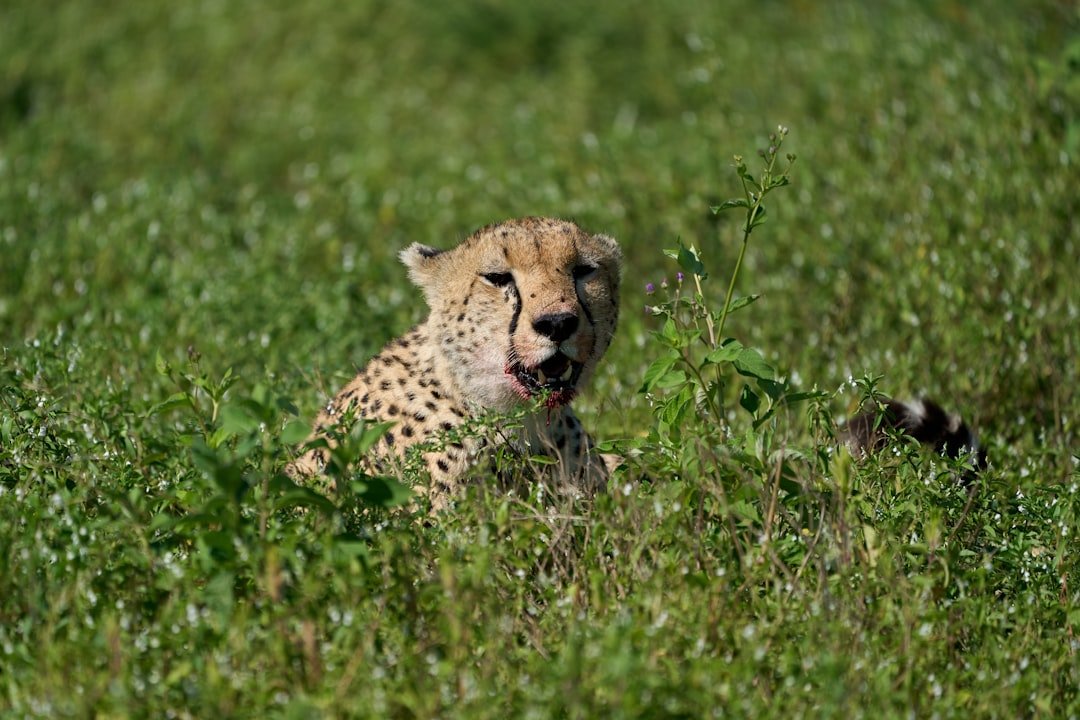
Cheetah, lion, leopard, wild dog, and spotted hyena all converge on the Ndutu area during this period. The short grass means predators are highly visible, and the frequency of hunts is dramatically elevated compared to the rest of the year. A single morning game drive can produce multiple kills or predator events. For photographers and serious wildlife observers, this is the primary draw.
There is also an intimacy to the calving plains that the river crossings don’t always offer. The Mara crossing can involve dozens of safari vehicles congregating at a single point. Ndutu in January and February is still comparatively under-visited, and the landscape — flat open plains stretching to the horizon, dotted with wildebeest as far as the eye can see — is visually distinct from the more wooded northern Serengeti.
Best Viewing Spots
The core calving area sits around Ndutu Lake itself and the open plains extending east toward the Ngorongoro Conservation Area boundary. Key areas include:
Ndutu plains: The broad, short-grass zone immediately around the lake. This is where concentrations peak and where the highest density of predator activity tends to occur.
Naabi Hill Gate area: The southern entry into the Serengeti proper. The plains between Naabi and Ndutu carry significant herd concentrations and are good for cheetah.
Lake Masek: A second soda lake just south of Ndutu. The woodland fringe between the two lakes is productive for leopard and smaller carnivores.
Open plains toward Olduvai: The flat grasslands west of the Ngorongoro Conservation Area are part of the calving zone and tend to attract serious photographers who want wide landscape shots with herds.
Operator and Logistics Notes
Ndutu is not inside the Serengeti National Park — it sits partly within the Ngorongoro Conservation Area and partly in the Ndutu area managed under a special concession. This means park fee structures differ from the Serengeti, and some camps operate under NCA regulations. Confirm with your operator which zone your accommodation falls in, as this affects the daily fee structure.
Accommodation options in the Ndutu area range from the established Ndutu Safari Lodge to a number of seasonal tented camps that operate only during the calving window. Because the season is well-known, the better camps fill early — bookings for January and February should ideally be in place by September or October of the prior year.
The short rains that precede the calving season (October to December) can leave tracks muddy. From mid-January onward, conditions generally improve. February is typically the most reliably accessible month.
For operators, the calving season also pairs well with a visit to the Ngorongoro Crater — the two sites are less than two hours apart by road, and the crater floor offers year-round wildlife density that complements the open plains experience at Ndutu.