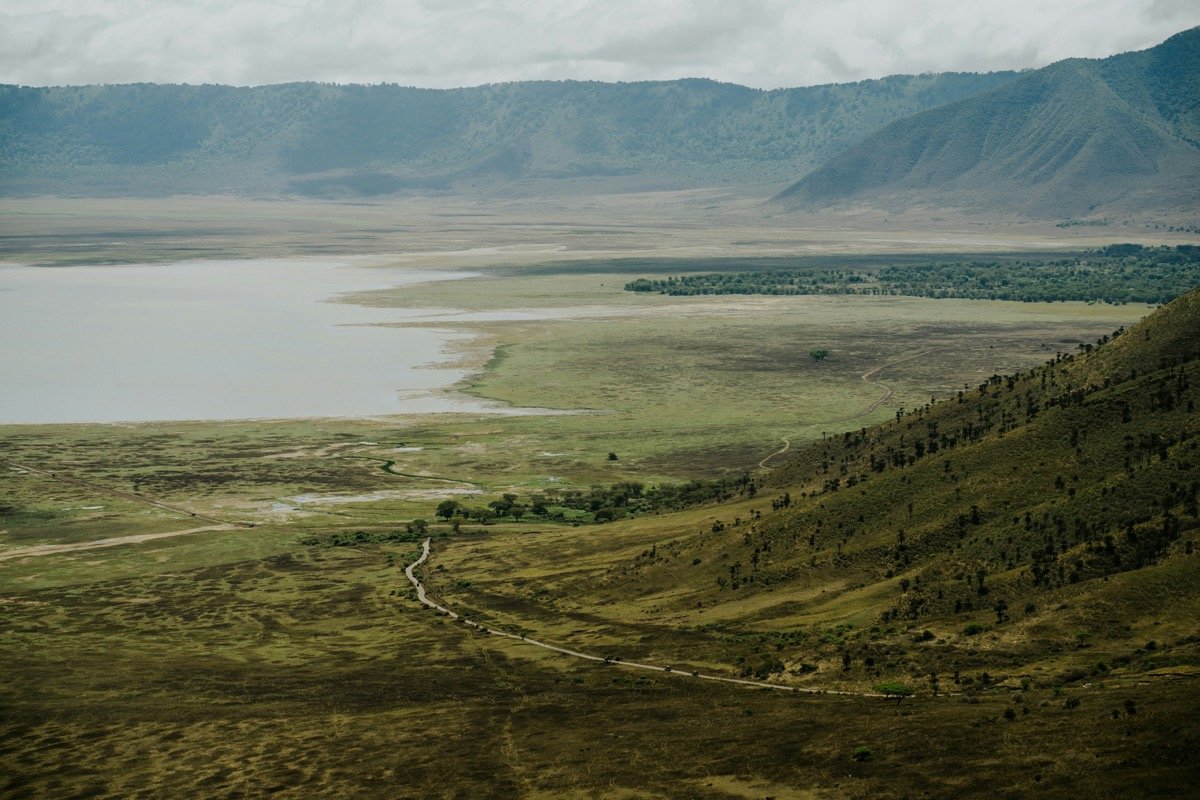
The Ngorongoro Crater is the world’s largest intact volcanic caldera - a collapsed volcano whose walls create a self-contained ecosystem 20km across and 600m deep. Approximately 30,000 large animals live on the crater floor year-round, unable to leave the caldera naturally. The result is the highest density of wildlife in Africa by land area: lions, elephants, hippos, buffalo, wildebeest, zebra, hyena, cheetah, golden jackal, flamingo, and one of the last viable black rhinoceros populations in Tanzania, all visible in a single day’s game drive.
It is also, in parts, very busy - the crater is one of the most visited sites in Africa, and the main viewpoints and Lerai Forest can have a dozen vehicles at peak times. Understanding when to go, where to focus, and how to structure the day significantly improves the experience.
What You Will See
The crater floor is divided into distinct habitat zones:
Short Grass Plains
The open grassland that covers most of the northern and eastern crater floor. This is where the wildebeest, zebra, and Thomson’s gazelle herds spend the majority of their time, and where lions hunt most effectively. Early morning (06:00–09:00) sightings of lion hunts are more common on the open plains than anywhere else.
Lerai Forest
A yellow-fever acacia forest in the south-western sector, fed by permanent springs. This is the most important area for:
- Black rhinoceros: The crater’s rhino population gravitates to Lerai for shade during midday heat and for the forest vegetation. Your best chance of a sighting is patrolling the forest edges between 08:00 and 11:00.
- Elephants: The Ngorongoro crater elephants are among Africa’s largest-tusked - the few males that live on the crater floor have avoided the ivory trade’s worst impacts. Sightings in Lerai are regular.
- Leopards: The forest trees provide cover; leopard sightings are uncommon but not rare.
Hippo Pool (Ngoitokitok Spring)
A permanent pool fed by springs in the south-central area of the crater. Home to a hippo pod of 20–30 individuals, visible throughout the day. The pool is also a reliable site for Egyptian geese, sacred ibis, yellow-billed storks, and other water birds. A picnic site adjacent to the pool is the standard lunch stop.
Lake Magadi
A soda lake in the south-eastern crater - the shallow alkaline water creates feeding conditions for lesser flamingos. Numbers range from a few hundred to several thousand depending on water levels. The flamingo concentrations are most consistent in the wet season (March–May) when the lake level is higher.
Planning a Crater Day Trip
From Arusha (180km)
Departure by 05:30–06:00 is essential. The drive to the crater rim takes approximately 3 hours on a mix of tarmac (to Karatu) and graded gravel (into the NCA). Descent to the crater floor opens at 06:00.
Recommended day trip schedule:
- 05:30: Depart Arusha
- 08:30: Arrive crater rim, descend to crater floor
- 08:30–13:00: Morning game drive (prime hours for predator activity)
- 13:00: Picnic lunch at Ngoitokitok hippo pool
- 13:00–16:00: Afternoon game drive and ascent
- 16:00: Leave NCA (crater access closes at 18:00; vehicles must be ascending)
- 19:00: Return Arusha
This gives roughly 7.5 hours on the crater floor - enough to cover all main areas. An organised day trip from Arusha costs approximately USD 250–350 per person in a shared 4WD group (includes fees, guide, picnic lunch, transport). Browse Ngorongoro Crater day trips and safari tours to compare operators.
Overnight on the Rim
The crater rim sits at 2,300m elevation. Staying one or two nights allows:
- Dawn descent at 06:00 when the morning mist lifts off the crater floor and predator activity is highest
- A second full day to cover areas missed on day one
- Better light for photography in the early and late hours
Rim lodges:
- Ngorongoro Crater Lodge (&Beyond): the most dramatic accommodation in Tanzania, clinging to the inner crater wall. From approximately USD 900–1,400 per person per night all-inclusive. Butlers, wood fires, dramatic crater views.
- Ngorongoro Serena Safari Lodge: mid-range option with crater views. USD 350–600 per person per night.
- Ngorongoro Farm House (Gibb’s Farm): colonial-era farm outside the NCA entrance in Karatu. Less expensive and with an excellent garden restaurant. From USD 250–400 per person per night.
Fees and Vehicle Requirements
All vehicles entering the NCA must be 4WD with a roof hatch for standing game viewing. Hired safari vehicles from Arusha operators include appropriate vehicles. Rental cars are not permitted for self-drive in the NCA.
Fee summary (as of 2026, all amounts per vehicle/person per 24-hour period):
- NCA entry: USD 70 per person
- Vehicle fee: USD 40 per vehicle
- Crater descent: USD 295 per vehicle per day
- Professional guide (required): included in all organised tours; if independent, USD 50–100 per day
Total fees for a two-person day trip: approximately USD 435 (two people entry + crater + vehicle). Plus guide, transport, and accommodation if staying overnight.
Wildlife Highlights by Season
Dry season (June–October): Excellent year-round game; lower grass makes wildlife easier to spot. The black rhino tend to concentrate around Lerai Forest in the dry season. Temperatures on the crater floor are pleasant (25–30°C by midday); the rim is cool (10–18°C at dawn).
Short rains (November–December): New green grass attracts wildebeest onto the plains; photography difficult in afternoon thunderstorms but excellent lighting in morning hours.
Long rains (March–May): Lake Magadi flamingo concentrations peak. Fewer vehicles, significantly lower prices at rim lodges. Some crater descent tracks may be temporarily closed after heavy rain.
Calving season (January–February): Wildebeest and zebra calves on the crater floor attract predators. The crater population is separate from the migratory herds (the crater animals rarely leave the caldera), so this is a genuine calving event rather than a migration overflow.
Photography Tips
The crater provides exceptional photographic conditions, but planning matters:
Morning light: The best light enters the crater from the east between 06:00 and 09:00. Position yourself facing west-north-west for golden hour light on wildlife.
Dust: Dry season game drives create significant dust. Use a UV filter and keep equipment covered between stops.
Focal lengths: A 300–500mm lens is ideal for the crater. Shorter focal lengths work well for wide-angle landscape shots from viewpoints on the rim.
Ready to Visit?
- Ngorongoro Day Trip from Arusha: Logistics, Drive Times and Fees — how to organise the trip from Arusha, including drive time, conservation fees, and what to bring
- Ngorongoro Tour Operators: Prices and How to Choose — shared vs private safaris compared with 2026 pricing
- Ngorongoro Crater Destination Overview — the ecosystem, caldera geology, and what makes this the most wildlife-dense park in Africa
Leopard position: If your guide finds a leopard in the Lerai trees, a 500mm lens is the minimum for frame-filling shots - the cats tend to rest in the upper canopy.
The NCA Beyond the Crater
The Ngorongoro Conservation Area covers 8,288 square kilometres - far more than the crater alone. Within the NCA:
-
Olduvai Gorge (Oldupai): 45km from the crater rim, the site where Mary Leakey discovered Australopithecus boisei (Zinjanthropus) in 1959. A small museum marks the gorge with fossil casts and interpretive displays. Entry approximately USD 30 per person, typically included in northern circuit itineraries.
-
Shifting Sands: A basaltic ash sand dune that moves approximately 17m per year driven by prevailing winds - a genuine geological curiosity. Accessible as a half-day trip from the rim.
-
Maasai communities: The NCA is jointly managed with the Maasai, who continue to graze cattle on the crater rim and in the wider NCA. Community visits can be arranged through the NCA authority.
Common Mistakes to Avoid
Arriving mid-morning: The crater gate opens at 06:00. Arriving at 10:00 means missing the best predator activity and hitting the midday vehicle concentration near the hippo pool. The difference between a 06:00 and 10:00 descent is significant in wildlife quality.
Skipping the western crater floor: The majority of vehicles on day trips stick to the hippo pool–rhino area loop. The western floor and the Goitokitok area get considerably less traffic and can offer quieter predator sightings.
Underestimating cold on the rim: The crater rim at 2,300m is cold - often 8–12°C at dawn. A fleece or light down jacket is essential if staying overnight or doing an early ascent.
For the wider Conservation Area including Olduvai Gorge and Maasai community visits, Ngorongoro Conservation Area tours covers multi-day circuits. Medical evacuation from the crater rim to Arusha or Nairobi can be very expensive - travel insurance for Tanzania that includes evacuation cover is strongly recommended before departure.