For the full year picture, see our best time to visit Tanzania guide.
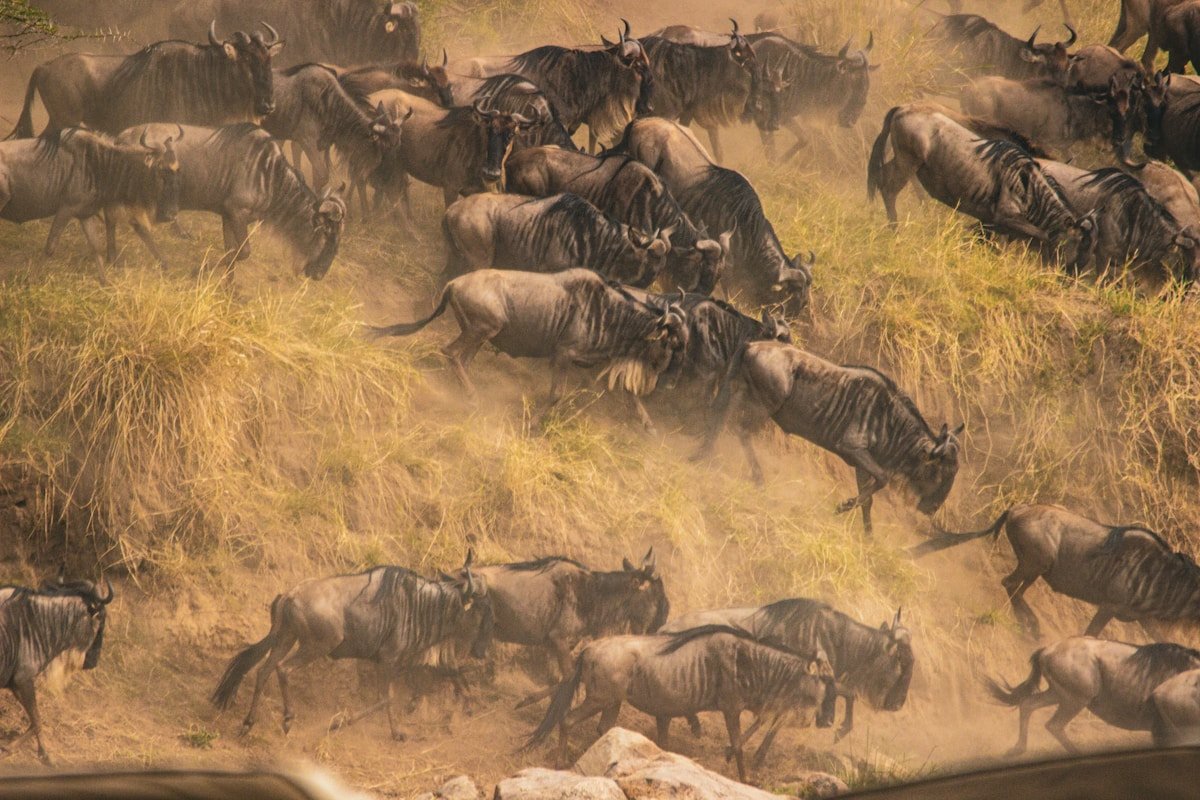
July is peak safari season in Tanzania and one of the most sought-after months in African wildlife tourism. The Great Migration’s Mara River crossings - arguably the most dramatic wildlife spectacle on earth - are in full swing. The northern Serengeti is at its most exciting, and the dry season has locked in across all of Tanzania’s safari areas. Kilimanjaro’s primary climbing season is at its busiest. Book everything 6–12 months in advance.
Weather in July
| Region | Avg High | Avg Low | Rainfall | Notes |
|---|---|---|---|---|
| Serengeti (north) | 26°C | 14°C | 15mm | Dry, clear; cool evenings |
| Ngorongoro Crater | 21°C | 7°C | 20mm | Crisp, clear mornings; cold nights on rim |
| Kilimanjaro base (Moshi) | 24°C | 12°C | 30mm | Dry; cool at altitude |
| Zanzibar | 28°C | 22°C | 25mm | Dry, breezy; excellent beach conditions |
| Dar es Salaam | 28°C | 21°C | 20mm | Comfortable; dry-season temperatures |
| Selous (Nyerere NP) | 29°C | 16°C | 10mm | Peak dry season in the south |
July is Tanzania’s driest month on average. Skies are reliably clear, temperatures are cooler than the wet season, and dust levels on game drive tracks are their highest. The dry conditions concentrate wildlife around remaining water sources, making game viewing exceptionally productive.
Wildlife in July
Northern Serengeti (Kogatende, Lamai Triangle): This is the epicentre of Tanzania’s July. The wildebeest herds - up to 1.5 million animals - are in the northern Serengeti, and the Mara River crossings are happening with regularity. On a good day, you can witness multiple crossings, with thousands of wildebeest plunging into the river as Nile crocodiles wait below. The energy is extraordinary. Predators are abundant - lions, cheetahs, and wild dogs all follow the herds. A full week in the north in July is the benchmark safari experience.
Central Serengeti (Seronera): The resident wildlife is excellent - lion prides, leopards at Seronera River, cheetahs on the open plains. Seronera is less spectacular than the north in July (the herds have moved on) but still delivers good game viewing without the northern camp price premiums.
Ngorongoro Crater: July is outstanding in the Crater. The dry conditions concentrate the crater’s 25,000 resident animals around the Munge and Ngoitokitok springs. Black rhino sightings are reliable in July - they congregate around the few remaining water points. The lion population is very active.
Tarangire National Park: July marks the beginning of the dry-season Tarangire elephant gathering - one of Africa’s largest elephant concentrations outside Amboseli. As dry-season water sources dwindle, elephants from a vast area converge on the permanent Tarangire River. By August–September, herds of 100–300 elephants are common.
Selous (Nyerere National Park): The southern circuit’s dry season is in full force. Walking safaris (unique to the southern circuit), boat safaris on the Rufiji River, and drive safaris all produce excellent results. Far fewer visitors than the northern circuit.
Kilimanjaro: Peak climbing season. All five main routes are operational. Summit success rates are high. Book permits and operators at least 3–6 months in advance.
Events in July
- Zanzibar International Film Festival (ZIFF) - typically runs late June into early July in Stone Town. East African and pan-African cinema, music, and arts events at the Arab Fort and open-air venues
- Nane Nane Agricultural Show preparations - Tanzania’s national agricultural fair (August 8); preparations begin in July in regional centres
- Eid al-Adha - may fall in July depending on the Islamic calendar; major observance on Zanzibar and throughout coastal Tanzania
Crowds and Pricing
July is Tanzania’s busiest and most expensive month. The northern Serengeti camps book out well in advance. Expect full occupancy at popular camps and higher vehicle concentrations at river crossing sites. Early morning and late afternoon positioning near the river is the strategy - patient waiting at a crossing point (rather than driving from point to point) is what separates good guides from great ones.
Typical costs:
- Budget/mid-range tented camp, northern Serengeti: approximately USD 250–450 per person/night, full board
- Luxury camp (Sayari, Lamai, Namiri): approximately USD 900–1,500 per person/night, all-inclusive
- Ngorongoro rim lodge (mid-range): approximately USD 350–550 per person/night, full board
Search hotels in Arusha on Booking.com
Best Activities in July
- Mara River crossing watch, northern Serengeti - position at a crossing point with a patient guide; allow 4–6 hours at the river
- Tarangire elephant gathering - begin in July; one of Africa’s least-known megaherds
- Walking safari, Selous - available year-round in the south; the dry season is the best time
- Ngorongoro Crater descent - black rhino viewing is at annual peak; cool clear morning light
- Kilimanjaro summit - prime season; Machame and Lemosho routes both excellent
Where to Go in July
First choice: Northern Serengeti - for the Mara River crossings, there is no substitute. Book 6–9 months in advance. A 4-night camp in the Kogatende area gives the best chance of witnessing multiple crossings.
Second choice: Tarangire + Ngorongoro - if the northern Serengeti is fully booked or out of budget, this combination is excellent in July. Tarangire elephant herds are building, and Ngorongoro is outstanding.
Southern circuit: Selous - a serious alternative for travellers wanting exclusivity. The southern circuit in July offers comparable wildlife viewing to the north with a fraction of the vehicle numbers.
Named Hotel Recommendations
Northern Serengeti (river crossing area):
- Sayari Camp (Asilia) - top-rated; most generous space in the Mara River area; approximately USD 1,000–1,400 per person/night, all-inclusive
- Lamai Serengeti - exceptional views of the Mara Triangle from the kopje position; approximately USD 900–1,300 per person/night
- Nomad Tanzania Serengeti Pioneer Camp - strong mid-range option; approximately USD 500–750 per person/night
- Kogatende Tented Camp - value option in the north; approximately USD 300–450 per person/night, full board
Tarangire:
- Oliver’s Camp (Tarangire) - best dry-season positioning for elephant herds; approximately USD 400–600 per person/night
- Tarangire Treetops - luxury treehouse accommodation; approximately USD 600–900 per person/night
What to Pack for July
- Warm layers - northern Serengeti mornings can reach 12–14°C; Ngorongoro rim evenings drop to 5–7°C
- Fleece, light down jacket, and thermal base layer for early morning game drives
- Dust-proof camera cases and lens cloths - July is extremely dusty on game drive tracks
- Sunscreen (high SPF) - dry-season UV is intense despite lower temperatures
- Scarf or buff - protects face and lungs from track dust during drives
- Binoculars - essential for river crossing observation (the banks can be dense with vehicles)
- Neutral safari clothing (khaki, green, brown) - bright colours disturb wildlife and other visitors
FAQs
When do the Mara River crossings happen in July? There is no fixed schedule - the crossings are driven by the herds’ response to grass availability and instinct. Crossings can happen at any time of day but are most common in the morning (roughly 7am–12pm). The best strategy is to identify where the herds are building on the banks and wait patiently for 3–6 hours. Multiple crossings can happen in quick succession.
Is July too crowded in the Serengeti? The northern Serengeti in July has more vehicles than any other area and month. However, Tanzania limits vehicle numbers at crossing points more strictly than Kenya’s Masai Mara side. Experienced guides know how to position ahead of the crowds.
How far in advance should I book July in Tanzania? For the northern Serengeti camps, 6–12 months is necessary for luxury options. Even mid-range camps fill quickly for July. December–January is the ideal booking window for the following July.
For migration timing and positioning, see our Great Migration guide. For Kilimanjaro routes, see our Kilimanjaro climbing guide. Browse July Serengeti and northern circuit tours - book early, July fills fast. Get travel insurance before departure.
Plan Your Trip
✈️ Book your flights to Tanzania 🛡️ Get travel insurance 📱 Stay connected with an eSIM 🚗 Rent a car