Tanzania sits about 8,000 km from London and over 13,000 km from New York — getting here requires a long-haul flight, but the route network is solid, and prices are reasonable if you book at the right time. Here is everything you need to know about flying to Tanzania and moving around once you arrive.
Tanzania’s Main International Airports
Julius Nyerere International Airport (DAR) — Dar es Salaam
Dar es Salaam is Tanzania’s busiest airport and the hub for most long-haul international traffic. It handles flights from Europe, the Middle East, and across Africa. If you are targeting Zanzibar, a connection from here takes around 20 minutes (or a quick ferry from the port). The airport is functional rather than impressive, with a reasonable food and drink offering in the international departures hall. Kilimanjaro is reachable from Dar by domestic flight in 45 minutes, or by road in 6–8 hours.
Kilimanjaro International Airport (JRO) — between Moshi and Arusha
KIA is the preferred gateway for northern circuit safaris. Arusha lies roughly 45 km west; the drive takes under an hour on a good road. From Arusha you can transfer directly to Serengeti, Ngorongoro, Tarangire, or Lake Manyara by road or by small-plane transfer. Flight options into JRO are fewer than DAR but have expanded significantly — direct services from Amsterdam, Doha, and Nairobi all serve this airport. For most safari visitors, flying into Kilimanjaro saves a day compared to routing through Dar.
Zanzibar International Airport (ZNZ) — Stone Town
Zanzibar’s airport handles a growing number of charter and scheduled international flights, particularly from Europe in peak season. Several European charter operators run seasonal direct routes (especially from Germany, Italy, and Poland). Year-round scheduled services connect via Nairobi or Dar es Salaam. The airport is close to Stone Town and within 30–90 minutes of all major beach areas depending on direction.
Airlines Flying to Tanzania
Ethiopian Airlines is the workhorse of East African long-haul travel. They connect Dar es Salaam and Kilimanjaro to Europe (London, Amsterdam, Frankfurt, Paris, Brussels, Rome), North America (Washington D.C., Toronto, Los Angeles), and dozens of African cities via Addis Ababa. Layovers in Addis are usually 2–4 hours. Competitive pricing and a solid economy product make this a popular choice.
Kenya Airways runs a frequent Nairobi–Kilimanjaro–Dar es Salaam circuit and connects Tanzania to London Heathrow via Nairobi. Flying via Nairobi adds only a short hop compared to the alternatives, and Kenya Airways economy is comfortable for an African carrier.
Qatar Airways serves Dar es Salaam from Doha with a premium economy and business class product that competes with European carriers. Doha is a major hub connecting North America, Australia, Europe, and South Asia — useful if you are coming from further afield.
Turkish Airlines connects Dar es Salaam via Istanbul. Good for European connections, particularly if you are travelling from central or eastern Europe where Istanbul is often more convenient than Addis Ababa.
KLM flies direct Amsterdam–Kilimanjaro, which is one of the most popular routes for European travellers and tends to have reasonable fares with a strong on-board product.
Condor and TUI operate seasonal charter services into Zanzibar from multiple German and UK airports — worth checking if you are planning a beach-heavy trip.
Typical Flight Times
| Route | Duration (approx.) |
|---|---|
| London to Dar es Salaam (via Addis Ababa) | 10–12 hours total |
| London to Kilimanjaro (via Nairobi) | 10–11 hours total |
| Amsterdam to Kilimanjaro (direct) | ~9 hours |
| New York to Dar es Salaam (via Addis Ababa) | ~18 hours total |
| Dubai to Dar es Salaam | ~5 hours |
| Johannesburg to Dar es Salaam | ~2.5 hours |
| Nairobi to Kilimanjaro | ~45 minutes |
Domestic Flights Within Tanzania
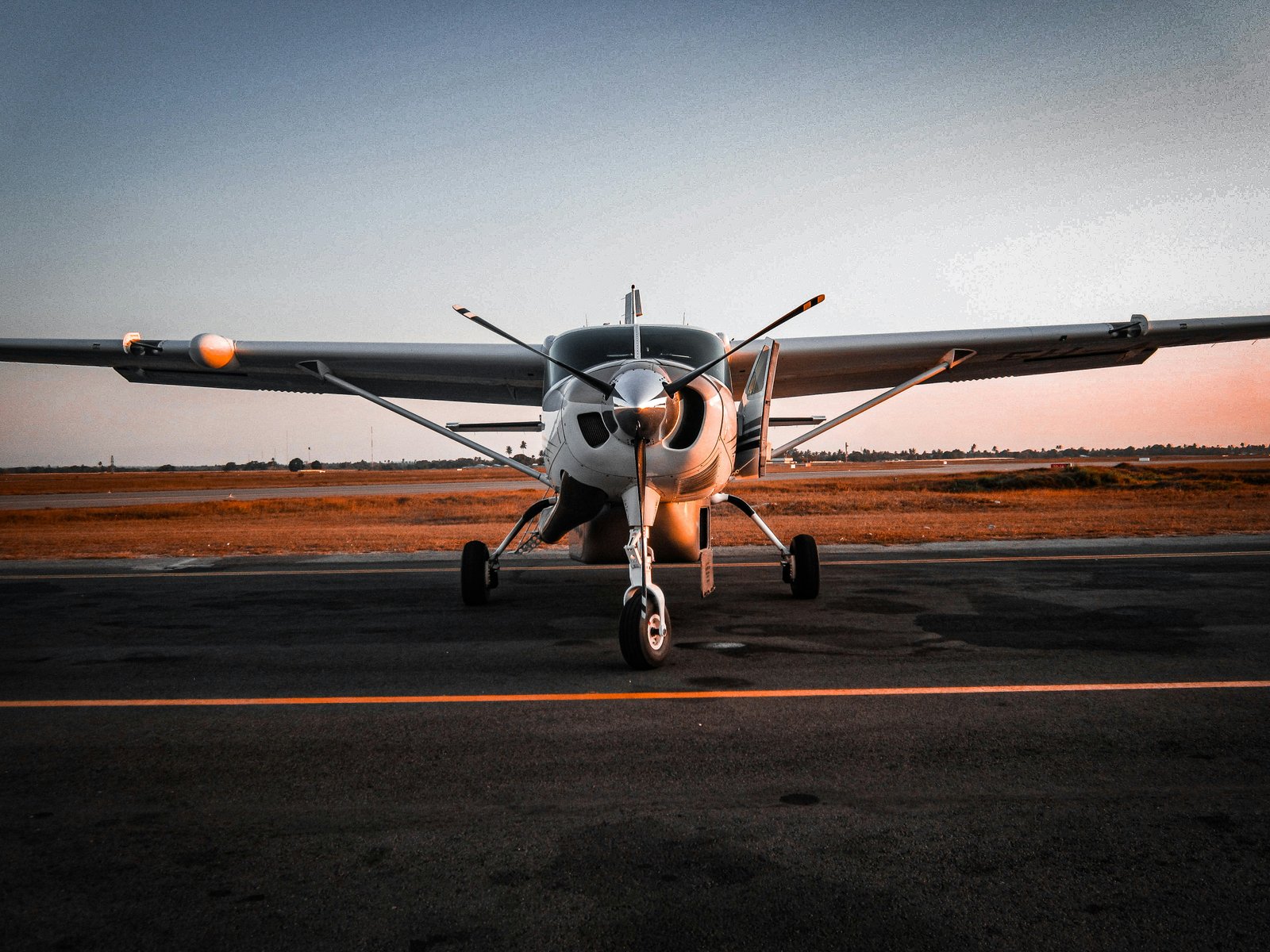
For a country this large — Tanzania is roughly the size of Western Europe — domestic flights can save days of overland travel. The main operators are:
Coastal Aviation — the most established domestic carrier, connecting Dar es Salaam, Zanzibar, Arusha, Selous (Nyerere), Ruaha, the Serengeti airstrips (Seronera, Grumeti, Kogatende), Lake Manyara, Tarangire, and more. Price range: approximately USD 120–350 per sector as of 2026.
Auric Air — similar route network, often competitive on pricing, particularly for routes within the northern circuit. They also offer charter options for small groups.
Grumeti Air — primarily serves the Grumeti Reserves and Serengeti’s western corridor, useful for mid- and high-end safari camps in that zone.
Air Tanzania — the national carrier operates scheduled services between Dar es Salaam, Zanzibar, Kilimanjaro, Mwanza, and a handful of regional cities. More like a conventional small airline; booking in advance is possible online.
Baggage on Domestic Flights
Bush planes are small. Most operators enforce a 15 kg total weight limit on soft-sided bags (no hard shells, no wheels on many aircraft). If you are flying bush plane legs mid-safari, pack a duffel bag for those legs and leave your main luggage at the base camp or starting hotel. Many lodges store excess luggage for free.
Booking Tips
Book 3–5 months ahead for peak season (July–August, December–January). Safari season aligns with school holidays, which drives international demand for East Africa sharply upward. Last-minute fares for this period can be double the advance price.
Compare Addis Ababa vs Nairobi vs Doha transit options. Ethiopian Airlines via Addis and Kenya Airways via Nairobi often price within USD 50–100 of each other; Qatar via Doha sometimes undercuts both on off-peak travel. Running a search across all three hubs is worth the extra five minutes.
Use multi-city searches for complicated itineraries. If you plan to fly into Kilimanjaro and out of Dar (or vice versa), a multi-city or open-jaw search will avoid paying for return positioning. This is a common and sensible routing for Tanzania safaris — fly into the north for the Serengeti, fly home from Dar after a Zanzibar leg.
Consider Nairobi as an alternative entry point. If fares to Nairobi are significantly lower and you are starting your Tanzania trip in the north, crossing overland from Nairobi to Arusha is a well-worn route (approximately 5–6 hours by shuttle bus, around USD 30–40 as of 2026). Companies like Impala Shuttle and Riverside run this route daily.
Check luggage allowances carefully. Long-haul fares often include one or two checked bags, but connecting bush-plane legs have strict 15 kg limits as described above. Build this into your packing from the start — Tanzania safari luggage discipline saves stress later.
Budget vs premium. Economy on Ethiopian Airlines, Kenya Airways, and Turkish Airlines is perfectly adequate for this route — the flight is long (10+ hours) but all three have seat-back screens, reasonable meals, and adequate legroom in standard economy. If you want more comfort, Qatar and KLM business class offers a flat bed and is often bookable with points if you accumulate them.
Getting from the Airport
Dar es Salaam: The airport is 12 km from the city centre, but traffic can make this a 30–60 minute drive. Registered taxis are available outside arrivals (agree the fare before getting in — typically USD 15–25 to the city centre as of 2026). Most hotels offer a pre-booked pickup.
Kilimanjaro: The airport sits between Moshi and Arusha. Shared shuttles to Arusha town take about 45 minutes (approximately USD 15–25). Private transfers to Arusha cost around USD 40–70 as of 2026. Many safari operators include airport pickup as part of their package.
Zanzibar: Stone Town is 6 km from the airport. Taxis are plentiful outside arrivals (around USD 10–15 to Stone Town). Transfers to beach resorts range from USD 15–50 depending on distance.