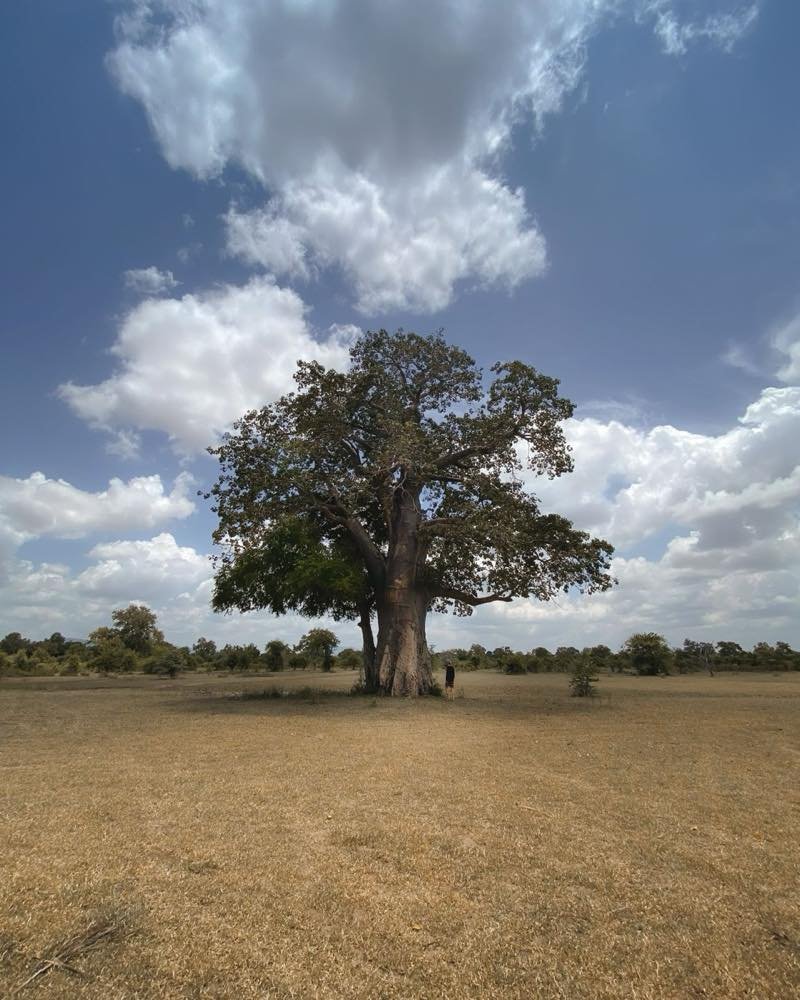
Ruaha National Park covers 22,000 square kilometres of south-central Tanzania, making it the country’s largest national park. It sits outside the standard Arusha-Serengeti-Ngorongoro corridor - which means most international visitors never reach it. The ones who do tend to return.
The wildlife here competes with the northern circuit in terms of sheer quality: lion, leopard, cheetah, elephant, buffalo, wild dog, kudu, and one of Africa’s most biodiverse bird lists. What Ruaha offers that the north cannot is space and solitude. You are unlikely to share a lion kill with five other Land Cruisers.
Entry fees are USD 32 per person per day for non-resident adults as of 2026, payable to TANAPA. Most visitors book fully inclusive fly-in packages where park fees are rolled into the camp rate.
The Wildlife
Ruaha holds Tanzania’s largest elephant population - upwards of 12,000 animals - and a lion population of over 1,000, which represents approximately 10% of all lions remaining in Africa. The park is one of the most consistent places on the continent to see African wild dogs (Lycaon pictus), which breed here annually. A full pack hunt - a dozen animals working in relay across open ground at dawn - is one of the great safari spectacles, and Ruaha gives you a reasonable chance of witnessing it between July and September.
The wildlife list differs meaningfully from the north. Both greater and lesser kudu are present (lesser kudu is uncommon in Tanzania). Roan antelope and sable antelope, essentially absent from the Serengeti, are resident in Ruaha. Cheetah and leopard are both present and reasonably visible in the dry season. Over 570 bird species have been recorded.
For the complete wildlife detail - species by species, with seasonal notes and where in the park each animal concentrates - see our Ruaha wildlife guide.
Getting There
By air: The most practical access for non-residents. Coastal Aviation and Auric Air fly from Dar es Salaam to Msembe airstrip inside the park, with journey times of approximately 1.5 hours. Flights from Arusha take around 2 hours. One-way fares start at approximately USD 300–400 per person on scheduled services; charter prices vary by group size. Book at least 4–6 weeks ahead for peak season (July–September). Compare flights to Tanzania for the international leg into Dar es Salaam before you connect to Msembe.
By road: From Dar es Salaam, drive or be driven to Iringa (440km on the TANZAM highway, approximately 5 hours), then continue west on the B127 to the park gate near Msembe (approximately 3–4 more hours). Total journey: 8–10 hours depending on road conditions. This route is used primarily by Tanzanian residents and overland operators; most international visitors fly.
Combining parks: Ruaha is commonly combined with Nyerere National Park (formerly the Selous Game Reserve) into a southern Tanzania safari circuit. Both parks are accessible by light aircraft, and the combined itinerary - three nights Ruaha, three nights Nyerere - gives you a genuinely different safari experience from the north, covering bush, river, and boat safari in a single trip.
When to Visit
June to October (dry season): The main visitor season. Vegetation thins, animals concentrate along the Great Ruaha River, and road conditions are reliably good. Wild dog activity peaks July to September. July and August are peak months - book early.
November to December: The short rains arrive, briefly turning the landscape green. Wildlife remains visible and the light is excellent for photography. Some lodges begin to close from late November.
January to March: The green season. Animals are more dispersed across the park and game drives can require more patience. Rates at most camps drop by 30–40% compared to peak season. The landscape is spectacular - particularly the acacia-studded hills with new foliage after the rains. Birding is at its best.
April to May: The main rainy season. Most camps close, roads can become impassable in the northwest of the park, and the Great Ruaha River floods. Not recommended for standard visits.
Where to Stay
Ruaha is a camp-first destination. There are no large lodge complexes on the scale of the northern circuit; instead, the park is served by small tented camps (typically 6–12 tents) operating on an all-inclusive basis. This contributes to the uncrowded atmosphere - there are simply fewer people in total across the park.
Jongomero Camp: One of Tanzania’s most remote and celebrated camps, positioned in a private concession in the southwest of the park. Eight tents on a seasonal sand river, with excellent guiding and a long-standing reputation for wild dog sightings. Rates from approximately USD 800–900 per person per night all-inclusive in peak season. It suits experienced safari travellers who want complete immersion.
Kwihala Tented Camp: A newer camp with a strong conservation ethos, operating in the central section near the Great Ruaha River. Six tents; excellent guiding; known for lion and elephant sightings. Rates from approximately USD 600–750 per person per night all-inclusive in high season.
Mwagusi Safari Camp: One of the original and best-known camps in Ruaha, run by a family with decades of experience in the park. Ten tents along the Mwagusi sand river. Rates from approximately USD 550–700 per person per night all-inclusive.
Ruaha River Lodge: The most established option and slightly more accessible in price, with a mix of banda rooms and tented cottages. Rates from approximately USD 350–500 per person per night, making it the most affordable option for travellers on a tighter budget. The guiding standards are somewhat lower than the top-end camps, but wildlife access is comparable given the shared park.
All rates above are indicative and for 2026 high season. Request current pricing directly from the camps or through a Tanzania-based operator. Check availability and current rates at Ruaha National Park camps and lodges.
Planning a Ruaha Safari
Minimum stay: Three nights. Two nights is not enough to cover different areas of the park and increases the lottery element of wildlife sightings. Wild dog sightings, in particular, reward guests who go out for multiple early-morning drives across consecutive days.
Typical itinerary: Three nights Ruaha combined with three nights Nyerere National Park makes a well-balanced southern Tanzania trip. For a fuller southern circuit, add two nights at Mahale Mountains for chimpanzee trekking (fly via Dar).
Budget: Southern Tanzania is more expensive than the northern circuit at the mid-range level because small camps cannot amortise costs across large guest volumes. All-inclusive packages (including flights, accommodation, park fees, and guiding) typically run USD 1,500–3,500 per person for a three-night stay depending on camp tier. This is comparable to high-end Serengeti camps, but there is no low-budget equivalent.
Booking: Book through a Tanzania-registered safari operator rather than directly through camps for itinerary flexibility. Operators who specialise in the southern circuit include Nomad Tanzania, &Beyond Tanzania, and several boutique operators based in Dar es Salaam and Arusha. Ask specifically about the operator’s guiding track record at Ruaha before booking - guide quality varies more in the south than in the heavily competed northern circuit.
See our Tanzania safari costs guide for full budget breakdowns across all lodge tiers. To compare itineraries, browse Ruaha safari tours in Tanzania, including fly-in southern circuit packages.
Official sources: Tanzania National Parks Authority.