Zanzibar’s food is the most distinctive in Tanzania - shaped by six centuries as the Indian Ocean’s most important spice and trade port. Arab dhows, Indian merchants, Portuguese traders, and British administrators all left traces in the island’s cooking. The result is a cuisine that is aromatic, coconut-rich, heavily spiced, and unlike anything you will find on the African mainland.
The Forodhani Night Market
The single most important food experience in Zanzibar. From sunset (around 18:00) until around 22:30, Forodhani Gardens on the Stone Town waterfront fills with charcoal grills, cooking stations, and the smell of frying spices.
What to eat and how much:
Zanzibar mix (urojo): A sour, tangy soup base - tamarind and mango - poured over cassava, potato bhajis, fried cassava chips, hard-boiled egg, and chilli sauce. The layering of textures and the tart broth make this genuinely addictive. Price: TZS 2,000–5,000.
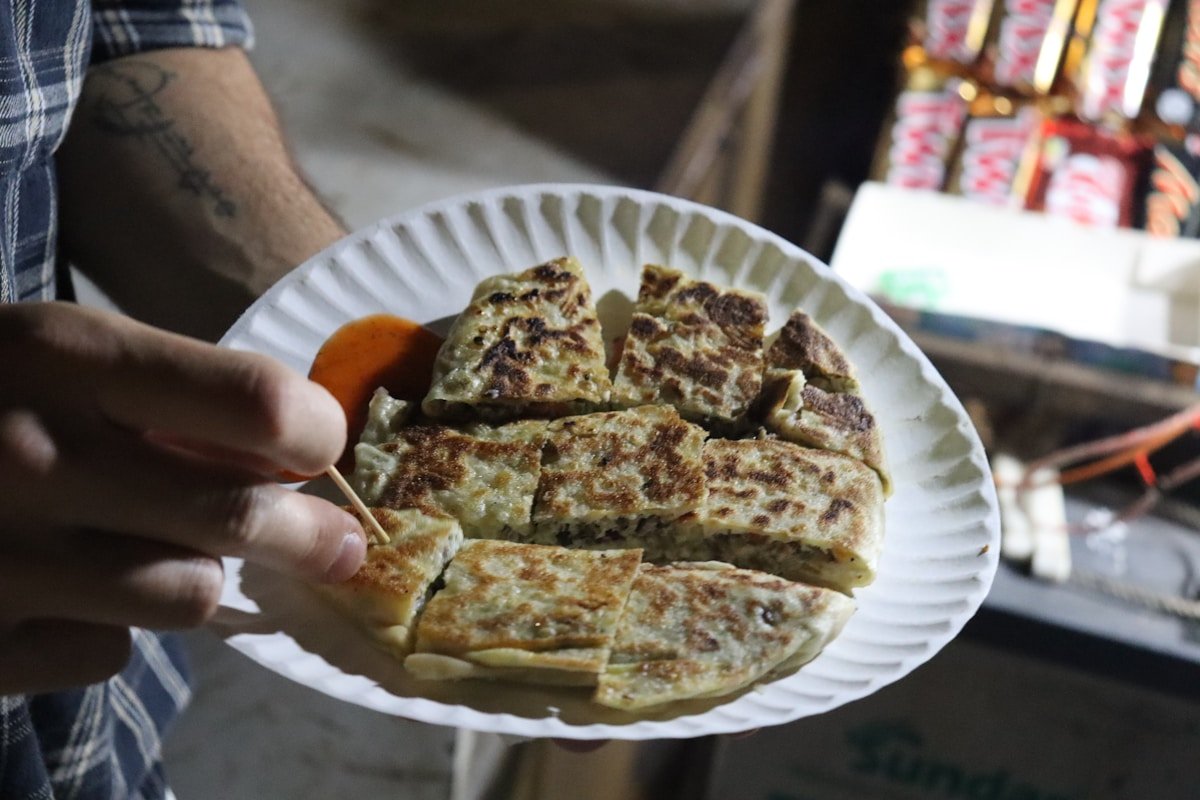
Zanzibar pizza: Thinly stretched dough filled with combinations of egg, minced meat, vegetables, cheese, and spices, folded and fried on a flat griddle. Nothing like Italian pizza - closer to a stuffed crepe. Fillings are negotiated with the vendor; prices TZS 5,000–15,000 depending on the filling.
Fresh octopus (pweza): Whole octopus tentacles grilled over charcoal, served with a squeeze of lime and chilli. TZS 3,000–8,000 per skewer. The octopus at Forodhani is the freshest on the island.
Sugarcane juice (muwa): Fresh-pressed on a hand-operated press, often with a squeeze of lime. TZS 1,000–2,000. The best non-alcoholic drink at the market.
Fried cassava with coconut chutney (muhogo wa kakara): TZS 1,000–2,000. Simple and deeply satisfying.
Practical tips for Forodhani:
- Prices should not require heavy negotiation, but confirm before eating
- Start at one end and walk the full market before committing - variety is the point
- Come hungry; TZS 15,000–25,000 will give you a substantial eating tour of the whole market
- The market is best Sunday–Thursday; weekends can feel overcrowded with non-local visitors
Stone Town: Daytime Eating
Darajani Market
Creek Road’s central market has the best spice stalls on the island. Beyond shopping, the surrounding streets have excellent daytime food:
- Fish section (rear of market): Whole grilled fish with chapati and kachumbari, TZS 6,000–12,000
- Vitumbua vendors: Rice and coconut pancake sellers set up around the market entrance from 06:00 to 11:00. TZS 200–500 each; buy six for breakfast.
- Juice stalls: Fresh passion fruit, mango, and tamarind juices pressed to order. TZS 1,500–3,000.
Stone Town Local Lunch Restaurants
Several small restaurants in the old town alleys serve the working lunch crowd: pilau rice with meat, fish curries, and vegetable stews. The best are usually away from the main tourist routes - look for spots on Malawi Road, Kiponda Street, or near the Old Fort’s back entrance.
A plate of pilau with chicken and kachumbari: TZS 8,000–15,000. Fresh fish curry over coconut rice: TZS 10,000–18,000.
Key Zanzibari Dishes to Try
Samaki wa Kupaka
The defining seafood dish of the Swahili coast. Whole fish - typically red snapper, kingfish, or grouper - marinated in a paste of tamarind, garlic, and coconut milk, then grilled or baked until the exterior caramelises slightly. Served with wali wa nazi (coconut rice) and a simple tomato-coriander relish.
The key is the tamarind-coconut combination: the tartness of the tamarind cuts through the richness of the coconut, and the marinade penetrates the fish deeply before grilling. Price at a proper Stone Town restaurant: TZS 20,000–40,000 depending on the fish.
Pilau Rice
Zanzibar pilau is more aromatic than mainland versions - whole spices (cardamom pods, cloves, cinnamon sticks) float in the rice alongside slow-cooked meat. The best versions use a homemade spice paste ground fresh for each batch. Available at most restaurants; the quality indicator is whether the spices are whole and visible, or whether the rice has simply been coloured with spice powder.
Mchuzi wa Pweza (Octopus Coconut Curry)
Octopus braised in coconut milk with tomatoes, onion, garlic, turmeric, and ginger. The octopus needs long slow cooking to become tender - the difference between a well-made mchuzi wa pweza (falling-off soft) and a rushed one (rubbery) is significant. Stone Town restaurants that specialise in this dish are worth finding. Price: TZS 18,000–35,000.
Biryani
Zanzibar’s biryani - influenced by Omani and Indian cooking - is richer than the mainland version. The spicing includes dried limes (loomi), saffron if the cook is generous, and fried onions layered through the rice. Available for celebrations, feast days, and at better Stone Town restaurants. Price: TZS 15,000–30,000.
Halwa
The most important Zanzibari sweet - a dense, gelatinous confection made from wheat starch, sugar, ghee, and cardamom, often with nuts mixed in. Sold in red boxes from halwa shops throughout Stone Town. The most established shop is just off Cathedral Street. A 250g box: TZS 8,000–15,000. It keeps well and is a good gift to take home.
Spice Farm Meals
Several of the spice farm tours north of Stone Town (Kizimbani area) include a lunch cooked with freshly harvested spices. This is one of the best food experiences in Zanzibar - rice scented with fresh cloves and cardamom, a coconut curry made with spices picked minutes before, and tropical fruit from the same farm.
Quality varies by tour operator. The included meals on most standard USD 20–30 tours are basic; the better operators (USD 40–60 tours) use trained cooks and give more time for the eating portion. Ask specifically whether lunch is included and what the menu is before booking.
Beach Restaurant Dining
The major beach resorts - Nungwi (north), Paje (east), and Jambiani (south-east) - all have restaurant strips catering primarily to resort guests. The food is generally decent but prices are calibrated to international tourist budgets:
- Grilled catch of the day with chips and salad: USD 12–25
- Lobster when in season: USD 25–50
- Fresh fruit juice: USD 3–6
- Local beer: USD 3–5
The cooking at beach restaurants is usually simpler than at good Stone Town restaurants - fish is typically grilled plain with lemon rather than spiced in the Swahili style. For authentic Zanzibari flavours, a meal in Stone Town is almost always better than a beach restaurant equivalent.
Exception: The fish market at Nungwi village (separate from the resort beach) sells fresh catch daily from 06:00 to 10:00, and a few local stalls near the market cook simple grilled fish for TZS 8,000–15,000 - considerably better value than the resort restaurants 50m away.
Drinks
Coffee in Zanzibar
Zanzibar does not grow coffee to the same quality as Kilimanjaro arabica, but the island has developed a distinctive spiced coffee tradition. Kahawa ya Unguja (Zanzibari coffee) is brewed strong from ground coffee beans mixed with cardamom and ginger, served in tiny cups. Sold from silver urns by street vendors near Darajani market and the Old Fort from 06:00 to 10:00. TZS 500–1,000 per cup.
Fresh Coconut Water
Green madafu (young coconut) are available from street vendors throughout Stone Town and at beach areas. The vendor splits the top with a machete and adds a straw. Cold from a cooler in the midday heat: TZS 1,000–2,000.
Baobab Juice
Less common but worth seeking out - baobab fruit dissolved in water with sugar makes a tart, slightly grainy drink rich in vitamin C. Available at some Forodhani market stalls and speciality health juice bars in Stone Town.
A Zanzibar Food Itinerary
Morning: Vitumbua and spiced coffee near Darajani market (07:00–08:00). Walk the fish section of the market.
Late morning: Spice farm tour north of Stone Town with lunch included (09:00–13:00).
Afternoon: Stone Town walking tour with carved door map - stop for fresh juice and halwa shopping.
Evening: Forodhani night market with a full eating tour (TZS 20,000–30,000 covers sampling six to eight dishes across the market). Walk back to your guesthouse along the seafront.
This is one of the best food days available anywhere in East Africa for under USD 30 total. Browse Zanzibar food tours and cooking classes to book a guided Swahili market and cooking experience. For named restaurant recommendations sorted by area - from Stone Town rooftops to east coast beach shacks - see our Zanzibar restaurant guide. Stay connected for navigation across Stone Town and the beaches with an eSIM for Tanzania.