Arusha sits at the crossroads of Tanzania’s safari circuit and feeds accordingly. The city receives a constant flow of travellers — budget overlanders, mid-range safari groups, and high-end lodge guests — and its restaurant scene reflects that diversity. But beneath the tourist-facing cafes and safari lodges, there is a genuine local food culture shaped by the city’s Meru and Maasai heritage, its large Indian-Tanzanian community, and its role as a trading hub between the highlands and the coast. Eating well here requires knowing which street to turn down.
For a full overview of what to see and do in the city, see our Arusha city guide.
The Central Market: Where Arusha Actually Eats
Arusha’s central market on Market Street is the single best place to understand how the city feeds itself. Arrive before noon — by early afternoon the best stalls are sold out.
What to look for:
- Rolex vendors: At the market edge and in the surrounding streets, vendors roll eggs and vegetables into chapati for TZS 2,000–4,000. A rolex is the definitive Arusha street breakfast. The egg is cracked onto the hot plate, seasoned, and the chapati is rolled around it while still warm.
- Ugali na mchuzi: The market has several informal lunch counters serving ugali with bean stew, leafy greens, or goat curry — TZS 3,000–6,000 for a full plate.
- Chips mayai: Potato chips set into an egg omelette, eaten cut in wedges. One of the most popular quick lunches in any Tanzanian city market area — TZS 4,000–6,000.
- Fresh produce: The market is also the place to buy passion fruit, avocados, and the local njugu (groundnuts) that appear in many Arusha dishes.
The lanes around the market also concentrate the highest density of Indian-run grocery shops and duka restaurants serving cheap pilau.
Nyama Choma: Arusha’s Evening Ritual
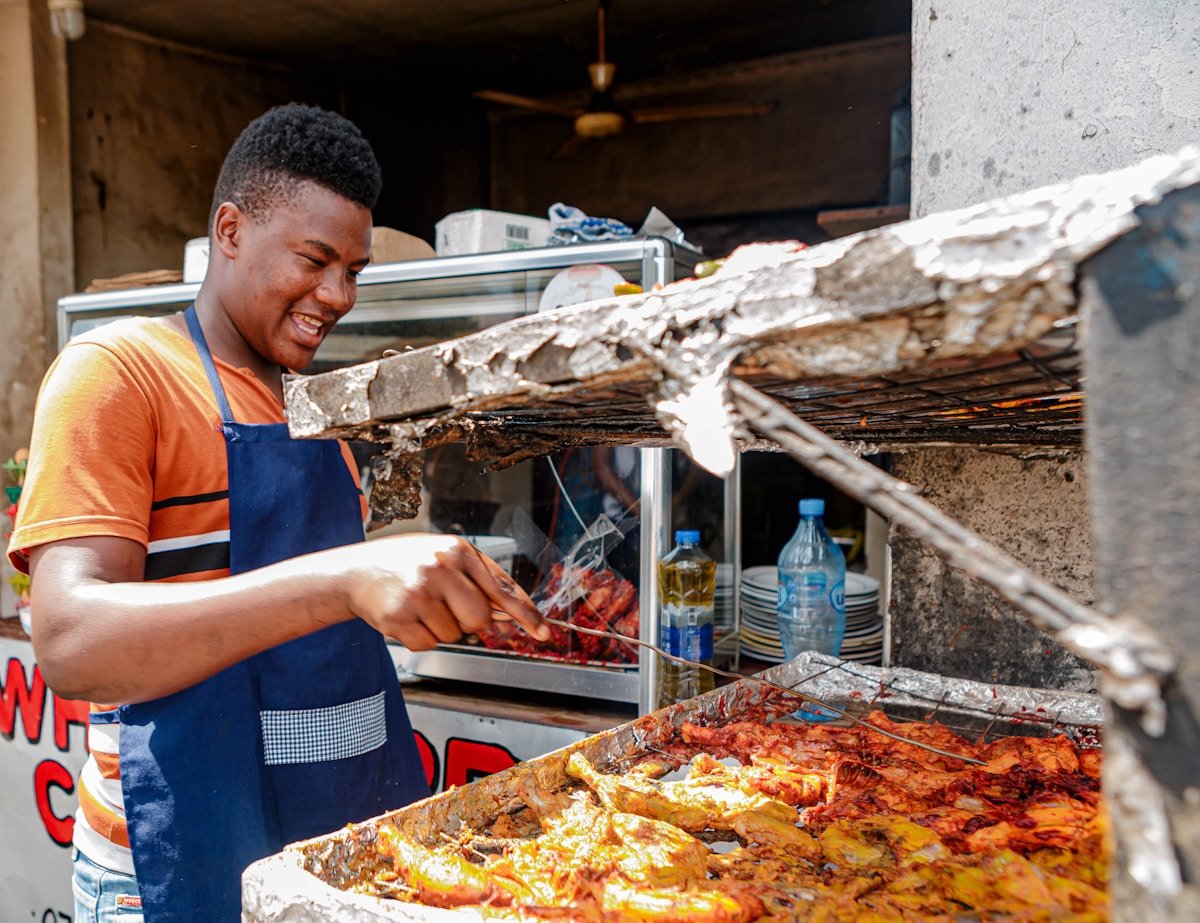
Nyama choma — literally “grilled meat” — is the social meal of northern Tanzania. In Arusha, it typically means goat, though beef is widely available, and chicken (kuku choma) is popular with those avoiding red meat.
The standard setup: you choose your cut (ribs, leg, shoulder), agree a weight and price, and the meat goes on a charcoal grill while you wait with a cold beer. It arrives on a wooden board with kachumbari (raw tomato and onion salad), ugali, and a chilli sauce.
Where to go for nyama choma:
- Arusha Meat Market area (off Sokoine Road): The cluster of outdoor nyama choma joints near the bus stand is where local office workers eat after work. Expect to pay approximately TZS 15,000–25,000 per kilo of goat. Less polished than tourist-facing restaurants, but the quality is higher and the portions are generous.
- Impala Hotel grounds area (Dodoma Road): Several nyama choma gardens operate in this part of the city from early evening, with outdoor seating and live music at weekends. Prices run TZS 20,000–40,000 for a full meal with ugali and drinks.
- Baraa Butchery (Stadium Road): A long-standing local favourite, this butchery-restaurant hybrid lets you select raw meat and have it grilled to order. Goat ribs: approximately TZS 18,000–22,000 per kilo. Open daily from around 10:00.
Indian Food in Arusha
Arusha’s Indian-Tanzanian community — many families descended from traders and labourers who arrived in the colonial era — has left a lasting mark on the city’s eating habits. Pilau (spiced rice with meat), biryani, samosas, and mandazi (fried dough) with chai are found across the city, often without any tourist markup because they are genuinely local staples.
Where to Eat Indian Food
Khan’s Barbecue (Old Moshi Road): A Arusha institution. Khan’s is technically a barbecue restaurant but the spice profile is firmly South Asian — cumin-marinated chicken tikka, seekh kebabs, and fragrant pilau rice. Full dinner: TZS 35,000–65,000 per person. Open from 12:00 daily.
Spices and Herbs Restaurant (Serengeti Road, near the Clock Tower): Vegetarian-friendly with a menu drawing on Gujarati cooking traditions. Dal, paneer dishes, and an excellent masala chai. Lunch: TZS 15,000–30,000. Popular with the local Asian community, which is a reliable indicator of quality.
Mukhtar’s Snack Bar (Market Street area): A bare-bones counter serving samosas and mandazi from early morning. Samosas: TZS 500–1,000 each. The chai here is some of the best in the city.
Safari Lodge Restaurants
Several safari lodges and upmarket hotels around Arusha run restaurants open to non-guests, offering good food in calmer surroundings than the city centre.
Arusha Coffee Lodge Restaurant (Dolly Rd, near the airport road): Set on a working coffee estate, this is one of the best brunch spots in the region. The menu draws on East African ingredients — avocado, seasonal greens, fresh eggs from the estate — combined with European technique. Brunch: TZS 60,000–120,000 per person. Reservations recommended at weekends.
Kijenge area restaurants (Kijenge Rd): The diplomatic and NGO district northwest of the centre has a cluster of restaurants serving international food — burgers, pasta, Ethiopian injera — at mid-range prices of TZS 25,000–70,000. Good for lunch if you are based on the northern side of the city.
Breakfast and Coffee
Arusha is close enough to the Kilimanjaro coffee-growing region that fresh Tanzanian arabica is widely available. Most mid-range hotels serve decent coffee; for something better:
Café des Arts (Boma Road): Long a meeting point for Arusha’s creative and NGO community, this courtyard café serves single-origin Tanzanian coffee alongside pastries and a short all-day menu. Cappuccino: approximately TZS 7,000–9,000. Lunch mains: TZS 18,000–40,000. Closed Sundays.
Fig & Olive (Joel Maeda Road): A newer entry that has quickly become popular with the expat community. Good eggs on toast, quality filter coffee, and fresh juice. Breakfast: TZS 15,000–35,000. Opens at 07:30.
Swahili Coastal Food in a Landlocked City
Despite being 600km from the coast, Arusha has a handful of restaurants serving genuinely good Swahili cooking — wali wa nazi (coconut rice), grilled kingfish, octopus stews — catering to the Swahili-speaking population and nostalgic coastal travellers.
Stiggy’s Bar and Restaurant (Joel Maeda Road): A casual, open-air venue that serves both Tanzanian and international food. The biryani is reliable; the fish dishes (when available) are freshwater fish from the region rather than Indian Ocean species. Full meal: TZS 20,000–45,000.
What to Eat in Arusha: Summary
- Morning: Rolex from a market vendor (TZS 2,000–4,000), or eggs and coffee at Café des Arts
- Lunch: Ugali with bean stew at the central market (TZS 3,000–6,000), or samosas and biryani in the Indian quarter
- Evening: Nyama choma with kachumbari and beer at the Meat Market area (TZS 25,000–40,000 for two)
- Splurge: Brunch at Arusha Coffee Lodge on a working coffee estate (TZS 60,000–120,000 per person)
Arusha feeds well across every price point. The city’s position as the hub of Tanzania’s tourism industry means international quality is available when you want it, but the market stalls and nyama choma joints are a reminder that the best eating in East Africa is almost always found at street level.