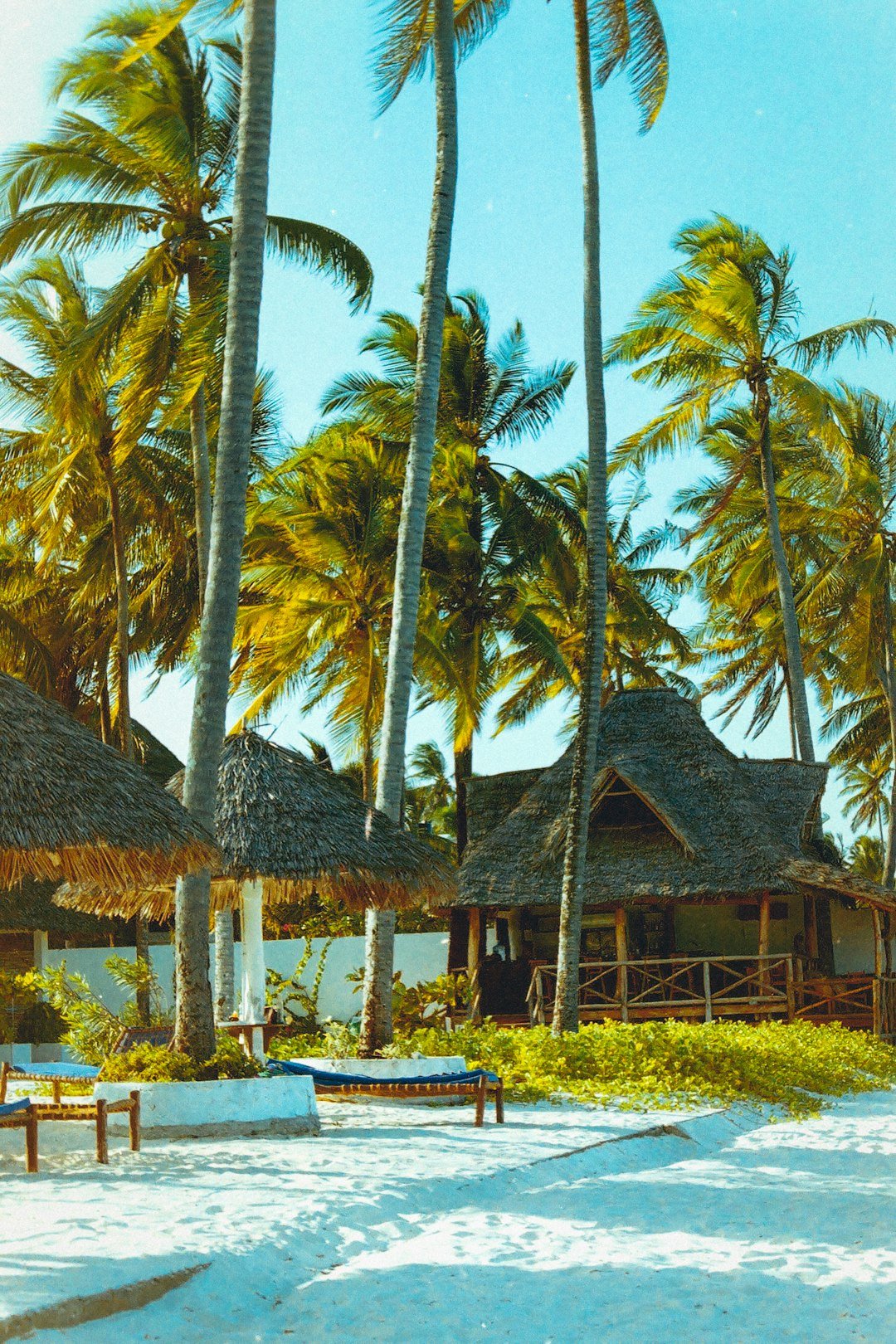
Tanzania’s two main Indian Ocean islands attract very different travellers. Zanzibar is widely known — Lonely Planet-famous, with a Unesco-listed Stone Town, dozens of beach resorts, and tourism infrastructure that has grown steadily for 30 years. Pemba, 80km to the north, sits in a different category entirely: fewer than 10,000 tourist arrivals per year, almost no mass-market accommodation, reefs that diving specialists rate among the best in the Indian Ocean, and a landscape of clove farms and fishing villages that feels genuinely unhurried.
Choosing between them comes down to a fundamental question: do you want comfort and options, or remoteness and reward?
Overview
Zanzibar is an archipelago with Unguja as the main island. Stone Town, the historic trading hub on its western coast, holds Omani-era architecture, a labyrinth of alleyways, and the UNESCO-listed old town. The north and east coasts have the main beach resort areas — Nungwi, Kendwa, and Paje being the most developed. With a population of over 1.5 million and roughly 650,000 annual tourists (as of recent counts), Zanzibar is well set up for visitors.
Pemba Island is smaller, quieter, and considerably harder to reach. Clove cultivation remains the economic foundation, and the tourism infrastructure is deliberately minimal. The Pemba Channel that surrounds it drops to 800m within a few kilometres of shore, creating the nutrient-rich cold upwellings that feed some of the healthiest coral walls in the western Indian Ocean.
Accommodation
Zanzibar has accommodation at every price point. Budget beach bungalows in Paje start around USD 25 to USD 40 per night. Mid-range resorts on the north coast (Nungwi, Kendwa) run USD 80 to USD 180. Luxury properties like The Residence Zanzibar or Zuri Zanzibar in the north charge USD 400 to USD 900 per night. Stone Town has boutique hotels in converted merchant houses from USD 60 to USD 200. The supply is large and competition keeps quality reasonable at mid-range.
Pemba has a small number of dedicated dive resorts and eco-lodges. Fundu Lagoon, the island’s most-established upscale property, charges approximately USD 600 to USD 1,200 per person per night all-inclusive. Manta Resort, built partly over water, runs similarly. A handful of simpler guesthouses in Wete and Chake Chake start from around USD 30 to USD 50, but these are basic and aimed at travellers comfortable with limited amenities. There is almost nothing in the USD 100 to USD 400 mid-range tier.
Winner on accommodation: Zanzibar for breadth and mid-range value; Pemba’s top end is exceptional but expensive.
Getting There
Zanzibar has Abeid Amani Karume International Airport with multiple flights daily from Dar es Salaam (around 25 minutes, USD 80 to USD 150 one-way with Precision Air, Air Tanzania, or Coastal Aviation). Ferry services from Dar es Salaam run several times daily and take 90 minutes to two hours by fast ferry (approximately USD 35 to USD 50 one-way).
Pemba requires more planning. Coastal Aviation and Auric Air operate small-plane flights from Dar es Salaam (approximately USD 180 to USD 260 one-way, 1.5 to 2 hours with possible intermediate stops) and from Zanzibar (around 30 minutes, USD 120 to USD 150). A passenger ferry runs occasionally from Zanzibar but schedules are inconsistent; the flight is strongly recommended. Most visitors book transfers through their lodge.
Winner on access: Zanzibar, clearly. Pemba requires deliberate planning.
Beaches and Swimming
Zanzibar’s beaches vary by season and position. The east coast (Paje, Bwejuu) has picture-postcard white sand and turquoise water during the dry season (June to October and January to February). The tides are extreme — at low tide on the east coast, the water recedes several hundred metres and swimming is impossible. The north coast (Nungwi, Kendwa) has calmer tidal patterns and swimming more reliably year-round.
Pemba’s beaches are less developed but the water clarity is exceptional given the channel upwellings. Swimming is good on the west coast beaches sheltered from the southeast trade wind; the east coast can be rough. The real draw is not beach-lying but water-based — diving, snorkelling, and kayaking through mangroves.
Winner on beaches: Zanzibar for resort-style beach experience; Pemba for water quality and visibility.
Diving and Snorkelling
This is where Pemba’s case becomes overwhelming for a specific type of traveller. The Pemba Channel walls drop vertically, starting at 10m and continuing to 800m. Coral health is exceptional — bleaching events that affected surrounding reefs have been less severe here. The combination of cold, nutrient-rich upwellings and the channel’s strong currents means abundant pelagic life: Napoleon wrasse, giant grouper, barracuda, reef sharks, and occasional hammerheads. Dive visibility regularly exceeds 30m.
Zanzibar has diving and it is decent — particularly around Mnemba Atoll in the northeast (day trips approximately USD 60 to USD 80 including equipment). But the coral has seen more pressure from boat anchors, sunscreen runoff, and periodic bleaching. It is not in the same league as Pemba for serious divers.
Winner on diving: Pemba, significantly. It is rated one of the top 10 dive destinations in the entire Indian Ocean by specialist publications.
Culture and Activities Beyond the Beach
Zanzibar’s Stone Town is the main cultural draw in Tanzania beyond the national parks. A half-day walk covers the House of Wonders (currently under restoration), the Old Fort (free entry, with cultural performances), the spice market, and the waterfront cafes serving Zanzibari coffee. The Forodhani Night Market on the waterfront operates from around 6pm and offers fresh grilled seafood for about USD 3 to USD 8 per plate. Spice tours from Stone Town (approximately USD 20 per person) visit clove, nutmeg, and vanilla farms on the island’s interior.
Pemba’s cultural activities are centred on its clove industry — you can visit farms and processing facilities — and on mangrove tours through the island’s extensive wetland network. Ngezi Forest Reserve in the north (admission approximately USD 10) protects one of the last intact examples of the coastal forest that once covered much of East Africa and is home to the Pemba flying fox. There is no Stone Town equivalent.
Winner on culture: Zanzibar. Stone Town alone justifies the trip.
Budget
Zanzibar mid-range travel (decent beach bungalow, two meals, a dive or snorkel trip, Stone Town day) runs approximately USD 100 to USD 180 per day per person. Budget travellers can manage on USD 60 to USD 80.
Pemba is expensive when staying at the destination lodges (USD 600 to USD 1,200 per night all-inclusive), cheap when staying in Wete guesthouses (USD 30 to USD 50), but the guesthouses require organising your own dive operator and transport which adds complexity. There is no genuinely comfortable mid-range option. Factor in the higher access cost (flights rather than ferry).
Winner on budget: Zanzibar for mid-range and budget travellers; Pemba’s all-inclusive lodges offer value given what is included.
Best For
- First-time Indian Ocean visitors: Zanzibar. The beach infrastructure, cultural depth of Stone Town, and easy access make it the natural choice.
- Serious divers: Pemba. The reef health and visibility are exceptional, and experienced divers rate it highly.
- Honeymooners: Both have appeal — Zanzibar for romance and setting, Pemba for total seclusion.
- Budget travellers: Zanzibar, where the mid-range is accessible and competitive.
- Off-the-beaten-path preference: Pemba. You will share beaches and reefs with very few other tourists.
- Short Tanzania add-ons (2-3 days): Zanzibar. It works as a beach end to a safari; Pemba requires a longer commitment.
The Verdict
Zanzibar wins for infrastructure, cultural richness, beach variety, and accessibility — it is the stronger choice for most visitors to Tanzania, particularly those combining islands with a mainland safari. Pemba wins for diving quality, reef health, and seclusion — it is one of the Indian Ocean’s best-kept diving secrets and rewards travellers who plan specifically around it.
If diving is central to your Tanzania trip, add three to five nights on Pemba. For everyone else, Zanzibar delivers the full package.