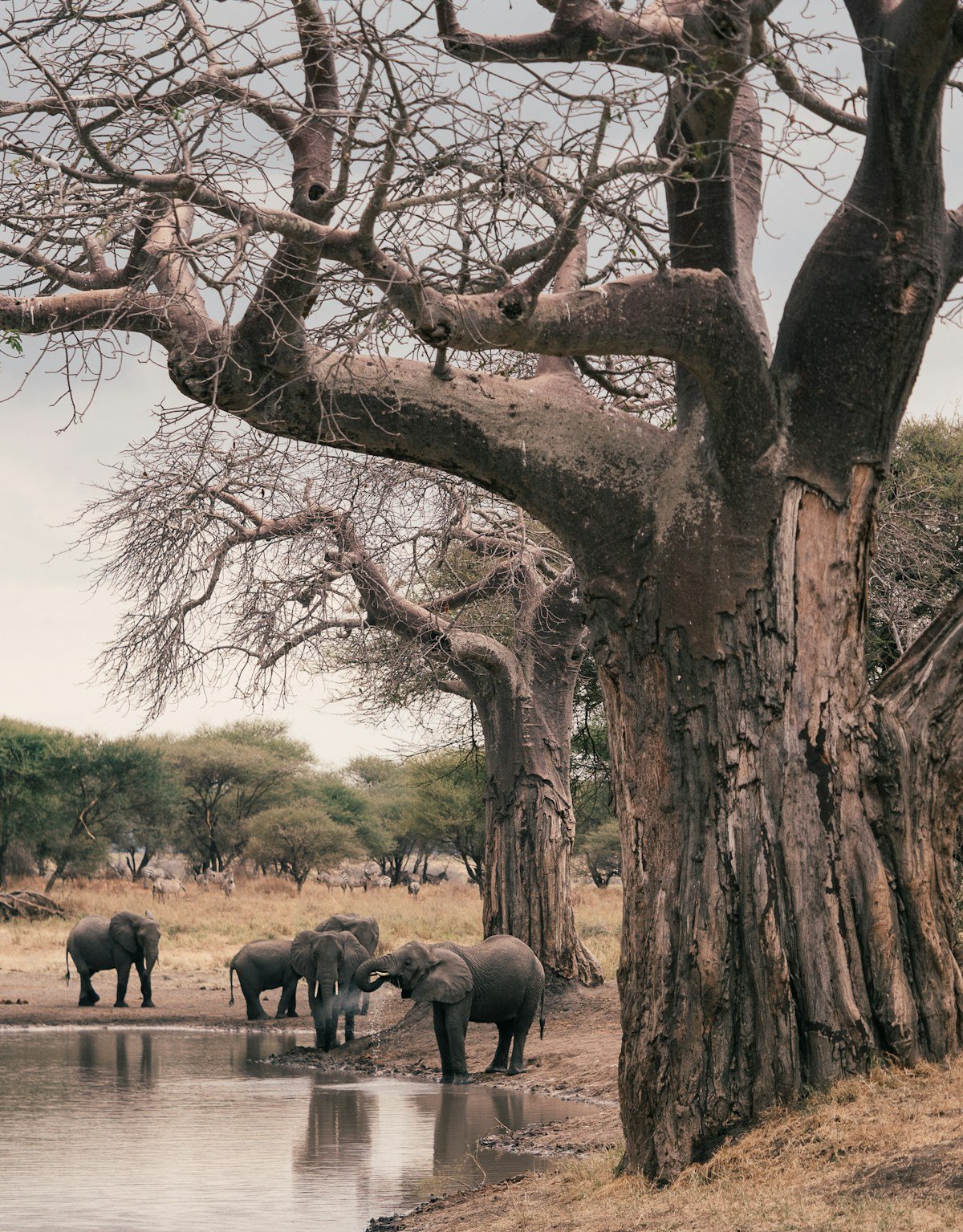
Tarangire National Park is the most underrated of Tanzania’s northern circuit parks and the best place in the country to see elephants in large concentrations. During the dry season from July to October, the Tarangire River — the only permanent water source in the region — draws wildlife from across a vast migration ecosystem that spans more than 20,000 sq km. Elephant herds of 200 to 300 animals gather at the river daily. The park covers 2,850 sq km of classic East African savannah dominated by ancient baobab trees, many of which are over 1,000 years old, and is home to one of the most diverse bird communities in Tanzania, with over 550 recorded species.
Entry fees are USD 59 per person per day for non-resident adults (as of 2026), considerably lower than the Serengeti’s USD 82. The park is open daily from 6am to 6pm, with night game drives available in certain private conservancy concessions outside the main park boundary. For a deep dive into Tarangire’s elephant migration mechanics, seasonal wildlife patterns, and standout wildlife encounters, see our Tarangire wildlife and elephant guide.
The Elephant Population
Tarangire’s elephant population is estimated at 4,000 to 6,000 individuals across the broader migration ecosystem, with the highest concentrations inside the park during the dry season. The herds exhibit complex social structures — large matriarch-led breeding herds, younger bachelor groups, and solitary older bulls all visible on a typical morning game drive along the river circuit.
What distinguishes Tarangire from other elephant destinations is the context: baobab trees and herds of hundreds of elephants make for one of Africa’s most photographically distinctive landscapes. The park’s tree-climbing lions, though rare, are occasionally sighted in the southern section near Silale Swamp.
Wildlife
The park’s year-round resident population includes large lion prides, leopard (more commonly heard than seen, concentrated in the acacia woodland of the northern sector), buffalo herds in the hundreds, giraffe, and massive concentrations of plains game — wildebeest, zebra, eland, and hartebeest all present. The Silale Swamp in the south holds hippo pods and attracts wading birds including saddle-billed stork, yellow-billed stork, and African open-bill.
Birding is Tarangire’s secondary drawcard. The yellow-collared lovebird is endemic to this region and extremely common. Martial eagle, lappet-faced vulture, kori bustard, and northern carmine bee-eater (October to April) are all reliably found. The park holds one of the highest bird species counts of any Tanzanian park of similar size.
Where to Stay
Luxury
Tarangire Sopa Lodge sits on a ridge overlooking the Tarangire River within the park boundary, with an outdoor swimming pool and views over the floodplain. The elevated position makes it one of the best locations for watching game from your room without leaving. Rooms start at approximately USD 380 per person per night (full-board, as of 2026). Rated 9.4 by couples on Booking.com.
Mid-Range
Mbali Mbali Tarangire River Camp operates in a private concession area adjacent to the park, allowing night drives and bush walks that are not available inside TANAPA boundaries. The riverside setting brings wildlife — particularly elephants — close to the camp perimeter. Rates start at approximately USD 200 to 350 per person per night (full-board, as of 2026).
Budget
Tarangire Safari Camp offers the lowest accommodation price inside the park, at approximately USD 100 to 180 per person per night (full-board, as of 2026). Accommodation is in permanent tents on raised platforms. The camp’s location near the main game circuit means morning drives start without transit time.
The Silale Public Campsite offers basic camping inside the park at USD 35 per person per night plus park fees (as of 2026). Self-sufficient vehicle and camping equipment required.
Where to Eat
Restaurants in Tarangire are exclusively lodge-based. All mid-range and luxury camps provide full-board meals; budget campers must be self-sufficient.
Sopa Lodge Restaurant serves a daily lunch buffet available to day visitors for approximately USD 35 per person (as of 2026). The spread covers international and East African dishes with views over the floodplain — a practical option for visitors on a day trip who want a proper meal mid-drive.
For self-catering, stock up in Kwa Kuchinia (the nearest small town, 12 km from the park entrance) or in Makuyuni on the main Arusha–Dodoma road, where there are small duka shops selling basic provisions.
Getting There
From Arusha: Tarangire is 118 km from Arusha, approximately 2 hours on tarmac to Makuyuni followed by a 15 km dirt road to the park entrance gate. Most safari operators drive this route as part of a combined Tarangire–Lake Manyara day circuit or as the first stop on a northern Tanzania safari itinerary. Private transfers from Arusha cost approximately USD 80 to 120 for the vehicle (as of 2026).
From Kilimanjaro International Airport: Approximately 2 hours 30 minutes by road. The airport is 110 km away via the A23 highway to Arusha, then south toward Makuyuni.
From Dar es Salaam: Fly to Kilimanjaro International Airport (1 hour 40 minutes, approximately USD 200 one-way, as of 2026) then road transfer as above.
By air: Coastal Aviation and Air Excel operate scheduled flights from Arusha to Kuro airstrip inside the park. Flight time is approximately 30 minutes; fares start at approximately USD 180 per person one-way (as of 2026).
When to Go
The dry season (July to October) is peak season for elephant concentrations. Wildlife density during this period is extraordinary — the river corridor can see hundreds of elephants, thousands of wildebeest, and multiple predators within a single morning drive. The green season (November to June) sees animals dispersed more widely across the ecosystem, numbers at the river are lower, but vegetation is lush, birthing impala herds attract predators, and prices drop by 20 to 40 percent at most camps. Tarangire is worth visiting year-round.
For full detail on what happens month by month — including the mechanics of the elephant dry-season migration, Python Rock, fringe-eared oryx sightings, and the best walking safari operators — see our companion Tarangire elephants and wildlife guide.