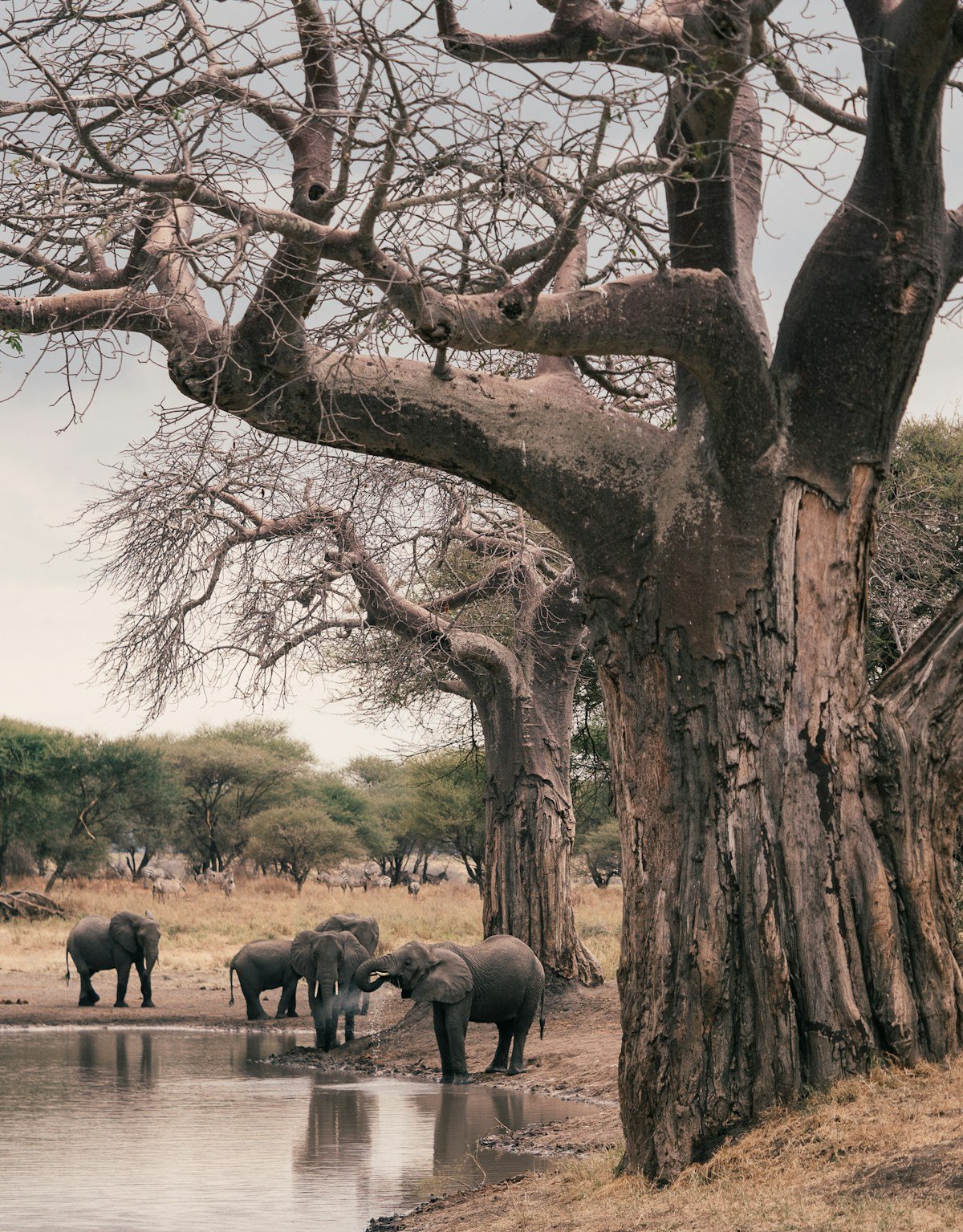
Most Tanzania safaris head straight for the Serengeti. Tarangire is often treated as a one-day detour on the way north - and that is a mistake. In the dry season (June–October), the Tarangire River becomes the last reliable water source for a vast area, drawing elephants from across the Maasai Steppe in numbers that must be seen to be understood. Herds of 200 elephants at a single waterhole are not unusual. Herds of 500 are recorded.
Combine that with an ecosystem dominated by ancient baobab trees - some over 1,000 years old - and you have a landscape unlike anywhere else on the safari circuit.
This guide covers the wildlife experience in depth: elephant migration mechanics, what else lives here, the best encounters, and a month-by-month breakdown. For logistics — entry fees, accommodation with booking links, and how to get there — see the Tarangire National Park visitor guide.
The Tarangire Ecosystem
Tarangire National Park covers approximately 2,850 square kilometres, though the broader Tarangire-Manyara ecosystem that animals move through is considerably larger. The park’s defining feature is the Tarangire River, which flows year-round and acts as a dry-season anchor for wildlife.
Outside the park, communal and wildlife management areas (particularly Randilen and Lolkisale) allow dispersal into a much greater area. Some of the finest walking safaris and most authentic bush experiences in northern Tanzania happen in these buffer zones.
Elephant Migration: What Happens and When
The elephant migration to Tarangire is less celebrated than the Great Migration but equally compelling in its way. Up to 3,000 elephants converge on the park during the dry season months, arriving in progressively larger numbers as water elsewhere fails. They concentrate along the Tarangire River and its tributaries.
Peak elephant concentration: July–October. The dry season shrinks the river to pools, and thousands of elephants queue along the banks. August and September typically offer the densest concentrations.
Green season (November–May): Elephants disperse into the surrounding ecosystem as water becomes available. The park is still excellent - bird numbers peak, and fewer vehicles are on the roads - but you are less likely to see the spectacular congregations.
Beyond Elephants: What Else Lives in Tarangire
Tarangire has Tanzania’s highest lion population per square kilometre during the dry season (some estimates put it second only to the Serengeti). The baobab woodland habitat also supports leopard, cheetah and an extraordinarily varied bird list - over 550 species recorded, including multiple species of hornbill, raptors and the diminutive ashy starling found only in this area.
Python Rock in the northern section of the park is one of the most reliable places in Africa to spot a rock python - they sun on the granite outcrops in the mornings and are genuinely enormous.
Fringe-eared oryx and gerenuk are found here but rarely see in the more-visited northern circuit parks. Tarangire’s more arid southern sections are the best place in Tanzania for both.
Park Entry Fees (as of 2026)
- Non-resident adults: USD 68 per person per day
- Non-resident children (5–15): USD 34 per person per day
- Vehicle fee: approximately USD 40–200 depending on seats
Fees are paid through the TAZAMA digital card system and are per calendar day, not 24-hour period. An arrival at 3pm and departure at 9am the following day counts as two days.
Getting to Tarangire
Tarangire is approximately 120 km southwest of Arusha (2–2.5 hours by road) and has a grass airstrip at Kuro served by Coastal Aviation, Air Excel and Auric Air. Full transfer options and flight details are in the Tarangire visitor guide.
Where to Stay in Tarangire
Full accommodation options across all budget tiers — from riverside bush camps to the tree-house suites at Tarangire Treetops — are covered in the Tarangire National Park visitor guide, including Booking.com links and current pricing. One practical note for wildlife watchers: camps in private concessions adjacent to the park (such as Boundary Hill Lodge and Oliver’s Camp) permit walking safaris and night drives that are not available inside TANAPA boundaries — worth prioritising if the wildlife experience is your main aim.
Best Experiences in Tarangire
Night game drives: Permitted inside the park with licensed operator vehicles. Completely different cast of characters - spring hare, genet, porcupine and aardwolf emerge after dark. Many lodges offer this as an included activity.
Walking safaris: Only available in the private concession areas outside the park boundary, not inside the national park proper. Operators like &Beyond (Oliver’s Camp) and some independent specialists run excellent half-day walks.
Bird watching: Tarangire is extraordinary for birders. The dry months concentrate water birds at the river while the wet season brings migrants. The baobab woodland has species found nowhere else in the northern circuit.
Visiting Python Rock: Ask your guide specifically for this - it requires knowing where to look and some camps include it as a half-day activity. Pythons in the 4–5 metre range are regular.
Seasonal Guide
| Month | Game | Crowds | Price | Notes |
|---|---|---|---|---|
| Jan–Feb | Good – some animals dispersed | Low | Low | Green, photogenic, birth of young |
| Mar–Apr | Good – wet and dispersed | Very low | Lowest | Long rains, some tracks muddy |
| May | Good, transitional | Low | Low | Rains easing, landscape green |
| Jun–Jul | Excellent – concentrating | Medium | Rising | Dry season begins, crowds increasing |
| Aug–Sep | Peak | High | Peak | Best elephant numbers, busiest |
| Oct | Excellent | Medium | High | Animals still concentrated, rain possible |
| Nov–Dec | Good | Low | Dropping | Short rains, animals dispersing |
Combining Tarangire with Other Parks
Most northern Tanzania safaris include Tarangire as the first or last stop:
- 2-day minimum: Enough for one full day of game drives, ideally overnight inside the park
- Best northern circuit combination: Tarangire (1–2 nights) → Lake Manyara (1 night) → Ngorongoro Crater (1–2 nights) → Serengeti (3–4 nights)
- Fly-in option: Land at Kuro airstrip, do 2 nights in Tarangire, fly to Seronera for the Serengeti
Browse Arusha Region tours for day trips and multi-day packages that include Tarangire as part of the northern circuit. For the full northern loop with Ngorongoro and the Serengeti, Tanzania safari tours covers operators at every budget tier. If you’re flying into Kilimanjaro or Arusha, compare flights to Tanzania to find connections through Nairobi, Addis Ababa, or Dar es Salaam.