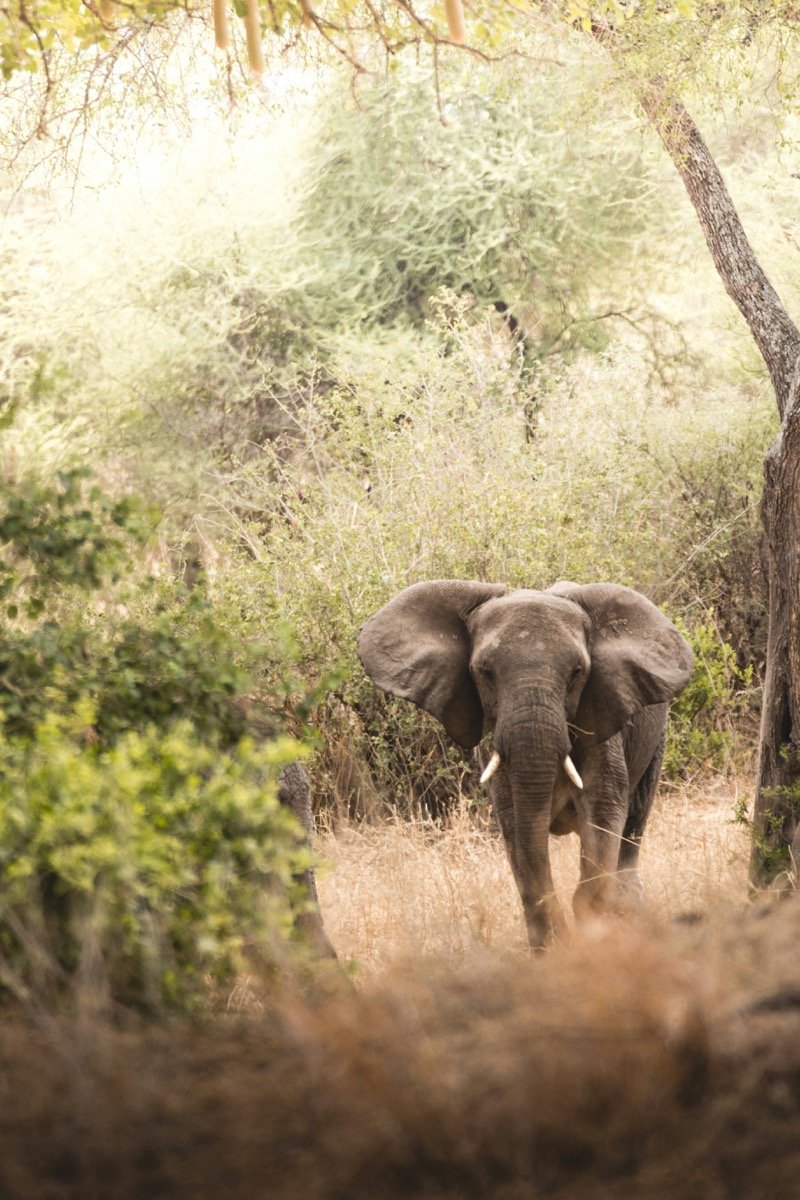
Lake Manyara National Park stretches along the base of the Great Rift Valley escarpment in northern Tanzania - a compact park of 325 square kilometres that packs in a remarkable variety of habitats and wildlife for its size. The park runs along the western shoreline of Lake Manyara, a soda lake that fills roughly two-thirds of the park’s total area and attracts some of East Africa’s largest flamingo concentrations. The remaining land section rises from lake shore to escarpment base through groundwater forest, open grassland, and acacia woodland.
Ernest Hemingway described the lake as “one of the lovelier places in the world” after visiting in the 1930s. The park’s combination of dense forest elephants, hippos in the shallows, and the famous - if infrequently spotted - tree-climbing lions makes it a compelling addition to the northern Tanzania circuit. For travellers on a tighter schedule or budget, it works equally well as a focused day trip from Arusha.
What You Will See
Groundwater Forest
The narrow belt of forest along the escarpment base is fed by springs percolating down from the Ngorongoro Highlands above. The canopy is dense and cool, in stark contrast to the open lake shoreline below. This is the best section for:
- Elephants: Lake Manyara’s elephant population numbers approximately 400–500, among the densest in Tanzania relative to land area. The forest elephants here tend to be larger-bodied than those on open savanna, and encounters are often very close - the forest tracks keep vehicles within metres of the herds.
- Vervet monkeys and olive baboons: Both species are abundant and approachable; the baboon troops along the forest tracks number in the hundreds.
- Birds: The forest holds over 400 bird species. Highlights include the silvery-cheeked hornbill, African broadbill, crowned eagle, and migratory species passing through on the East Africa flyway. The forest section accounts for a significant proportion of the park’s extraordinary species count.
Lake Shoreline and Hippo Pool
The main hippo pool in the north-central section of the lake holds 30–60 hippos year-round, visible from the bank and from boat-height on the park tracks. The surrounding reed beds and shallow water attract yellow-billed storks, sacred ibis, African fish eagles, and several heron species. The hippo pool is typically a late morning stop - 09:30 to 11:00 - when the herds are most active in the water.
Flamingos on the Southern Lake
The southern sections of Lake Manyara, accessible via the Maji Moto Hot Springs track, are the primary flamingo area. Both lesser and greater flamingos feed in the alkaline shallows. Peak concentrations arrive after the rains when lake levels and algae blooms are optimal. During peak periods, the pink line extends several kilometres across the southern shoreline.
Open Woodland and Grassland
The central and southern land sections are where lion, zebra, buffalo, wildebeest, giraffe, and impala concentrate. This is also where the park’s celebrated tree-climbing lions are most often spotted - resting in the branches of yellow-fever acacias, particularly in the midday heat. Tree-climbing lions are not unique to Lake Manyara (some populations in Uganda’s Queen Elizabeth NP also show this behaviour), but the phenomenon is most reliably documented here. Sightings are not guaranteed but occur regularly enough that the behaviour has been studied here since the 1960s.
Costs and Entry Fees
Park fees (as of 2026):
- Adult entry: USD 70 per person per 24-hour period
- Vehicle entry: USD 40 per registered vehicle
- No separate activity fees for game drives
Organised day trips from Arusha:
- Shared group tour (4–6 passengers): approximately USD 150–200 per person, including transport, park fees, guide, and picnic lunch
- Private vehicle (2 passengers): approximately USD 280–350 per person all-inclusive
- Budget backpacker option via public transport to Mto wa Mbu and hired park vehicle: approximately USD 100–130 per person in fees alone, plus USD 30–50 for a park guide (required for most activities)
Recommended operators for day trips:
- Zara Tours (Arusha): Long-established operator with good vehicle standards; Lake Manyara day trips from approximately USD 180 per person. Office on India Street, Arusha.
- Roy Safaris: Reliable mid-range operator with a strong northern circuit track record; Manyara day trip packages from USD 165 per person.
- Leopard Tours: Budget-oriented option targeting backpackers; group Manyara day trips from approximately USD 145 per person.
All three can organise Lake Manyara as a standalone day trip or as the first day of a northern circuit covering Manyara, Ngorongoro, and Serengeti. You can also browse Lake Manyara safari tours to compare operators and book online before arrival.
When to Visit
Dry season (June–October): Best overall conditions. Vegetation is lower, making wildlife easier to spot. Elephant herds move along predictable forest tracks, lion sightings increase in open woodland, and the flamingo numbers are present though not at peak. Temperatures are comfortable (28–32°C at the lake; cooler in the forest). This is peak season - book transport and any lodge accommodation at least 4–6 weeks in advance.
Short rains (November–December): The early rains bring green grass that attracts herbivores onto the open areas. Flamingo numbers begin to build as lake levels rise. Prices drop slightly from peak season rates. Afternoon thunderstorms are common but rarely disrupt morning game drives.
Long rains (March–May): This is prime flamingo season - lake levels are highest, algae blooms are strongest, and flamingo concentrations can exceed 100,000 birds. Wildlife viewing is excellent but vehicle tracks can become muddy after heavy rain. Prices are at their lowest, with some operators offering 20–30% reductions on published rates.
January–February: Calving season for wildebeest on the open plains; predator activity increases. Fewer visitors than the June–October peak but good wildlife conditions.
Practical Information
Opening hours: Park gates open at 06:00 and close at 18:00. All vehicles must be out of the park by 18:00.
Duration: A half-day (3–4 hours in the park) covers the forest section and hippo pool. A full-day visit (6–8 hours) allows the southern flamingo areas, Maji Moto hot springs, and a thorough exploration of the lake shoreline. Most Arusha day trips allow 5–7 hours in the park.
Getting there: The park gate is at Mto wa Mbu village, 126km from Arusha on the Arusha–Dodoma highway. Mto wa Mbu is a busy market village worth a brief stop - the banana market and canal irrigation scheme are locally significant. Dala-dalas (shared minibuses) run from Arusha to Mto wa Mbu (approximately TZS 5,000–8,000 per person), but independent access to the park without a safari vehicle requires hiring a park vehicle at the gate.
What to bring: Sun protection, a layer for the forest (cooler and shadier than the open lake), binoculars for birdwatching and flamingo viewing across the lake, and a dust cover for cameras if visiting in the dry season.
Combining with Ngorongoro: Lake Manyara is the standard first stop on the northern Tanzania circuit. A typical 3-day itinerary runs Manyara (Day 1), Ngorongoro Crater (Day 2), and the Serengeti for 2–3 nights (Days 3–5). The drive from Lake Manyara to the Ngorongoro crater rim is approximately 90km (2 hours).
Birdwatching at Lake Manyara
Lake Manyara is one of Tanzania’s premier birdwatching destinations - over 400 species recorded within the park boundaries. Key birding areas:
- Forest zone: African broadbill, silvery-cheeked hornbill, Narina trogon, crowned eagle, and several sunbird species in the forest canopy
- Lake shoreline: Lesser and greater flamingo, great white pelican, yellow-billed stork, African spoonbill, African fish eagle
- Open woodland: Lilac-breasted roller, superb starling, secretary bird (occasional), bateleur eagle, Verreaux’s eagle-owl
The park is included on most specialist Tanzania birdwatching itineraries because the combination of forest, lake, and open habitat types in one park produces a species list that rivals much larger parks. Kenya-based birding operator Nature Kenya runs dedicated Lake Manyara birding extensions in conjunction with northern Tanzania circuits.
For the full northern circuit - Manyara, Ngorongoro, and Serengeti - Tanzania safari tours lists operators covering all three parks. Stay connected throughout your safari with an eSIM for Tanzania, which works across the northern circuit without a local SIM card.