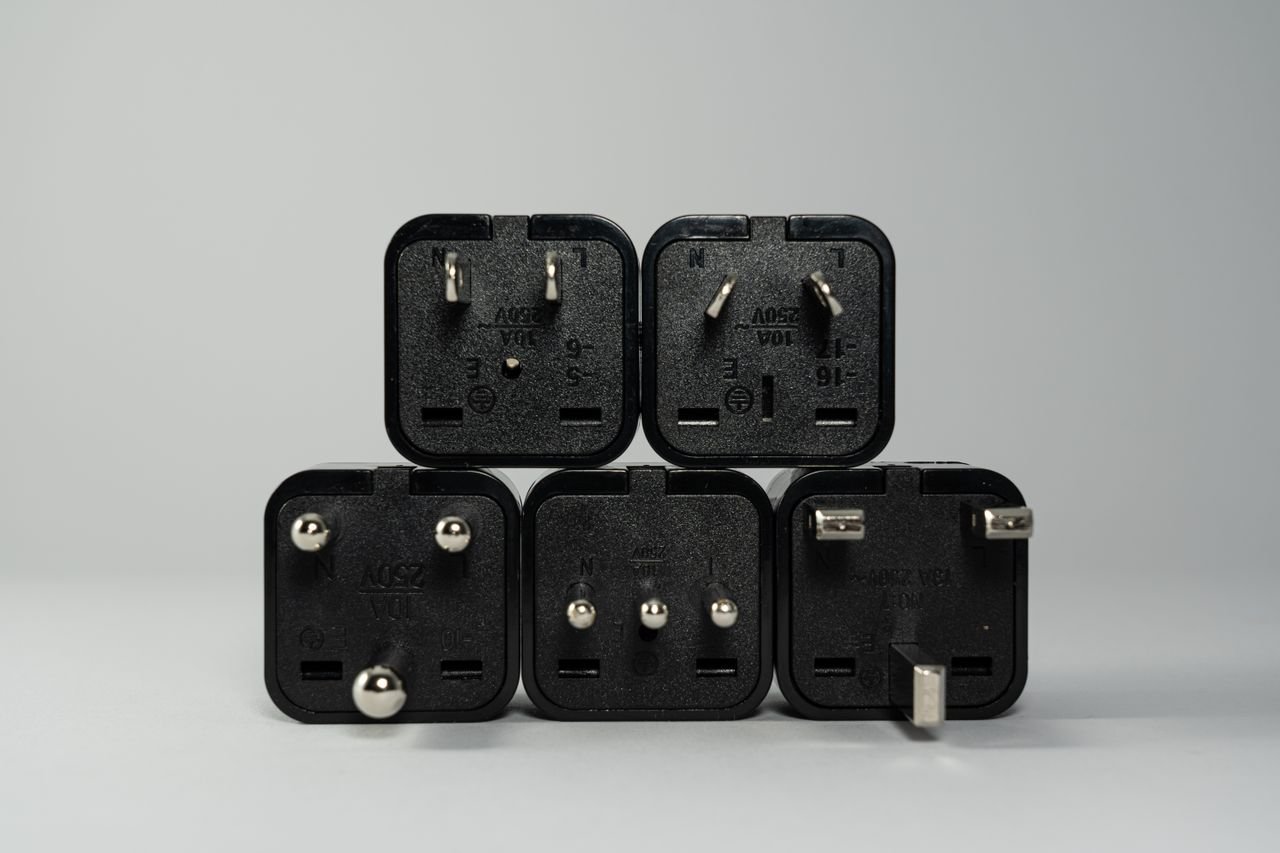
Tanzania is easy for travellers from the UK and Kenya, and a small adapter job for everyone else. This guide covers the plug types you will meet, the voltage, how charging works on safari, on Zanzibar and on Kilimanjaro, and the short kit list we suggest. For the rest of your preparation, see our Tanzania travel tips and the full Tanzania packing list.
Plug types and voltage in Tanzania
| Item | Tanzania |
|---|---|
| Voltage | 230V |
| Frequency | 50Hz |
| Main plug type | Type G (British, three rectangular pins) |
| Also found | Type D (three round pins in a triangle), mostly older buildings |
| Utility | TANESCO (Tanzania Electric Supply Company) |
Type G is the standard in modern hotels, safari lodges and homes. It is the same plug used in the UK, Kenya and Uganda, so a single Type G adapter works across a typical East Africa trip. Type D is the older Indian-style plug and you may still find it in guesthouses in Arusha, Moshi or Dar es Salaam. Many sockets accept both, and a quality universal adapter covers either case.
Do not assume that a two-pin European (Type C) plug will fit. Some sockets are shuttered, and loose-fitting plugs can overheat. Use a proper adapter instead of forcing a plug in.
Do you need a voltage converter?
At 230V, Tanzania matches the UK, most of Europe, Australia and South Africa, so devices from those countries need only a plug adapter. Travellers from the United States, Canada and Japan are on 100-127V, and the rule is simple: read the small print on the device.
- Phones, tablets, laptops, camera chargers and power banks: nearly all are rated 100-240V and need only an adapter.
- Hair dryers, straighteners, electric razors and kettles: often single-voltage. Plugging a 120V heater into 230V can destroy it. Leave these at home, or buy a dual-voltage model.
- CPAP machines: check the power brick label. Most are 100-240V, but confirm and bring a spare adapter. Ask your lodge ahead of time about overnight power, especially in tented camps.
Power cuts and generators
Supply is generally stable in Dar es Salaam, Arusha and Stone Town, but outages happen and can last for hours. Hotels in these cities usually have a generator, though it may take a few minutes to switch over. Surges when power returns are a real risk for sensitive electronics, so a surge-protected adapter is a cheap precaution.
Remote lodges in the Serengeti, Ngorongoro, Tarangire and Ruaha typically run on solar power, generators or a mix. Common patterns:
- Charging points in the main tent or lodge area, rather than in each room, in smaller camps.
- Generator hours that cover only part of the evening and early morning.
- In-room sockets that are on a limited circuit, which is fine for phones and camera batteries but not for heavy loads.
Tell your guide or camp manager if you depend on a medical device. Lodges are used to the request and will plan around it.
Charging on safari and in transit
Game drives run for four to eight hours and battery drain is faster when you use a phone for photos and video. We recommend:
- A power bank of 10,000-20,000 mAh. Airlines allow power banks in cabin baggage only, never in checked bags.
- At least two spare camera batteries, charged the night before every drive.
- A short multi-way extension lead with USB ports, so one adapter powers several devices. It also saves you queuing for the single socket in the room.
- Offline maps downloaded before you leave Arusha, because mobile data is patchy in most national parks. Our Tanzania eSIM guide explains coverage, and you can set up a Tanzania eSIM before landing.
Dust is the other safari hazard. Keep charging gear in a zip bag between drives.
Charging on Zanzibar
Beach resorts on Nungwi, Kendwa, Paje and Jambiani generally run a mix of mains and generators, and sockets in rooms are usually Type G. Stone Town hotels in older buildings may have fewer sockets and an older mix of types. Pack your adapter in hand luggage rather than hoping to buy one on the island, as stock in shops is unreliable.
Charging on Kilimanjaro
There is no mains electricity on the mountain. On every route (Machame, Lemosho, Marangu, Rongai) you charge from power banks or small solar panels. Cold temperatures above 4,000 metres cut battery performance sharply, so:
- Sleep with phone and camera batteries inside your sleeping bag.
- Carry a power bank for each person and keep it in an inner pocket.
- Switch devices to flight mode and avoid recording long videos on summit night.
Marangu is the one route with hut accommodation, but we would not count on charging points for guests. Plan as if you will have none, and charge everything fully in Moshi or Arusha before the climb.
Where to buy adapters
Buy before you travel. Airports sometimes sell adapters, but selection and pricing are unpredictable. In Tanzania, electronics shops in Dar es Salaam (around Kariakoo) and Arusha sell adapters and extension leads cheaply, with prices from roughly TZS 5,000-15,000 as of 2026, though quality varies and safety standards are inconsistent. A reputable universal adapter bought at home is safer.
What to pack: our shortlist
- One Type G adapter per person, plus one spare for the group.
- One universal adapter in case you meet Type D.
- A surge-protected multi-way extension lead.
- A power bank (10,000-20,000 mAh) and short charging cables.
- Spare camera batteries and memory cards.
- A small head torch for power cuts. See the Tanzania packing list for everything else.
If you are on a guided trip, check the operator’s inclusions. Several run vehicles with charging points, which makes your power bank a backup rather than a necessity.