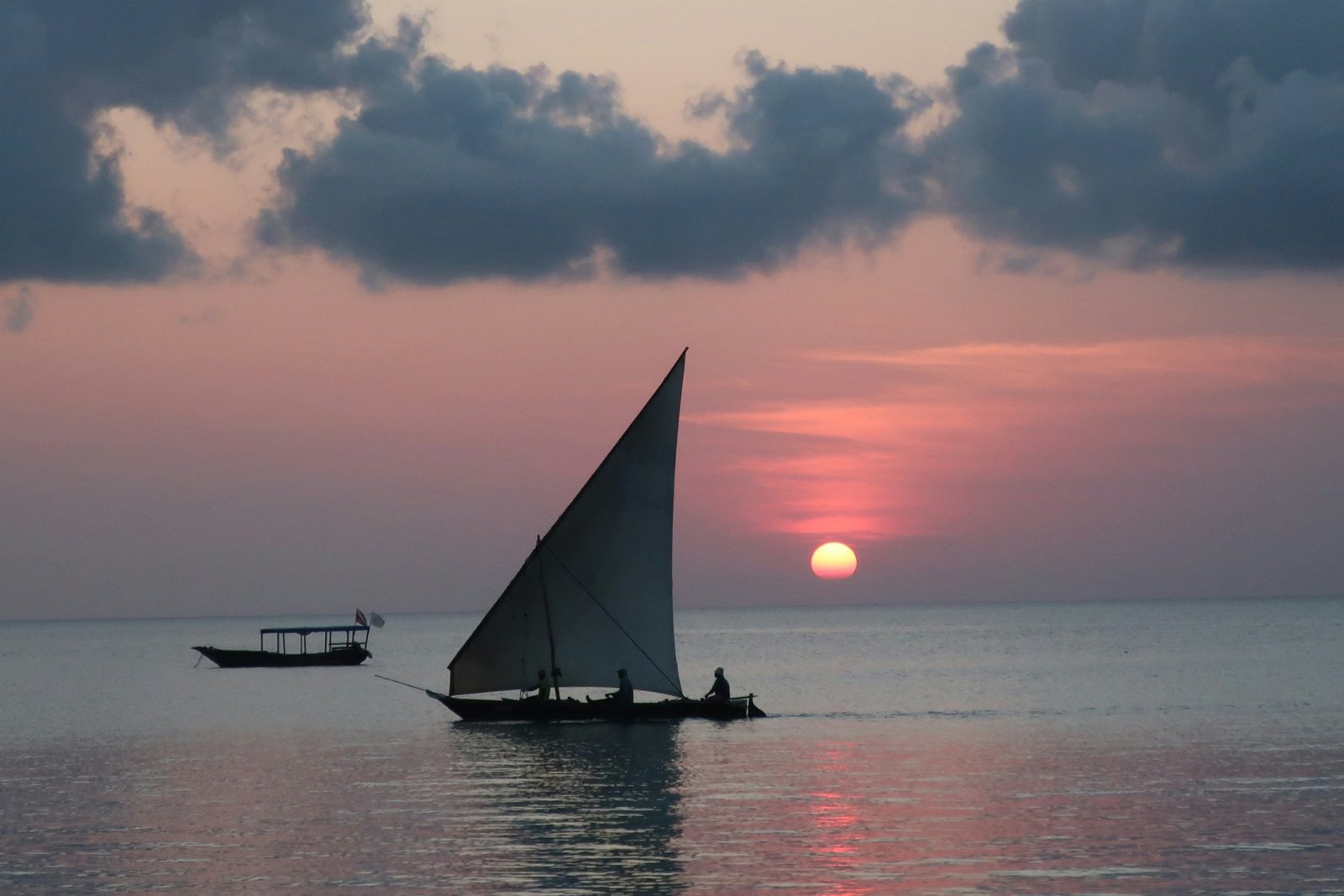
A week in Zanzibar is one of the most satisfying Indian Ocean holidays available — and it fits a genuinely varied itinerary rather than just beach-lying. This plan covers the UNESCO-listed Swahili architecture of Stone Town, the calm-water beaches of the north, the kite-surf scene and fishing villages of the east, and a half-day trip to Prison Island to meet Aldabra giant tortoises face-to-face.
The sequence — Stone Town first, then coast — means you understand the island’s culture before retreating to the beach, which makes the whole experience more coherent.
The Route at a Glance
| Days | Location | Nights |
|---|---|---|
| 1–2 | Stone Town | 2 |
| 3–4 | Nungwi (north coast) | 2 |
| 5–6 | Paje or Jambiani (east coast) | 2 |
| Day 7 | Departure day (morning beach, afternoon airport) | — |
Total transfers: three (Stone Town → Nungwi → Paje → Airport). All are short taxi or dala dala rides.
Days 1–2: Stone Town
Day 1: Arrive and Explore the Old Town
Stone Town’s core is small enough to walk entirely — the maze of coral stone alleys and Swahili carved-door townhouses covers roughly 1.5 km × 1 km. Get lost intentionally on arrival afternoon: the alleys reward wanderers with incense traders, tiny coffee stands, and carved wooden doors that are some of the finest in East Africa.
Key sights in Stone Town:
- House of Wonders (Beit el-Ajaib): The first building in Zanzibar to have electricity and an elevator, now a cultural museum. Entry USD 3, open 9:00 am–6:00 pm.
- Old Fort (Arab Fort): Built in 1699 on the site of a Portuguese chapel. Free entry to the courtyard; occasional evening cultural performances (check the noticeboard inside).
- Slave Memorial and Underground Slave Chambers: The most important historical site on the island — the underground holding cells where enslaved people were kept before export are a confronting and necessary visit. Entry USD 5 including guide.
- Palace Museum (Beit el-Sahel): Former sultan’s palace overlooking the sea. Entry USD 3, open 9:00 am–6:00 pm.
- Forodhani Night Market: Every evening from 6:00 pm, vendors set up along the seafront selling Zanzibar pizza (a stuffed flatbread), fresh lobster, octopus skewers, and sugarcane juice. Budget USD 5–10 for dinner. This is the best cheap eating experience on the island.
Spice market: Visit the Central Market (Darajani Market) on Creek Road — a working vegetable and spice market open every morning. Arrive before 9:00 am for the most activity. Vendors sell cloves, cinnamon, vanilla, and cardamom from USD 2–5 per bag.
Day 2: Spice Tour and Prison Island
Morning: Spice Tour (half-day)
Zanzibar’s spice plantations lie 10–15 km north of Stone Town in the island’s central district. A half-day guided spice tour visits working plantations where you can smell and taste cinnamon bark, vanilla pods, lemon grass, and the cloves that once made Zanzibar the world’s largest supplier. Cost: USD 25–40 per person including transport and a spiced Swahili lunch. Book through your hotel or directly at the Stone Town tourist office at the port. Spice tours and Prison Island boat trips can also be pre-booked through GetYourGuide’s Stone Town activities — handy for comparing itineraries and reading verified reviews before you arrive.
Afternoon: Prison Island (Changuu Island)
A 20-minute boat ride from Stone Town harbour brings you to Changuu Island — a former quarantine station that once held an Aldabra giant tortoise colony gifted by the British government in the 1920s. The tortoises have multiplied; the oldest residents are over 100 years old and weigh up to 250 kg. Entry to the island: USD 4 per person. Boat hire from Stone Town harbour: USD 20–30 per boat (negotiate and split costs with other visitors). Tortoises can be hand-fed for an additional USD 2.
The island also has a small beach with decent snorkelling around the old jetty — bring a mask.
Evening: Rooftop sunset at Emerson Spice — even if you’re not staying there, the nightly sunset dinner (booking required, USD 45–60 for a set Swahili menu) is a Stone Town institution. Otherwise, the rooftop of Zanzibar Coffee House on Mkunazini Street offers open views with no dinner reservation required.
Where to stay in Stone Town (Nights 1–2)
- Budget (~USD 60–90/night): Stone Town Café and B&B — converted Arab townhouse, small rooms, good central location on Kenyatta Road.
- Mid-range (~USD 150–280/night): Zanzibar Palace Hotel — nine individually designed suites, beautiful courtyard, 5-minute walk from Forodhani.
- Luxury (~USD 450–700/night): Emerson Spice — a beautifully restored historic hotel with hammam, rooftop restaurant, and antique-furnished rooms. One of the finest boutique hotels in East Africa.
Days 3–4: Nungwi (North Coast)
Transfer from Stone Town to Nungwi: 50 km, approximately 1 hour by taxi (USD 30–45) or 2 hours by dala dala (USD 5–8).
Nungwi sits at Zanzibar’s northern tip where the island curves around to shelter the water from the tidal variation that affects the east coast. The result is a swimmable beach at any time of day, year-round. The village itself is a working fishing community — traditional dhow builders still work on the beach — but the northern end has been fully developed with beach bars and restaurants.
Day 3: Beach and Sunset Dhow Cruise
Settle into your accommodation, then do very little. This is intentional — Stone Town is stimulating, the north is for decompression.
Late afternoon: Book a sunset dhow cruise from the beach at Nungwi. Traditional wooden dhows with lateen sails are available from USD 30–50 per person, typically including Swahili snacks and soft drinks. The light on the water at sunset from a dhow is arguably the single most photogenic moment on the island.
Day 4: Mnemba Atoll Snorkelling
Mnemba Atoll, 3 km off Zanzibar’s northeast coast, is the best snorkelling and diving site in the archipelago — a protected marine reserve with hawksbill turtles, reef sharks, dolphins, and dense coral. Snorkelling day trips from Nungwi run USD 55–75 per person including boat, equipment, lunch, and a guide. Browse and book Zanzibar snorkelling and water activities on GetYourGuide to lock in your slot during July to October peak season. Dive operators (One Ocean, Zanzibar Dive Centre) offer two-dive packages to Mnemba from USD 100–130 per person.
Whale shark season (October–February): Whale sharks aggregate off Nungwi during this period — operators run dedicated whale shark snorkelling trips for USD 80–120 per person. Not guaranteed but a spectacular experience when conditions align.
Where to stay in Nungwi (Nights 3–4)
- Budget (~USD 80–120/night): Z Hotel Zanzibar — beachfront pool, clean rooms, good value at the northern end of the beach.
- Mid-range (~USD 300–500/night): Essque Zalu Zanzibar — pool villas with direct beach access, strong snorkelling programme, one of the most consistently well-reviewed properties on the island.
- Luxury (~USD 700–1,100/night): Zuri Zanzibar — eco-designed treehouse-style villas on Kendwa Beach, spa, and exceptional food. Slightly south of Nungwi but shares the same calm water.
Days 5–6: East Coast (Paje or Jambiani)
Transfer from Nungwi to Paje: approximately 80 km, 1.5–2 hours by taxi (USD 40–55). The taxi from Nungwi will take you directly rather than backtracking through Stone Town.
The east coast is a different character from the north: wider beaches, stronger wind (excellent for kitesurfing), a larger tidal range, and quieter fishing village communities. Paje is the kitesurf capital of the Indian Ocean — consistently ranked among the world’s top five kite destinations. Jambiani, 8 km south of Paje, is quieter and more village-orientated.
Day 5: East Coast Arrival and Seaweed Farming Walk
The tidal flats on the east coast support a significant seaweed farming industry — predominantly run by local women. At low tide, you can join a guided walk (USD 10–15, arranged through most guesthouses) to meet the farmers and learn about the export trade to Japan and Europe for cosmetics.
Kitesurfing (if applicable): Paje’s main IKO-certified kite schools include Kite Centre Zanzibar and Airborne Kite Centre, both on the beach at Paje. A 3-hour introductory lesson costs approximately USD 120–150. The consistent south-easterly wind from June–October makes this the prime kite season; December–February is the second season.
Day 6: Dolphin Tour from Kizimkazi
Kizimkazi village, 25 km south of Paje, is the departure point for Zanzibar’s dolphin-watching tours. Indo-Pacific bottlenose and spinner dolphins are resident in Kizimkazi Bay year-round. Boat trips cost USD 40–60 per person; most operators are on the beach at Kizimkazi Mkunguni. Depart early — 7:00–8:00 am — for the highest probability of dolphin sightings before boat traffic increases.
Note: sustainable operators allow passive observation from the boat. Tours that guarantee swimming with dolphins tend to use more intrusive methods — ask your guesthouse to recommend operators with good wildlife welfare practices.
Alternative Day 6: If dolphins aren’t a priority, Paje’s beach at high tide is genuinely one of the most beautiful stretches of sand in East Africa — flat, powder white, and calm enough to swim. Combined with a spiced Swahili lunch at any of the beach restaurants (USD 12–20 per person) and a late afternoon hammock session, it’s a perfect final full day.
Where to stay on the east coast (Nights 5–6)
- Budget (~USD 60–100/night): Hakuna Majiwe Beach Lodge — relaxed thatched bungalows in Paje, eco-focused, great community atmosphere.
- Mid-range (~USD 500–800/night): Baraza Resort and Spa — all-inclusive Swahili-style resort in Bwejuu, private beach, excellent spa with traditional hammam.
- Luxury (~USD 900–1,400/night): The Residence Zanzibar — private-pool villas in Kizimkazi, adults-only atmosphere, most secluded position on the island.
Day 7: Departure
International flights depart from Zanzibar International Airport (ZNZ). Most connections go via Nairobi (Kenya Airways, 1 hour) or Dar es Salaam (Precision Air, 30 minutes) for onward international routes to Europe, the Gulf, and Asia.
Transfer time from Paje to ZNZ: approximately 50–60 minutes by taxi (USD 30–40). Allow 2.5 hours before departure for check-in and immigration.
If your flight departs in the afternoon, use the morning for a final swim at Paje’s high-tide beach before heading to the airport.
Budget Summary
| Expense Category | Budget (7 days) | Mid-Range | Luxury |
|---|---|---|---|
| Stone Town accommodation (2 nights) | USD 120–180 | USD 300–560 | USD 900–1,400 |
| Nungwi accommodation (2 nights) | USD 160–240 | USD 600–1,000 | USD 1,400–2,200 |
| East coast accommodation (2 nights) | USD 120–200 | USD 1,000–1,600 | USD 1,800–2,800 |
| Stone Town entry fees + tours | USD 35–50 | Same | Same |
| Prison Island boat + entry | USD 25–35 | Same | Same |
| Mnemba snorkelling | USD 55–75 | Same | Same |
| Sunset dhow cruise | USD 30–50 | USD 50–80 | USD 100+ private |
| Daily food (per person) | USD 15–25 | USD 40–80 | USD 100–200+ |
| Transfers (all 3 legs, taxi) | USD 100–130 | Same | USD 200+ private |
Total estimated per person (7 days, solo traveller):
- Budget: USD 700–1,000
- Mid-range: USD 2,500–4,500
- Luxury: USD 6,000–10,000+
Group travel reduces per-person costs significantly for transfers and boat charters.
Practical Notes
Dress code in Stone Town: Zanzibar is a predominantly Muslim island. In Stone Town and village areas, cover shoulders and knees — lightweight linen trousers and a loose shirt are ideal. Beach swimwear is appropriate on the beach only.
Water: Tap water is not drinkable. Buy bottled water (USD 0.50–1 per 1.5-litre bottle at supermarkets) or use a filter bottle. Most hotels provide filtered water on request.
Currency: US dollars are accepted across all hotels and tour operators. Tanzania shillings (TZS) are needed for dala dalas, market shopping, and small village purchases. ATMs are available in Stone Town (CRDB and NMB branches) — the north and east coasts have limited ATM access, so carry sufficient cash when leaving Stone Town.
Connectivity: Zanzibar has decent 4G coverage from Vodacom Tanzania and Airtel Tanzania. Buy a local SIM at the airport (USD 3–5, requires passport). Airport Wi-Fi is slow — download offline maps and hotel details before leaving Stone Town.
Tipping: USD 1–2 per meal at local restaurants; USD 5–10 for a half-day guide; USD 10–15 for a full-day driver/guide. Tips are not automatically added to bills.