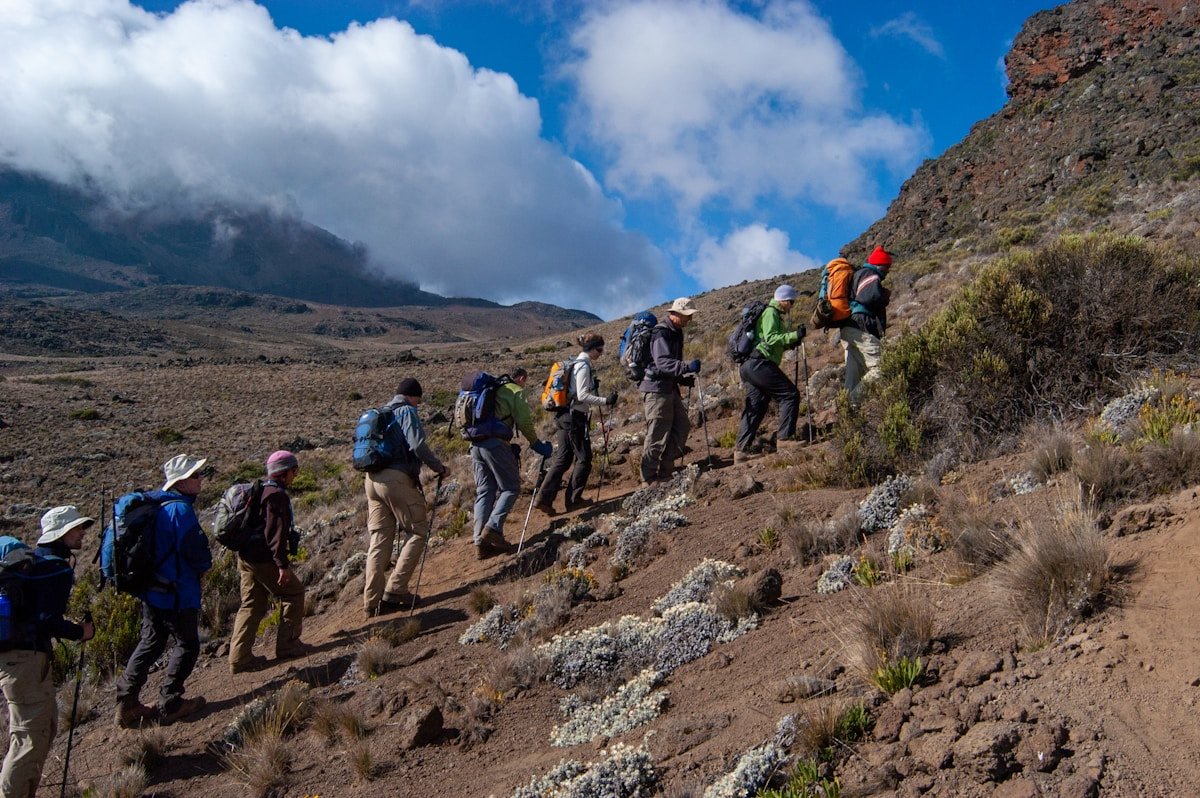
The single biggest predictor of summit success on Kilimanjaro is not fitness — it is how well your body adjusts to altitude. A thoughtful 3-day acclimatization block before your climb significantly raises summit rates and reduces the misery of the ascent. This itinerary is designed for climbers arriving in Tanzania 3 days before their official climb start date.
Why Acclimatization Matters on Kilimanjaro
Kilimanjaro’s Uhuru Peak sits at 5,895 m. At that altitude, air contains roughly 50% of the oxygen available at sea level. Most climbers who turn back do so because of acute mountain sickness (AMS) — headaches, nausea, and fatigue that result from ascending too quickly for the body to adapt.
The standard 7-day Lemosho route and the 8-day Northern Circuit build in acclimatization days on the mountain, but climbers on the popular 6-day Machame route or 5-day Marangu route benefit greatly from pre-climb altitude exposure. Even one or two acclimatization hikes in the days before your climb can lower the onset threshold for AMS symptoms and give your body an early physiological signal to increase red blood cell production.
Day 1: Arrive Moshi — Rest, Gear Check, and Operator Meeting
Arrival: Kilimanjaro International Airport (JRO) is 50 km from Moshi — a taxi costs approximately USD 30–40 and takes 45–60 minutes. Most operators send a shuttle.
Moshi altitude: 900 m above sea level. The town sits on the southern slopes of Kilimanjaro and on a clear day you can see the summit ice fields from the main road.
Morning/Afternoon: Rest and rehydrate after your flight. Avoid alcohol on Day 1 — it accelerates dehydration and impairs early acclimatization.
Afternoon: Visit your trek operator’s briefing office. A good briefing covers:
- Tent and sleeping bag assignment (for camping routes)
- Summit food and snack provision
- Porter loadout and KPAP compliance (see below)
- Detailed timetable and gate reporting instructions
Gear check: Lay out all gear in your room and cross-reference against the checklist at the bottom of this article. This is the time to identify anything missing while Moshi’s rental shops are still accessible.
Dinner: Kilimanjaro Crane Hotel’s restaurant on Mawenzi Road does a reliable set menu for USD 12–18. For something more atmospheric, the outdoor terrace at Buffalo Hotel on Chagga Street is popular with climbers.
Where to stay in Moshi — Day 1
- Budget (~USD 40–70/night): Buffalo Hotel — clean, central, popular with climbers, rooftop terrace.
- Mid-range (~USD 130–200/night): Kilimanjaro Crane Hotel — comfortable rooms with Kilimanjaro views, strong breakfast buffet.
- Luxury (~USD 350–500/night): Onsea House — boutique guesthouse in a colonial-era farmhouse in Arusha (45 min from Moshi), with exceptional meals; a good choice if arriving via Arusha.
Day 2: Acclimatization Hike — Marangu Route to Horombo Hut (3,720 m)
This is the most important day of your pre-climb block. You are going to hike as high as possible into Kilimanjaro National Park, then descend to sleep low.
Start time: 6:30 am departure from Moshi. Transfer to Marangu Gate (1,845 m) takes 45 minutes. Park entrance fee for a day hike: approximately USD 70–80 per person (Kilimanjaro National Park fee as of 2026 — verify current fees at the TANAPA website). You do not need a porter or guide for a day hike to Horombo if you are with your operator’s team, but a local ranger guide is mandatory once past Mandara Hut and is included in the day-hike fee arrangement through most operators.
Hike profile:
- Marangu Gate (1,845 m) → Mandara Hut (2,720 m): 5 km, 3–4 hours ascending
- Mandara Hut → Horombo Hut (3,720 m): 9 km, 3.5–4 hours ascending
- Horombo Hut → Marangu Gate (descent): 14 km, 3–4 hours
Total: approximately 28 km round trip, 8–10 hours moving time. This is a long day but the terrain is not technical — it’s forest and moorland, then heather and giant senecio at altitude.
Key rules for acclimatization hiking:
- Pole pole (slowly, slowly): the Swahili mountaineering mantra applies here. Keep your pace conversational — if you can’t speak in full sentences, you’re going too fast.
- Drink 3–4 litres of water throughout the day. Start hydrating the night before.
- Turn back if symptoms escalate: mild headache at altitude is expected. Severe headache, nausea, or loss of coordination are signals to descend immediately — no exceptions.
- Sleep at Moshi (900 m): descending to sleep low after the hike is the key principle. Do not attempt to spend a night at Horombo during your acclimatization phase unless you have a specific medical reason and guide approval.
At Horombo Hut (3,720 m): spend 20–30 minutes at the hut. Eat a snack, observe how your body feels, note whether you have a headache and how quickly it eases. This is calibration data for your actual climb.
Back in Moshi: expect to return by 6:00–7:00 pm. Eat a carbohydrate-rich dinner, drink an oral rehydration solution if you were sweating heavily, and sleep as early as possible.
Day 3: Light Activity, Final Gear Prep, and Early Night
Day 3 is a recovery and logistics day. Your muscles need rest after yesterday’s long hike, and your nervous system needs a calm day before the climb begins.
Morning: gentle walk in Moshi town — 30–60 minutes at a relaxed pace. Do not do any strenuous exercise. Visit the Kilimanjaro Porters Assistance Project (KPAP) office if you haven’t confirmed your operator’s porter welfare compliance — it takes 15 minutes and is worth the reassurance.
Gear rental (if needed): Moshi’s rental shops cluster on Mawenzi Road and around the town’s central bus stand. Key items to rent:
- Sleeping bag rated to -15°C: USD 8–12/day
- Down jacket: USD 5–8/day
- Trekking gaiters: USD 3–5/day
- Headlamp (if you haven’t packed one): USD 3–5/day
Afternoon: pack your summit bag and porters’ duffel. Pack everything the night before — last-minute packing at the gate is stressful and often leads to forgotten items.
Carbohydrate loading: eat a large pasta or rice-based dinner. Kilimanjaro-area restaurants with solid pasta options include El Rancho on Rengua Road (USD 10–15 per meal) and the YMCA Hostel canteen on the corner of Mawenzi and Rengua.
Sleep strategy:
- Target bedtime: 9:00 pm
- Avoid screens for 60 minutes before sleep — the altitude hike will have disrupted sleep hormones slightly
- Place your alarm for 5:00 am (most gates open at 7:00 am; budget 1–1.5 hours for transfer)
- If you’re taking Acetazolamide, take your evening dose with dinner
Where to stay in Moshi — Day 3 (same as Day 1 or upgrade)
Staying in the same property makes logistics simpler — your kit is already settled, the staff know you, and there’s no packing and repacking between hotels. If you want a pre-climb splurge, Weru Weru River Lodge (USD 200–280/night) on the Weru Weru River just outside Moshi is a peaceful, garden-set option with excellent food that many climbers use for their final night.
Gear Checklist
Summit Layer (worn at Crater Rim and Summit Push)
- Hard-shell waterproof jacket and trousers (non-negotiable)
- Insulated down or synthetic jacket (-20°C rated)
- Fleece mid-layer
- Thermal base layer (top and bottom)
- Balaclava or neck gaiter
- Beanie hat (wool or fleece)
- Waterproof gloves (liner + outer shell)
- Gaiters (to keep snow/scree out of boots)
Footwear
- Sturdy waterproof hiking boots (broken in — not new)
- Thick wool socks × 3 pairs minimum
- Camp shoes or sandals
Trekking Equipment
- Trekking poles (collapsible, with rubber tips for crater rim)
- Headlamp + extra batteries (summit push begins at midnight)
- Daypack (20–30 litres, for summit day carry)
- Water bottles × 2 (minimum 3-litre capacity total) or hydration bladder
Health and Hygiene
- Altitude medication (Acetazolamide, if prescribed)
- Ibuprofen or paracetamol for headache management
- Blister kit (Compeed patches, tincture of benzoin)
- High-SPF sunscreen (SPF 50+) and lip balm with SPF
- Sunglasses rated UV400 or glacier glasses above 4,000 m
- Hand sanitiser and toilet paper
Food and Nutrition
- High-energy snacks for summit day: energy gels, nuts, dried fruit, chocolate
- Electrolyte sachets (Dioralyte or similar)
- Your favourite comfort snack for difficult moments (this genuinely helps)
Porter Welfare: Book KPAP-Compliant Operators
Tanzania’s porter welfare situation is improving but not uniform. The Kilimanjaro Porters Assistance Project (KPAP) monitors porter conditions and maintains a list of partner operators who comply with minimum weight limits (20 kg per porter), paid sleeping bag and jacket provision, and minimum wage standards. Before booking your trek, verify your operator appears on the KPAP partner list at kilimanjaro-porter.org. This costs you nothing and makes a meaningful difference to the porters who make every summit possible. You can also compare Kilimanjaro trekking packages on GetYourGuide and filter by guest rating to identify operators with a strong track record before committing.
Altitude Sickness: Know the Signs
| Symptom | Mild AMS | Severe AMS (descend immediately) |
|---|---|---|
| Headache | Present, responds to ibuprofen | Persistent, does not ease with medication |
| Nausea | Mild | Vomiting, can’t keep fluids down |
| Fatigue | Normal tiredness | Extreme weakness, unable to walk straight |
| Breathing | Slightly laboured on ascent | Breathlessness at rest |
| Mental state | Slightly foggy | Confusion, slurred speech |
If you experience any symptom in the severe column: descend immediately, regardless of how close to the summit you are. Kilimanjaro has a rescue infrastructure, but descent is the only reliable treatment for severe AMS. No view is worth your life.
Climb Start Day: Gate Transfer
Your operator arranges gate transfers. For most routes:
- Machame Gate (1,800 m): 40 km from Moshi, 1 hour by vehicle
- Lemosho Gate (2,100 m): 85 km from Moshi, 2 hours — depart Moshi by 7:00 am
- Marangu Gate (1,845 m): 45 km from Moshi, 45 minutes
Arrive at the gate with all gear packed. Registration, weight checks, and briefings typically take 60–90 minutes. Your first camp is usually reached by early afternoon.
Good luck. Pole pole.