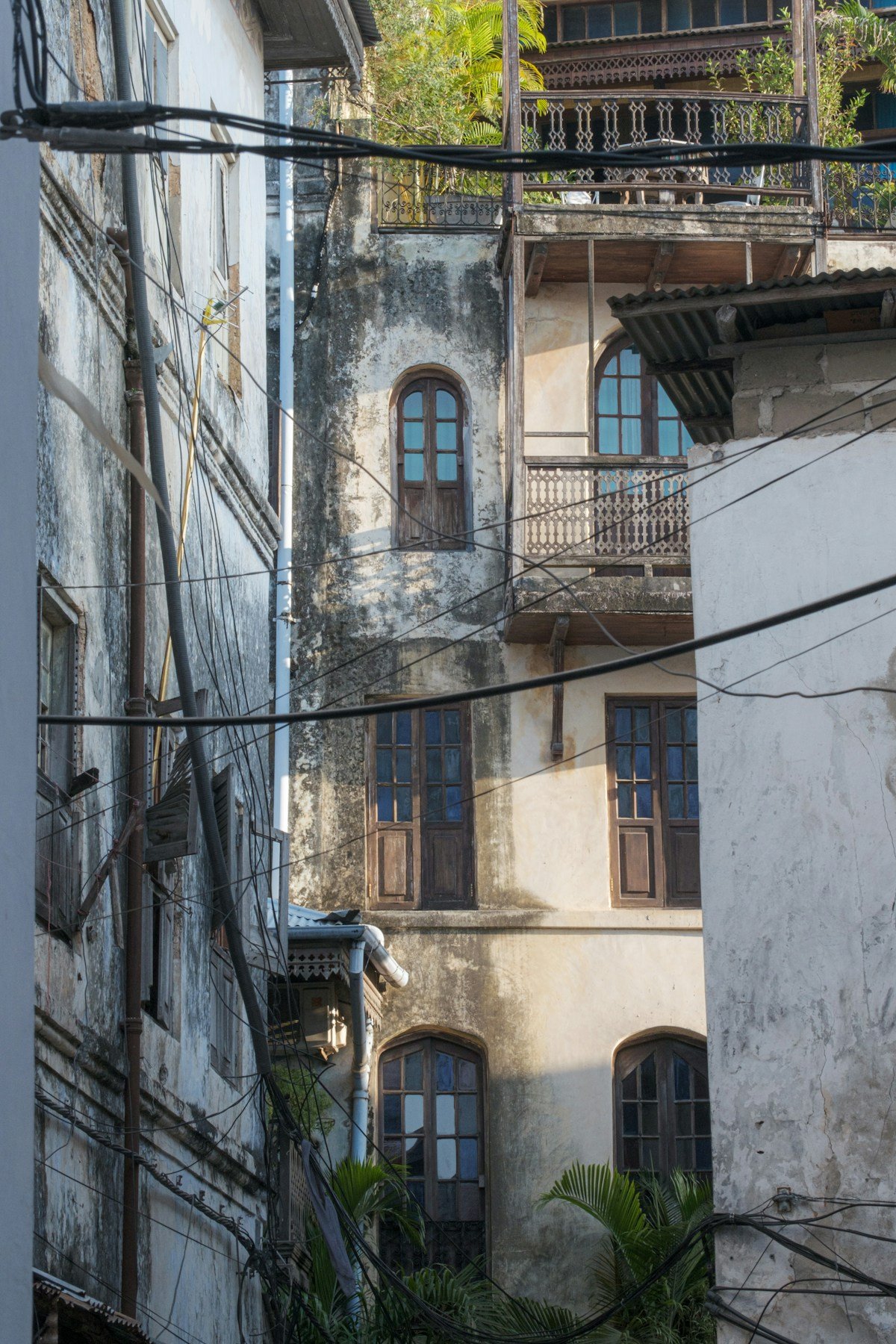
Stone Town is one of East Africa’s most atmospheric places to spend the night. The old medina’s labyrinthine lanes, carved wooden doors, rooftop terraces and sea breezes create a hotel experience you won’t find anywhere else. Many of the best properties here occupy 19th-century mansions - Arab merchant houses, former consulates and spice merchant townhouses - which have been restored with varying degrees of fidelity.
Staying inside the historic district is almost always the right choice for first-time visitors. You’re within walking distance of the waterfront, the night market at Forodhani Gardens, and the vast majority of the town’s restaurants, spice tour operators and cultural sites. Even the airport is only 6 kilometres away.
How the Old Town is Laid Out
Stone Town is compact enough to walk across in 30 minutes, but confusing enough that you’ll want to spend at least a day getting genuinely lost in it. The main reference points are:
- Forodhani Gardens (waterfront): The social hub of the old city, with a nightly street food market and views across the channel to the mainland. Most premium hotels cluster in the lanes immediately behind this stretch.
- The Old Fort (Ngome Kongwe): A 17th-century fortification that now hosts cultural performances and markets. Nearby lanes have some of Stone Town’s best boutique hotels.
- Hurumzi / Shangani: The quarter behind the seafront with the highest concentration of historic mansions. These lanes house some of the island’s most celebrated hotels.
- The House of Wonders and Beit-el-Ajaib: On the seafront to the south of Forodhani - the Cultural Centre area has good mid-range options and is slightly quieter.
Budget Options (Under USD 60 per room)
Malindi Guest House - One of Stone Town’s oldest and most consistently recommended budget guesthouses, in a classic old townhouse with a rooftop terrace. Rooms are basic but clean, all with shared or private bathrooms. Rates from approximately USD 25–45 per room per night, breakfast included. Book well in advance - it fills fast.
Clove Hotel Stone Town - A popular budget-to-mid-range guesthouse with good wi-fi and a helpful reception. Rates from approximately USD 40–65 per room. The communal rooftop has views over the old town and is a good place to meet other travellers.
Jambo Guest House - A well-regarded basic guesthouse close to the Old Fort with a mix of shared- and en-suite rooms. Simple Swahili-style decor, reliable fans or air conditioning. Rates from approximately USD 30–55 per room per night.
Stone Town Café & Bed - A small guesthouse attached to a good café, with six simple rooms and a friendly team. Rates from approximately USD 35–55 per room per night. The café serves proper espresso, which is a genuine bonus.
Mid-Range Options (USD 70–180 per night)
Zanzibar Palace Hotel - An atmospheric mid-range property in a restored 19th-century Arab townhouse near Hurumzi. The rooms vary significantly in size and quality - ask to see several before committing. The rooftop bar is one of Stone Town’s best for sundowners with views over the medina. Rates from approximately USD 80–130 per room per night.
The Swahili House - A boutique guesthouse in the heart of the old medina with carved furniture and Swahili-style four-poster beds. Rooms are individually decorated and the service is attentive. Rates from approximately USD 100–160 per room per night, breakfast included.
Emerson on Hurumzi - One of Stone Town’s most acclaimed properties, spread across two historic mansions near Hurumzi Street. The rooftop Tea House restaurant is legendary - a fixed-price dinner with live taarab music, often booked weeks ahead. The rooms are large, with high ceilings and a genuine sense of historic grandeur. Rates from approximately USD 130–220 per room per night.
Zanzibar Coffee House - A heritage property on the ground floor of a former Arab house on the seafront, with rooms above. High-quality linen, strong wi-fi, genuine hospitality. Rates from approximately USD 90–150 per room per night.
House of Spices Zanzibar - A mid-range boutique property close to the Darajani Market with warm interiors and a good restaurant. Rates from approximately USD 80–130 per room per night.
Luxury and Boutique Options (USD 200+ per night)
Park Hyatt Zanzibar - Built into two historic buildings - the Jubilee Palace (once the official guesthouse of the Sultan) and the Palace of Wonders - on the seafront. This is Stone Town’s only true five-star hotel. The rooms have been sensitively restored with a combination of Zanzibari antiques and contemporary luxury. Rates from approximately USD 300–600 per room per night. The Living Stone restaurant and rooftop lounge are open to non-guests.
Zanzibar Serena Hotel - A large heritage hotel built from two restored 19th-century buildings on the waterfront, operated by the pan-African Serena chain. 51 rooms with high ceilings, traditional tiles and a large pool garden that is unusual in Stone Town. Rates from approximately USD 200–350 per room per night. One of the most reliable options for consistent service standards.
The Seyyida Hotel and Spa - A stylish boutique hotel in a restored historic building, with an intimate spa and some of Stone Town’s best views from its rooftop pool. Rates from approximately USD 180–280 per room per night.
Jafferji House and Spa - An exquisitely restored mansion on Kenyatta Road with seven suites, each themed around a different chapter of Zanzibar’s history - the Slave Trade suite, the Spice Trade suite, and so on. The attention to architectural detail is exceptional. Rates from approximately USD 220–350 per suite per night, breakfast included.
Practical Information
Getting from Stone Town Airport: Julius Nyerere International is on the mainland; Zanzibar Airport (Abeid Amani Karume International, ZNZ) is 6 kilometres south of Stone Town on the island. Taxi to the medina: approximately TZS 15,000–25,000 (USD 6–10). Arranged hotel transfers from USD 10–15.
Getting from the ferry terminal: The Malindi ferry terminal (for boats from Dar es Salaam) is right on the Stone Town waterfront - most hotels are a 5–20 minute walk. Taxis and tuk-tuks are available outside.
Car access: The old medina is largely pedestrianised. Hotels will arrange luggage porters to meet you at the nearest vehicle drop point.
Wi-fi: Good in almost all mid-range and luxury properties. Budget guesthouses vary - check reviews.
Noise: Stone Town is a living city. Streets near mosques can be noisy from around 05:30 (dawn call to prayer). Streets near Forodhani are lively until midnight or later. If you’re a light sleeper, look for properties in the quieter inner lanes or request an interior-facing room.
Best time to visit: Stone Town is a year-round destination. The long rains (March–May) can make the lanes muddy and some restaurants close reduced hours; the short rains (November) are lighter and rarely disrupt travel. Peak season runs July–August and December–January.
Night market at Forodhani Gardens: Open every evening from around 18:00–23:00. Seafood skewers, Zanzibar pizza (a folded crêpe with egg, cheese and meat), sugarcane juice and fresh coconut are the staples. Entry is free and prices are fixed on most items - approximately TZS 2,000–5,000 (USD 1–2) per item.
Browse Stone Town tours and activities - spice tours, dhow cruises, and history walks can all be arranged before arrival.