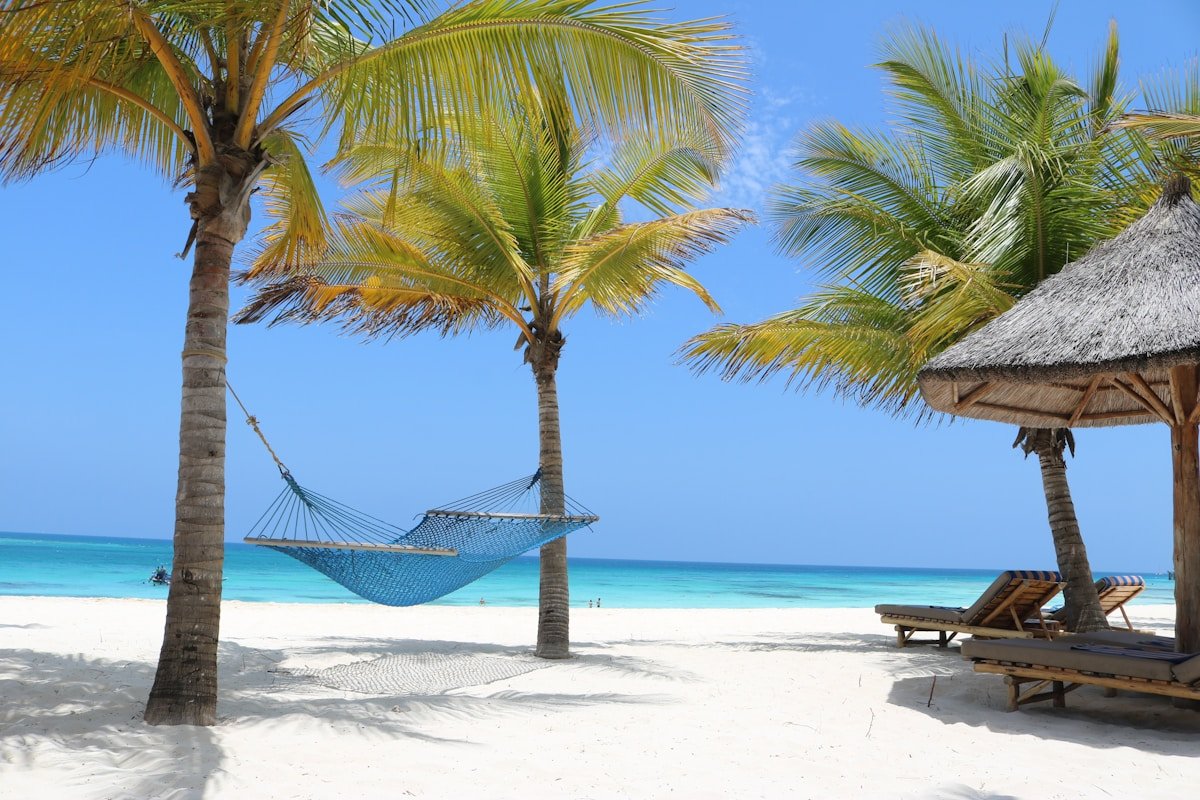
Paje sits on Zanzibar’s southeast coast, about 55 kilometres from Stone Town. It is the island’s kitesurfing capital and consistently attracts a younger, more activity-oriented crowd than the resort-heavy north coast. The beach is long, flat, and backed by palms; the water is a vivid turquoise. At high tide it is genuinely beautiful. At low tide, the reef flat empties and the swimming disappears. It also helps to read our Zanzibar Kitesurfing guide before you commit to plans.
Understanding Paje means understanding the tides. Zanzibar’s east coast has a tidal range of approximately 2–3 metres. When the tide retreats, the reef flat between the beach and the drop-off can extend 300–500 metres of exposed rock and seaweed, leaving shallow ankle-deep water not worth swimming in. When the tide comes in - twice a day - the flat fills quickly and the water quality transforms. Paje regulars live by the tide table. Checking it before you book a specific activity or plan to swim is not optional.
Kitesurfing at Paje
Paje’s reputation as a kite spot is well-deserved. The combination of consistent wind, shallow flat-water lagoon, and multiple established schools makes it one of the best learning environments in East Africa.
Wind seasons: The Kusi (southeast trade wind) runs June through September and provides 18–30 knots of reliable offshore wind - ideal for intermediate and advanced kiters. July and August are peak months with the most consistent conditions. The Kaskazi (northeast monsoon) from December to March brings 15–25 knots; winds are slightly lighter and less consistent but still kiteable, and the beach is quieter. October, November, and May are transition months - variable wind that can frustrate beginners.
Schools: Several kite schools operate along the Paje beachfront. Paje by Night (now operating under the Aquaholics brand) is the longest-established and most internationally known, offering IKO-certified courses from beginner (around USD 300–350 for a 9-hour learn-to-kite package) to advanced coaching. Zephyr Kiteboarding and several smaller operators compete for business in the main season, which drives reasonable price competition. Book ahead for July and August - schools fill up.
Equipment hire: Once you can ride independently, equipment hire runs approximately USD 50–70 per half-day. Most schools rent by the hour or half-day to certified kiters who can demonstrate their level.
The Beach and Swimming
Outside kite season, or for non-kiters, Paje still has appeal. The beach is wide and relatively undeveloped compared to the resort-dense north coast. A few kilometres south, the villages of Bwejuu and Jambiani have the same reef-flat character but even quieter atmospheres and slightly cheaper accommodation.
For swimming: plan around the tide, not the clock. Most accommodation has tide tables on display, and the standard advice from locals is to aim for two hours either side of high tide. At those windows, the water depth over the reef flat reaches 1–1.5 metres, it’s calm, warm (25–29°C year-round), and ideal for snorkelling over the inner reef.
For snorkelling: the inner reef at mid-to-high tide has decent fish life - parrotfish, triggerfish, moray eels, the occasional octopus. For serious snorkelling and diving, Stone Town-based boat trips to Mnemba Atoll offer something in a different category: visibility of 20–30 metres and turtles, reef sharks, and pelagic fish.
Getting to Paje
Dalla-dalla: The cheapest option. Dalla-dallas (minibuses) leave from Darajani terminal in Stone Town, initially heading to Uroa and then south to Paje. Journey time is 1.5–2 hours, sometimes longer. Fare: approximately 2,000–3,000 TSh (under USD 2). Best for independent travellers with light luggage and no fixed timetable.
Private transfer: Most accommodation in Paje can arrange airport or Stone Town pickups. A private 4WD transfer from Stone Town takes 45–60 minutes and costs USD 30–40. From Zanzibar Airport (15 minutes north of Stone Town), transfers to Paje cost approximately USD 40–50. If you’re arriving with kite gear or surfboards, a private transfer is strongly recommended.
Where to Stay
Paje’s accommodation runs overwhelmingly toward mid-range and budget - this is not a north-coast-resort destination. Most properties are either small guesthouses or kite-focused bungalow operations.
Baraka Natural: approximately USD 80–120 per night. Solid mid-range option set back from the beach slightly, with a good pool and solid restaurant. Not a kite school property, so it suits non-kiters who want the east coast atmosphere without being in the middle of kite instruction groups.
Paje by Night / Aquaholics Resort: The beachfront kite school and resort at the north end of Paje village. Accommodation ranges from basic bungalows (around USD 60–80 per night) to better-equipped rooms (USD 120–150). Staying here makes sense if you’re doing a kite course - you walk from your room to the beach and the school.
One Love Bungalows: Long-established budget favourite at the south end of Paje, popular with backpackers and solo travellers. Basic rooms from approximately USD 30–50 per night. No air conditioning in cheaper rooms. Communal areas are good for meeting other travellers.
For upmarket options, Bwejuu village (3km south of Paje) has a handful of boutique properties in the USD 200–400 per night range with better beach access at high tide. Compare more Zanzibar hotels before you book.
Paje or Nungwi?
For most first-time Zanzibar visitors, the choice comes down to activity focus versus all-day swimming access.
Nungwi’s north-coast position means waves year-round without the tide-dependent swimming limitation. It has more restaurants, bars, and nightlife. The accommodation portfolio is wider - from budget guesthouses to five-star resorts. It suits travellers who want flexibility and reliable beach swimming without managing tide tables.
Paje suits travellers who are kitesurfing, who prefer a quieter and less commercial atmosphere, or who specifically want the east coast’s flat lagoon experience at high tide. It is cheaper, younger, and more oriented around independent travellers. The trade-off is the tide variable.
See the full beach comparison if you’re still deciding between Zanzibar’s beach areas. Our Zanzibar Beaches: Nungwi, Paje, Kendwa guide goes into more detail on this.
Day Trips from Paje
Paje’s eastern position makes it a reasonable base for east coast day trips:
Jozani-Chwaka Bay National Park (30 minutes west of Paje): The only national park on Zanzibar island and the habitat of the rare red colobus monkey, found nowhere else in the world. Entry USD 12 per adult. Guided walks through mangrove and forest habitat take approximately 1.5 hours.
Kizimkazi Dolphin Tour (30 minutes south of Paje): Bottlenose and spinner dolphins are resident in the channels off Kizimkazi village year-round. Snorkelling with them is weather and tide dependent, but sightings from the boat are reliable. Tours run 7am–12pm and cost approximately USD 25–40 per person including equipment. Book via your accommodation or with one of the operators in Kizimkazi village directly. Browse Zanzibar dolphin and snorkelling tours for pre-booked options.
Stone Town (55km northwest): A half-day or full-day excursion worth doing early in your Zanzibar stay. See the Stone Town guide for what to prioritise.