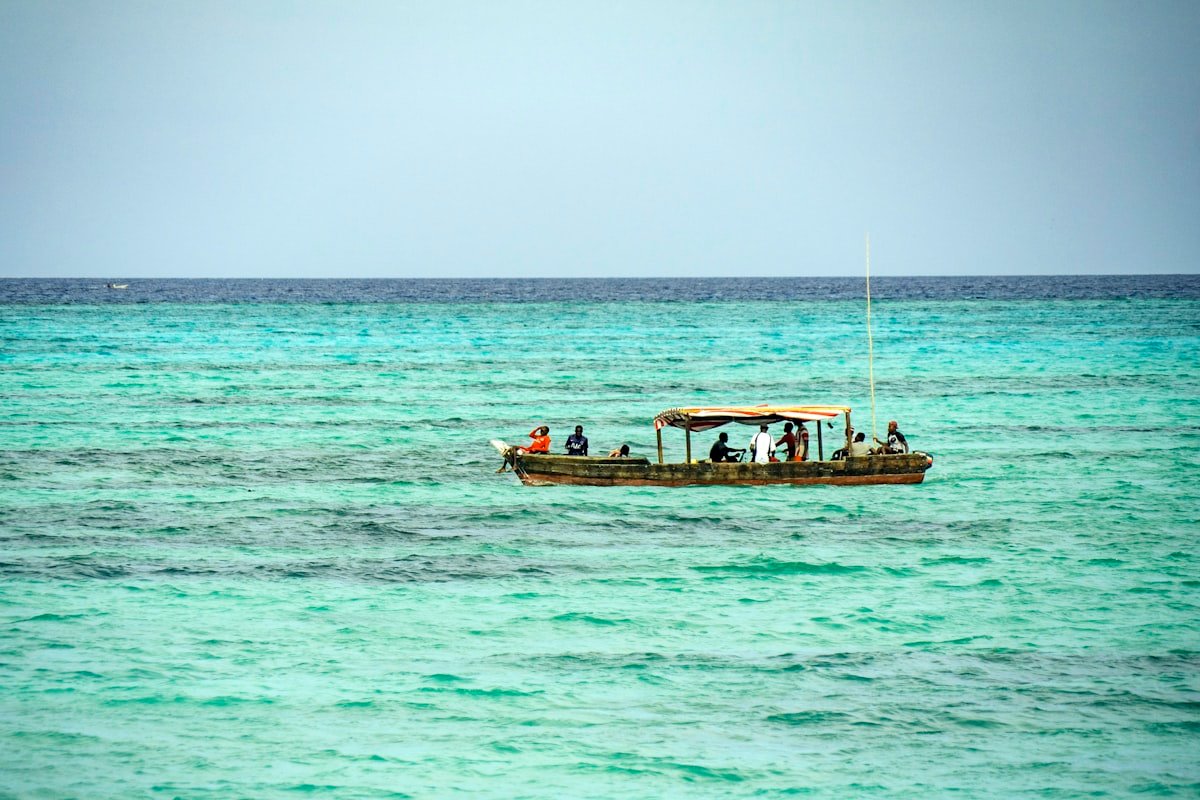
Zanzibar has enough day trips to fill a week without repeating anything. The three most popular are Prison Island (giant tortoises and colonial ruins 25 minutes offshore), Jozani Forest (the only native habitat of the Kirk’s red colobus monkey), and dolphin tours from the fishing village of Kizimkazi on the southern tip. Each covers a completely different type of experience and all are doable without a guide, though most visitors book through tour operators in Stone Town.
Prison Island (Changuu Island)
Prison Island sits approximately 5.5 km northwest of Stone Town, a 25-minute boat ride on a traditional wooden outboard. The name is slightly misleading — a prison was planned here in the 1890s by the British Consul, but the building was never used to hold prisoners. Instead, it briefly served as a quarantine station for cholera patients arriving by ship from the mainland.
The prison ruins are visible and explorable (the building is roofless but structurally sound). The more compelling reason to visit is the colony of Aldabra giant tortoises that were introduced from the Seychelles in 1919. Approximately 100 tortoises now roam the island. Some are over 100 years old; the largest weigh more than 200 kg. They are docile and approach visitors looking for food, though feeding is discouraged.
Getting there: Boats depart from the Stone Town waterfront throughout the day (approximately 7am–3pm). Negotiate the price before boarding — approximately USD 10–15 per person for the boat return, plus the island entry fee of approximately USD 4 per person (as of 2026). Total cost per person: approximately USD 14–19 if arranged independently. Most Stone Town tour operators offer a combined boat and entry package for approximately USD 25–35 per person.
Time needed: 1.5–2 hours including the crossing. Combine with a Stone Town walking tour in the morning and Forodhani Night Market in the evening for a full day.
What to bring: Water and sun protection — there is limited shade on the island away from the prison building. A snorkel is worth packing; the water off the jetty is clear and the reef holds parrotfish and small reef sharks.
Jozani–Chwaka Bay National Park
Jozani is the largest area of indigenous forest remaining on Zanzibar, covering approximately 50 km² inland from the southeast coast. It is the only national park on the island and the only protected habitat of the Zanzibar red colobus (Piliocolobus kirkii) — one of the world’s rarest primates, with a total population of approximately 3,000 individuals, all on Zanzibar.
The primates are the main draw. Three habituated groups live within the forest near the park headquarters; rangers take visitor groups to find them throughout the day. The colobus are distinctive — black-and-white colouring, distinctive red caps on the adults, and a characteristically loud snorting alarm call that carries through the forest. A visit during morning (7–10am) or late afternoon (4–5pm) offers the best chance of finding them active in the canopy rather than resting.
Getting there: Jozani is approximately 35 km southeast of Stone Town — about 45 minutes by car or shared dala-dala (public minibus) from the central bus station. A taxi from Stone Town costs approximately USD 25–35 one-way; negotiate a return fare (approximately USD 50–60 return including waiting time). Most Stone Town tour operators offer Jozani as a half-day or full-day trip with vehicle included for approximately USD 30–50 per person.
Entry fee: Approximately USD 10 per person including the guided forest walk (as of 2026). Entry is not permitted without a park ranger guide. The visit lasts approximately 1.5 hours.
What else is in the park: The mangrove boardwalk behind the visitor centre is an excellent 30-minute add-on. Jozani’s mangroves are in good condition and shelter mudskippers, fiddler crabs, and occasionally small crocodiles. The visitor centre also has a small display on colobus ecology and conservation.
Combining with the coast: Jozani is 15 minutes by car from Paje beach on the east coast. A morning Jozani visit followed by an afternoon at Paje makes a natural half-day structure if you have your own transport or a shared taxi.
Dolphin Tours from Kizimkazi
Kizimkazi is a fishing village on the southern tip of Zanzibar, approximately 60 km from Stone Town. It is the primary departure point for boat trips to observe Indo-Pacific humpback dolphins (Sousa chinensis) and Indo-Pacific bottlenose dolphins (Tursiops aduncus), both of which are year-round residents in the waters off the southern coast.
The tours typically run from approximately 7am to 10am, when dolphin activity is highest. Boat captains use local knowledge and radio contact with other boats to locate the pods. When dolphins are sighted, guests can enter the water to snorkel alongside them — though the dolphins are not obligated to stay and will move away if a boat approaches too aggressively.
Getting there: Kizimkazi is approximately 1.5 hours by dala-dala from Stone Town (departs Darajani bus station). A taxi costs approximately USD 35–45 one-way from Stone Town. Most tours include transport from Stone Town as part of the package price.
Tour cost: Approximately USD 30–45 per person for the boat trip including snorkel equipment (as of 2026). Tours booked directly at Kizimkazi pier are slightly cheaper (approximately USD 25–35) than those arranged through Stone Town operators. A combined dolphin tour and Jozani visit (booked through a Stone Town operator) typically costs approximately USD 55–70 per person with transport.
What to expect: Sightings are not guaranteed, but the boats and captains at Kizimkazi have a long track record and pod encounters are common. Best results come from being in the water (rather than watching from the boat) — bring your own mask if possible, as shared rental equipment varies in quality.
Responsible tourism note: Choose operators who give dolphins space. A single pod approached by multiple boats causes stress and disrupts feeding behaviour. Reputable operators limit group sizes and do not chase or crowd the animals.
Nakupenda Sandbank
A bonus option for short excursions from Stone Town: Nakupenda sandbank is a shallow white sand bar that appears at low tide approximately 2 km off the Stone Town coast. At peak low tide the sandbank is large enough to walk around; at high tide it disappears beneath the surface.
Day trip boats from Stone Town visit Nakupenda as part of beach snorkel packages — typically a 3–4 hour trip combining the sandbank with a snorkel stop on the nearby reef. Cost approximately USD 20–30 per person. Bring reef-safe sunscreen and food if you plan to stay more than an hour.
Combining Day Trips
Most Stone Town tour operators offer multi-destination combinations that make efficient use of a single day:
Full-day east coast: Jozani Forest (morning) + Paje or Jambiani beach (afternoon) + return to Stone Town. Approximately USD 50–70 per person by shared vehicle including park entry.
Full-day southern circuit: Dolphin tour Kizimkazi (early morning) + Jozani Forest + return. Approximately USD 60–80 per person.
Half-day Stone Town waterfront: Prison Island + Nakupenda sandbank in a single morning boat trip. Approximately USD 30–45 per person.
Browse Zanzibar day trips and excursions to compare operators, read verified reviews, and book online ahead of arriving on the island — popular trips fill quickly in the June–October high season. Stay connected throughout Zanzibar with an eSIM for Tanzania, useful for maps, booking apps, and staying in contact between sites.