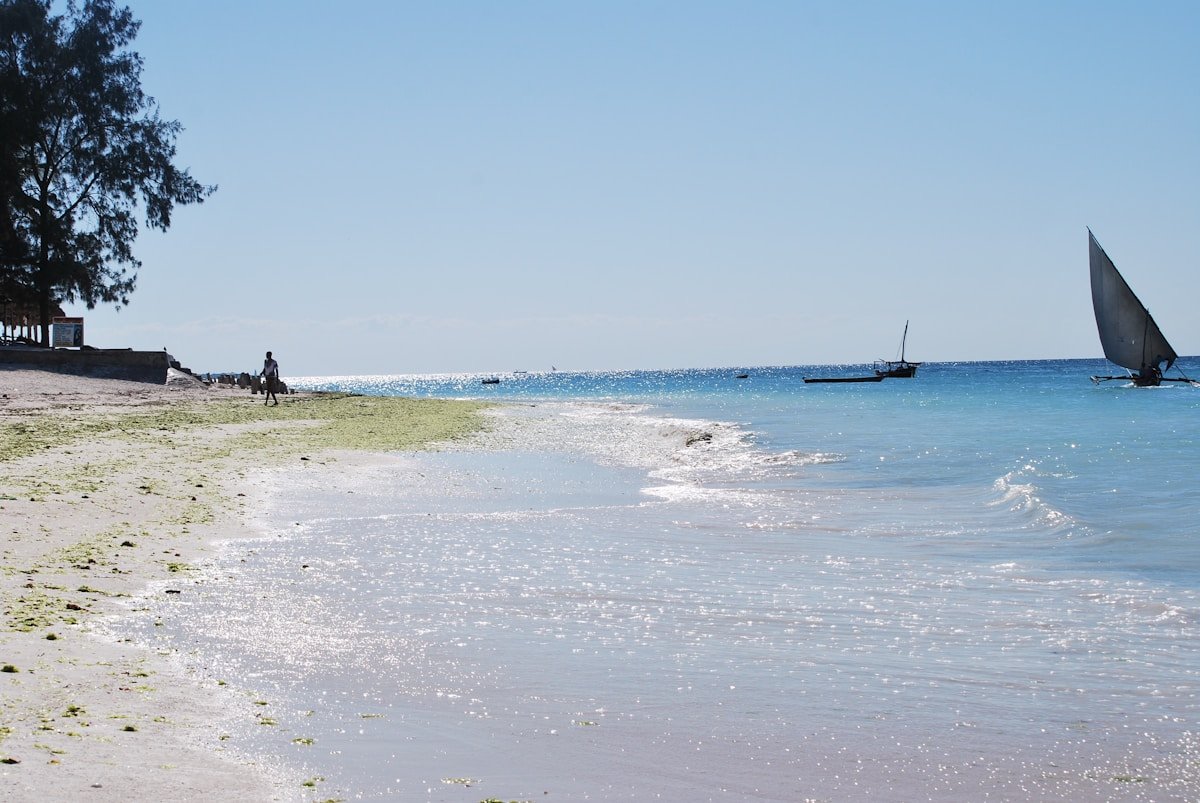
Zanzibar’s coastline runs approximately 200 km around the island and includes roughly a dozen distinct beach settlements worth knowing about. Not all beaches are equal - the north and east coasts behave differently throughout the day and across seasons, and the social atmosphere varies enormously from one village to the next. This guide covers the main options honestly.
How Zanzibar’s Tides Work
The Indian Ocean produces two tidal cycles per day, with a range of approximately 2–3 metres. This matters on the east coast more than the north. At low tide, the reef flat east of Paje and Jambiani can expose 300–500 metres of bare rock and seaweed beds - not swimmable. Water returns at mid-to-high tide, typically twice a day, and at those moments the beaches are outstanding. Check tide tables before booking.
The north coast, by contrast, drops into deeper water close to shore and stays swimmable through most tidal cycles.
North Coast Beaches
Nungwi
The most popular beach on Zanzibar, at the island’s northern tip. Nungwi has fine white sand, calm water sheltered by the northern reef, and enough bars, restaurants, and activities within walking distance to fill a week. A working dhow-building yard on the beach adds something no resort beach can replicate.
Search hotels in Zanzibar on Booking.com
Swimming: Reliable year-round, with calm conditions most mornings. Some afternoon chop when southeast winds pick up between June and September.
Activities: Sunset dhow trips depart nightly from the beach (approximately USD 25–35 per person). Boat snorkel trips to the northern reef - good for turtles - cost approximately USD 20–30. A spa cluster has developed at the south end of Nungwi village.
Accommodation: DoubleTree by Hilton Zanzibar – Nungwi Beach, from approximately USD 200 per night. Warere Beach Hotel (mid-range), from approximately USD 100. Z Hotel Zanzibar (boutique, pool), from approximately USD 170. Backpacker beds in village guesthouses from USD 20–30.
Eating: Langi Langi Beach Restaurant is well regarded for grilled seafood (mains USD 15–20). Baraka Natural Aquarium restaurant has a live sea turtle sanctuary alongside the food.
Kendwa
5 km south of Nungwi, accessible by tuktuk or a 20-minute beach walk at low tide. Kendwa is notably calmer than Nungwi - fewer vendors, less organised activity. The beach faces northwest, which means it catches one of the best sunset views on the island.
Kendwa Rocks hosts a full moon beach party that draws a significant crowd monthly. Outside of these, the beach is quiet.
Accommodation: Sunset Kendwa Beach Hotel from approximately USD 90. Kendwa Rocks from approximately USD 75. La Gemma dell’Est (luxury) from approximately USD 280.
East Coast Beaches
Paje
Paje is the de facto capital of East African kite surfing. The steady onshore winds (July–September being the strongest), wide tidal flat, and shallow water create ideal conditions. Airborne Kite Centre is one of the most established schools, offering beginner lessons from approximately USD 65 per hour.
Outside kiting sessions, the beach has a backpacker feel: hammock bars, beach volleyball, fire shows in the evenings, and a social hostel scene. The village behind the beach road has local food stalls with mishkaki and rice from USD 2–3.
Accommodation: Paje by Night from approximately USD 55 per room. Hakuna Majiwe Beach Lodge from approximately USD 70. Cristal Resort from approximately USD 100.
Swimming: Check tide times. High tide here produces lovely conditions; low tide leaves a rocky flat.
Jambiani
10 km south of Paje. Jambiani is the east coast’s quieter alternative - a long, narrow fishing village with seaweed farming visible in the water, local women collecting at low tide, and a more conservative atmosphere (dress modestly when walking through the village).
The beach itself is beautiful: long, white, and relatively uncrowded. Snorkelling is possible at high tide over the reef 200 metres offshore.
Accommodation: Red Monkey Lodge from approximately USD 60. Sunshine Hotel Jambiani from approximately USD 45. White Sand Luxury Villas from approximately USD 200.
Matemwe
Matemwe sits on the northeast coast and functions as the main base for divers heading to Mnemba Atoll (the atoll is 4 km offshore). The beach here is pristine and very quiet - fewer than 10 properties, no beach clubs. The tradeoff is that evening dining is limited to your lodge.
Mnemba Atoll snorkel trips from Matemwe cost approximately USD 40–55 per person, departing around 8am. See the diving and snorkelling guide for full details.
Accommodation: Matemwe Lodge from approximately USD 350 per room per night (high end). Matemwe Beach Village from approximately USD 120. Zanzibar White Sand Luxury Villas from approximately USD 180.
South Coast
Bwejuu: Long, empty beach popular with budget travellers and those who want genuine quiet. A few guesthouses and no organised activity except local fishing. Dhow charters and kite surfing lessons can sometimes be arranged through guesthouses. Rooms from USD 30.
Kizimkazi: On the southern tip, Kizimkazi is the departure point for dolphin watching boat trips (humpback dolphins are resident here year-round). Early morning trips cost approximately USD 25–35 per person. The beach itself is pleasant but less dramatic than the north or east coasts.
West Coast
The west coast between Stone Town and Ras Nungwi does not have the clarity of water found on the north and east sides. It is used mainly by local fishing communities. Fumba Beach Lodge, in the south-west, is an exception - a private peninsula property.
Beach Safety
Rip currents occur off the east coast during spring tides and strong wind periods. Swim between the coloured markers or where you can see local people swimming. Jellyfish are occasionally present on the east coast between January and March.
Ocean sunscreen should be reef-safe (no oxybenzone/octinoxate) to protect Zanzibar’s reefs - most lodges stock or can source it.
Browse Zanzibar beach excursions, snorkelling, and day trips to book dolphin watching, dhow sunsets, and Mnemba Atoll trips from any beach area. Stay connected across the island with an eSIM for Tanzania - useful for ride apps, maps, and communication between beach areas.