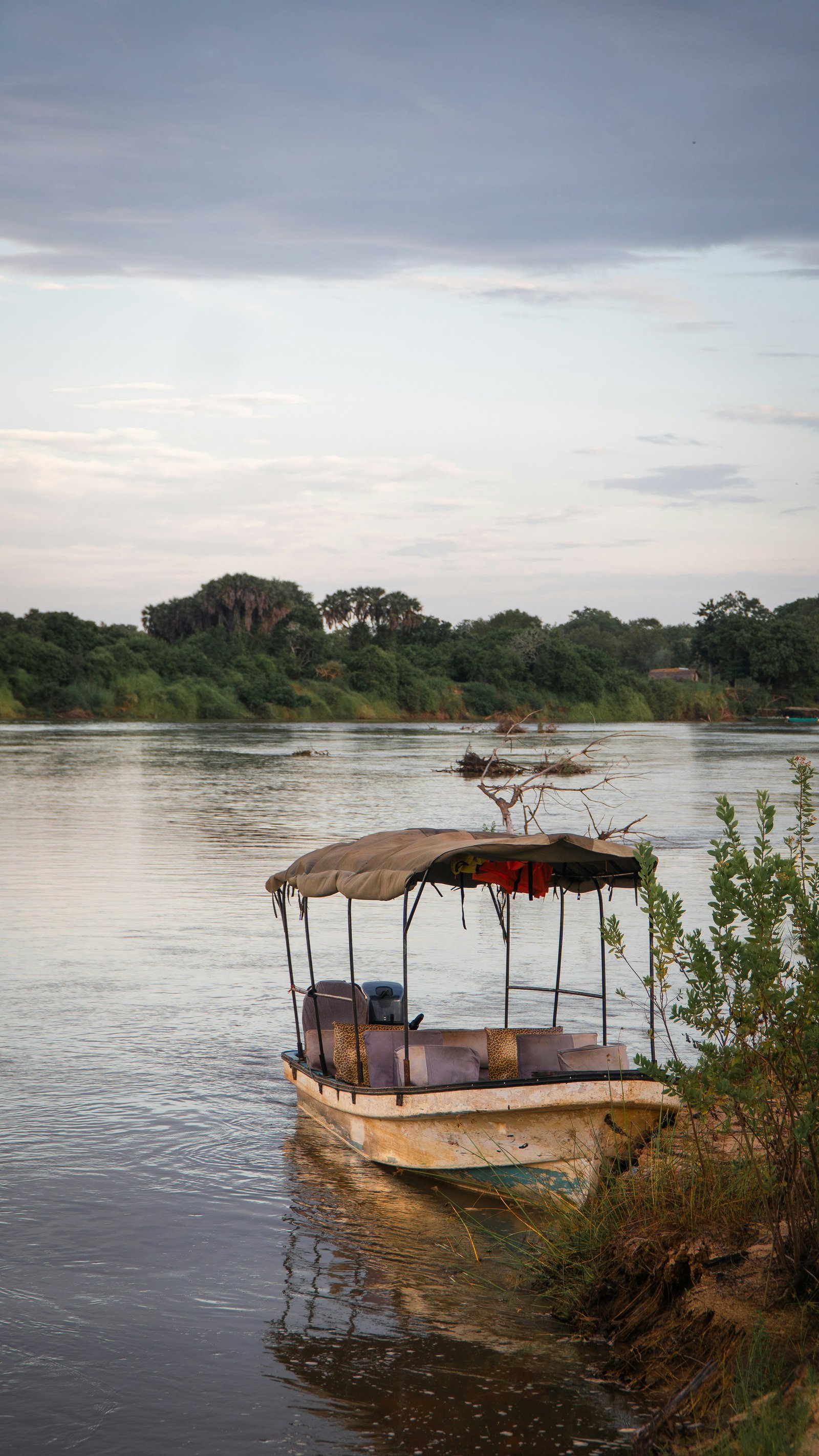
The Rufiji River is the largest river system in Tanzania — draining an enormous catchment from the Southern Highlands and running east to the Indian Ocean through the heart of Nyerere National Park (formerly Selous Game Reserve). On the water, in a flat-bottomed motorised boat, you sit eye-level with one of Africa’s most extraordinary riverine ecosystems: hippo pods surfacing and submerging around you, crocodiles basking on every sandbank, and fish eagles calling from fig trees that overhang the bank. It is a distinctly different kind of safari, and for many visitors to the Selous, the boat trip is the highlight.
Nyerere National Park — renamed from the Selous Game Reserve in 2019 to honour Tanzania’s first president — covers approximately 30,893 square kilometres, making it one of the largest protected areas in Africa. The northern photographic zone, where tourism is concentrated, sits along the Rufiji’s main channel and its network of lake inlets and oxbow lagoons. This zone is where boat safaris operate.
The Rufiji River: What Makes It Exceptional
The Rufiji’s combination of volume, slow flow, and extensive floodplains creates conditions that support extraordinary concentrations of large mammals. The hippopotamus population in the wider Selous ecosystem is estimated at 2,000 to 5,000 individuals — one of the highest densities in East Africa. In practical terms this means that a 2-hour boat trip on any significant water body in the photographic zone will encounter multiple hippo pods, typically at close range. Hippos in the water are generally tolerant of slow-moving boats; experienced guides know the distance limits and behaviour signals.
Nile crocodiles are equally abundant. Sandbanks along every bend in the river are typically occupied: large adults (4 to 5 metres) basking with mouths open, juveniles clustered in shallower areas. For visitors who have only seen crocodiles behind fences, the scale of the Selous population is genuinely striking.
Boat Safari Experience: What to Expect
Boat trips typically run 2 to 3 hours and depart in late morning (around 11:00) or in the afternoon (14:00 to 17:00) from the lodge or camp’s jetty. Dawn departures are sometimes available for experienced visitors staying multiple nights.
The boat is a flat-bottomed fibreglass vessel with a canopy for shade, typically carrying 4 to 8 passengers plus a guide and boat operator. Motorised and quiet — modern electric motor alternatives are starting to appear at higher-end camps — the boats can approach within 20 to 30 metres of hippo pods and crocodile banks without disturbing the animals.
Typical sightings per trip include: 4 to 10 hippo pods, 20 to 50+ individual crocodiles, 15 to 25 bird species, and a realistic chance of elephant at the water’s edge. Lion sightings from the boat are less frequent but not unusual. Monitor lizards are common on the banks; African skimmers, which are increasingly rare elsewhere in East Africa, nest on the sandy islands.
Bird-watching from the boat is exceptional and the primary draw for serious birders. The Selous is a stronghold for several species that are difficult to find elsewhere: the African skimmer, half-collared kingfisher, Bohm’s bee-eater, and the elusive pel’s fishing owl are all recorded in the photographic zone.
Combining Boat Safari with Game Drives
Most camps in the Selous run a standard itinerary of morning game drive followed by afternoon boat trip. The two activities cover different habitats: game drives access the miombo woodland, open grasslands, and lake shores where cheetah, wild dog, elephant herds, and buffalo range; the boat covers the riverine fringe. Wild dog are a particular Selous speciality — the park holds one of Tanzania’s largest populations, estimated at over 1,000 individuals. Sightings on game drives are not guaranteed but significantly more likely here than in Serengeti.
For an overview of the wider park and its remarkable wildlife density, see our Nyerere National Park guide.
Getting There
By air: Chartered or scheduled light aircraft from Dar es Salaam’s Julius Nyerere International Airport to Selous airstrips (Siwandu, Jongomero, or Selous) takes approximately 45 minutes. Coastal Aviation and Auric Air run scheduled services; prices from approximately USD 150 to USD 220 per person one way depending on season and availability. Flying is strongly recommended for a 3+ night stay and is the standard access for most camp bookings.
By road: Approximately 4 to 5 hours from Dar es Salaam via unsealed roads — challenging in the wet season when some sections become impassable. Practical only for 4WD self-drive visitors or those on a budget who book road-access camps near the western gate.
Day trips from Dar: Several Dar-based operators run combination drive-and-boat day trips to Selous, departing around 06:00 and returning in the evening. These include road transport (3 to 3.5 hours each way), a game drive, and a 1.5 to 2-hour boat trip. Expect to arrive in the park by 09:30 and depart by 15:00, leaving limited time inside the park. Prices from approximately USD 250 to USD 320 per person. Day trips are feasible but multi-night stays are significantly more rewarding.
Best Season for a Selous Boat Safari
July to October (dry season) is the premium period. Water levels on the Rufiji drop, concentrating wildlife at permanent water. Hippo pods become more compact, crocodiles are visible on exposed sandbanks, and the vegetation is lower — improving sightlines on game drives. Wild dog denning season (May to June) can produce exceptional encounters, though it overlaps with the early dry season when boat access to some areas is still affected by high water.
January to February is a shoulder season — green vegetation, active bird life (migrants present), and hot humid conditions. Boat safaris run normally during this period.
March to May (long rains): Some camps close, access tracks can be impassable, and boat safaris are suspended in certain areas due to flooding. Not recommended for first-time visitors.
Operators and Camps
Camps inside the photographic zone typically charge USD 350 to USD 700+ per person per night full board including activities. Boat safaris are usually included in the camp rate rather than charged separately.
Notable camps offering boat safaris on the Rufiji: Siwandu (Nomad Tanzania), Roho ya Selous (One Nature Hotels), Jongomero (remote southern camp), and Impala Camp (more budget-accessible, from approximately USD 200 per person sharing).
For travellers connecting Selous with Saadani National Park or a Zanzibar beach extension, light aircraft transfers between parks can be arranged through Coastal Aviation at approximately USD 200 to USD 350 per person depending on the route. For fly-in Selous packages bookable from outside Tanzania, GetYourGuide’s Tanzania safari listings include southern circuit options.