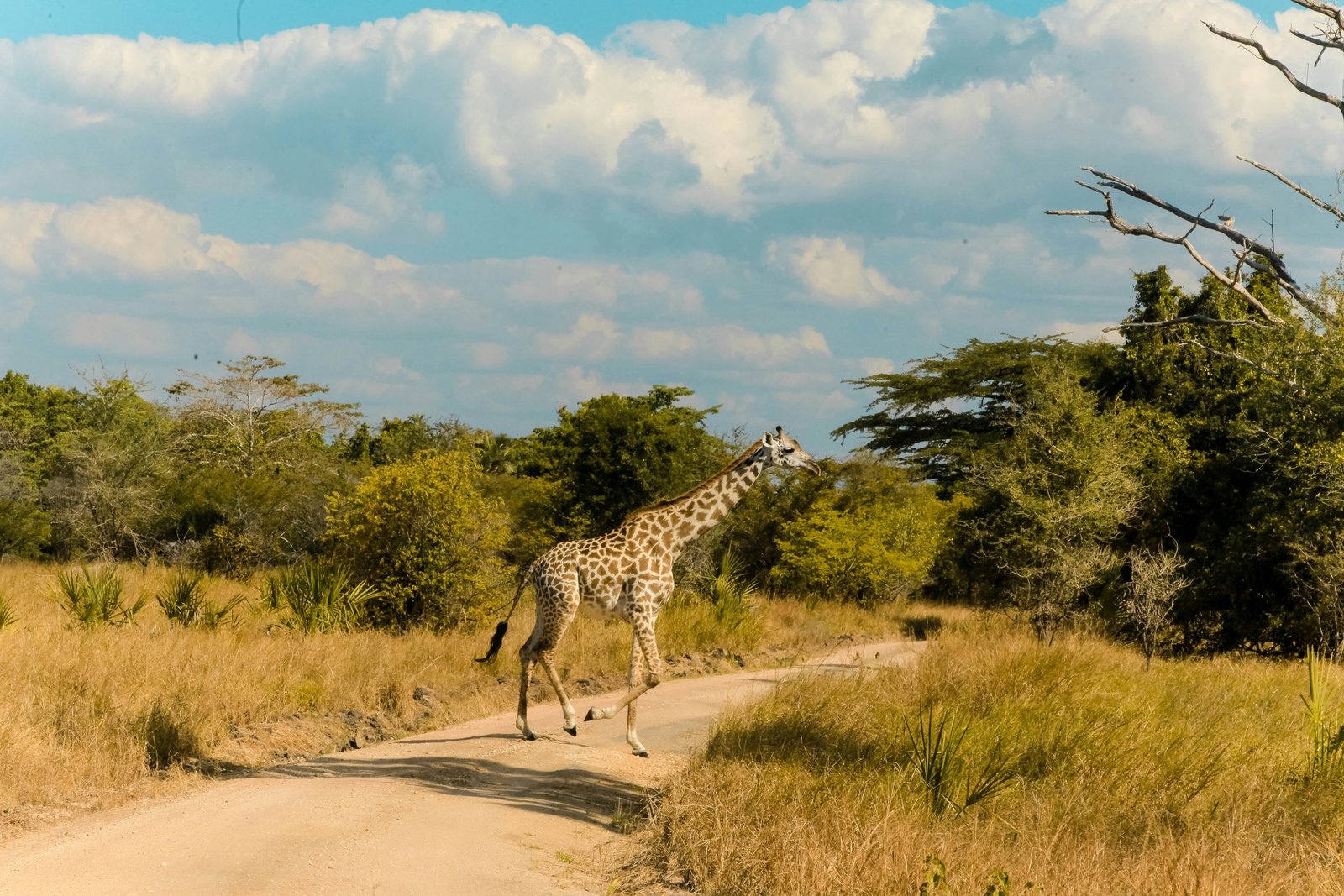
Saadani National Park occupies a stretch of Tanzania’s coast roughly midway between Dar es Salaam and Tanga — and it is the only national park in East Africa where you can watch the sun rise over the Indian Ocean and, minutes later, spot a giraffe grazing along the beach. The combination sounds like a marketing line, but it is simply what Saadani offers: a narrow coastal plain where savanna, mangrove estuary, and white-sand beach exist within a few kilometres of one another.
The park covers around 1,062 square kilometres and was gazetted as a national park in 2005. Before that, it was a game reserve and before that a sisal estate — which partly explains its less-manicured, rawer feel compared with the northern circuit parks. There are no trophy lodges every ten kilometres and no convoys of game vehicles at every sighting. Saadani runs quiet, and that is part of its appeal.
Getting to Saadani National Park
From Dar es Salaam the drive north takes approximately 3 hours. The route crosses the Wami River via a small vehicle ferry — a modest wooden pontoon that holds two or three cars at a time and runs on request. The crossing adds 20 to 30 minutes but is part of the experience. Most day-trip operators from Dar depart early morning (around 06:00) to maximise game-drive hours before midday heat.
Bagamoyo, the historic coastal town 75 km north of Dar, serves as an alternative staging point. From Bagamoyo some operators run speedboat transfers across the bay directly to Saadani, cutting driving time while adding a brief ocean leg.
Charter flights from Julius Nyerere International Airport land at Saadani airstrip in approximately 30 minutes. Coastal Aviation and Auric Air service this route; prices vary by group size but expect approximately USD 180 to USD 250 per person one way for scheduled flights. Flying is only practical when combined with a multi-night lodge stay — it makes no economic sense for a single day trip.
Game Drives and Activities
The main activity is the morning game drive along the park’s network of sandy tracks. The coastal woodland and open grassland near the Wami River estuary concentrates elephant, buffalo, giraffe, waterbuck, and warthog. Lion and leopard are present but sightings are less predictable than in Serengeti or Ruaha. The absence of crowds works in your favour: if you find lion, you are likely alone with them.
Guided walks along the beach between the Wami River mouth and the village of Saadani itself are a highlight unique to this park. Wading birds, olive ridley marine turtles (which nest on the beach), and the sight of dolphin offshore are all realistic expectations. TANAPA rangers accompany all walking activities.
Boat trips on the Wami River run from the park’s eastern edge. The river holds hippo and Nile crocodile in significant numbers, and the bird-watching along the mangrove-lined banks is exceptional: fish eagles, kingfishers, herons, and the striking mangrove kingfisher are all present. A one-hour boat trip costs approximately USD 25 to USD 40 per person through most operators.
Operators and Prices
Most Dar es Salaam-based tour operators offer Saadani day trips and overnights. Day-trip packages from Dar including transport, park fees, game drive, and a packed lunch typically start from approximately USD 120 to USD 160 per person for group departures. Private vehicle day trips cost from USD 200 to USD 280 per person depending on group size.
Recommended operators running Saadani programmes include:
Coastal Travels (Dar es Salaam) — long-running coastal specialist, owns Tent with a View Lodge inside the park. Day trips from USD 130 per person including transport from Dar.
Nomad Tanzania — offers fly-in packages combining Saadani with Selous (Nyerere) and Ruaha. Not a budget option; suited to multi-park itineraries.
Karibu Tanzania Safaris (Dar es Salaam) — competitive day-trip pricing for groups of 4+, departing 06:00 from Dar, returning by 18:30.
For self-drivers, TANAPA charges an entry fee of approximately USD 10 per person per day as of 2026 (verify current rates at tanzaniaparks.go.tz before travel). Vehicle fees apply separately. Self-drive is possible but the sandy tracks require a 4WD and conditions vary significantly after rain. Day trips from Dar es Salaam can also be arranged through GetYourGuide’s Dar es Salaam tour listings.
Where to Stay
Lodges inside or adjacent to the park are small and relatively affordable by Tanzania safari standards. Tent with a View Lodge has en-suite tented chalets on the beach from approximately USD 200 per person per night full board. Saadani Safari Lodge offers beachfront rooms from approximately USD 170 per person sharing. Both are far removed from the luxury mega-camp category — they are comfortable, well-run, and genuinely on the beach.
Combining Saadani with Other Destinations
Saadani works best as part of a wider coastal or northern-circuit trip rather than as a standalone destination. From Dar, a natural pairing is Nyerere National Park (Selous) — two or three nights in Selous followed by two nights in Saadani covers both riverine and coastal ecosystems. Alternatively, Saadani combined with Zanzibar makes a logical loop: fly or ferry to Zanzibar, take the ferry north to Bagamoyo, transfer to Saadani for two nights, then drive to Dar or Kilimanjaro for the next leg of a northern circuit.
The park is not a replacement for Serengeti National Park or Tarangire if your priority is concentrated wildlife viewing. But for travellers who want something quieter, coastal, and genuinely off the northern circuit, Saadani delivers an experience that is hard to replicate anywhere else in East Africa.
Practical Tips
- Book accommodation well in advance for July and August — the park has limited bed capacity and dry-season slots fill early.
- Carry USD cash for park fees if self-driving; card payment infrastructure inside the park is unreliable.
- Bring insect repellent: the estuary area holds mosquitoes year-round, and malaria prophylaxis is recommended.
- The ferry crossing at the Wami River is free for passengers but can involve a short wait — factor this into scheduling on day trips.
- Morning game drives (07:00 to 10:00) and late afternoon drives (15:30 to 18:00) give the best wildlife and light conditions; midday heat suppresses animal activity significantly.