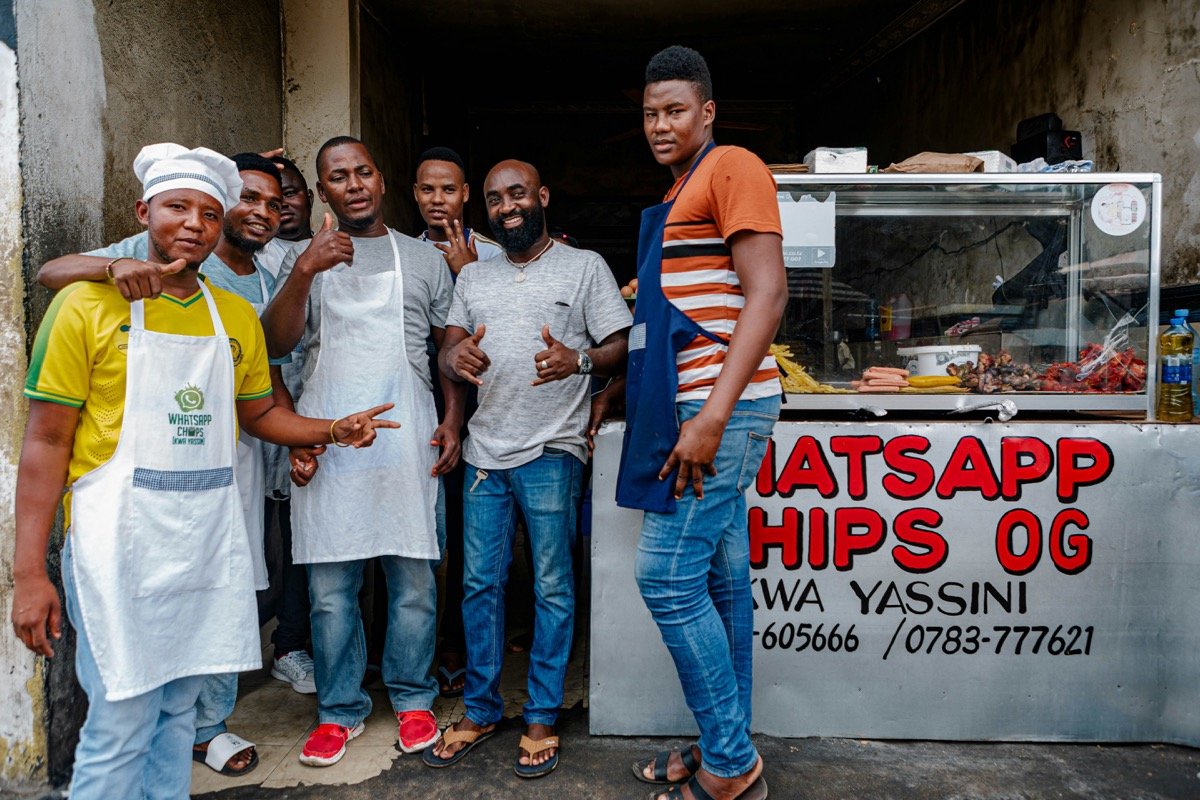
Dar es Salaam has one of the most underrated food scenes in East Africa. The city sits where the Indian Ocean trade routes converged - Arab, Indian, and Swahili influences layered into a coastal cuisine heavy on coconut, tamarind, and fresh fish. You can eat extraordinarily well here for TZS 10,000 or you can spend TZS 150,000 on a seafood dinner by the water. Both are worth doing.
Local Restaurants and Street Food
Chipsi Mayai Stalls
The Tanzanian equivalent of chips and eggs is ubiquitous and excellent. A thick omelette folded over chips, fried until slightly crispy on the outside, served with a spicy kachumbari salad of tomato and onion. Stalls are everywhere - near markets, bus stands, and on residential streets. Price: TZS 3,000–5,000. Look for a spot where the oil is fresh and the turnover is high.
Kariakoo Lunchtime Joints
The streets around Kariakoo market - particularly Tandamuti Street and the surrounding lanes - have dozens of small restaurants serving plate lunches between 11:00 and 15:00. A typical plate: rice or ugali, a protein (fish, beef, or chicken), cooked greens (mchuzi wa mboga), and a salad. Cost: TZS 5,000–10,000. These places have no menus or signage; walk in, see what is cooking, and point at what you want.
Kivukoni Fish Market Stalls
Just outside the fish market at the harbour, vendors fry and grill the morning catch on open charcoal grills. Chunks of red snapper or kingfish with coconut chutney and ugali: TZS 5,000–12,000. Go between 08:00 and 12:00 while the fish is still from the morning haul.
Mid-Range Restaurants
Addis in Dar (Msasani Peninsula)
An Ethiopian restaurant that has become one of the most reliable dining options in the city. Kitfo (minced beef with spiced butter), tibs (sautéed lamb), and injera (fermented flatbread) served as communal sharing platters. The atmosphere is relaxed and the service is consistent. Mains approximately TZS 30,000–55,000. No reservations needed except Friday and Saturday evenings.
The Waterfront Restaurant (Sea Cliff Village, Msasani)
One of the better fish restaurants in the city, overlooking the Indian Ocean. Grilled or pan-fried catch of the day, lobster bisque, and a dependable prawn curry. The kitchen is reliable if not adventurous. Budget TZS 50,000–80,000 per person for a full meal with drinks. Open for lunch and dinner daily.
Hifadhi House (Masaki)
A popular lunch spot with a large open terrace popular with business lunches. The menu mixes Swahili and Indian options - grilled squid, fish biryani, and a good dal. Mains TZS 25,000–45,000. Often full between 12:30 and 14:00 on weekdays.
Ranalo Foods (multiple locations)
A small local chain serving traditional Luo-influenced meals: fish fry, pork knuckle, ugali, and collard greens (sukuma wiki). Better value than the smarter Msasani restaurants and just as satisfying. A full meal runs TZS 12,000–25,000. The branch on Pugu Road is popular with office workers.
Nyama Choma (Grilled Meat)
Magomeni Nyama Choma Bars
The residential neighbourhoods of Magomeni and Kinondoni have the highest concentration of nyama choma shacks in the city. These are not restaurants in any formal sense - corrugated-iron shacks with charcoal grills, plastic chairs, and coolers of cold Kilimanjaro beer. Goat is the standard; a half-kilo portion with ugali and kachumbari costs TZS 15,000–25,000. Go from 19:00 onwards, when the coals are properly hot.
Safari Inn Rooftop (Kariakoo Area)
A well-known nyama choma spot popular with locals and market traders. The goat ribs are particularly good. Order by the kilo (approximately TZS 25,000–35,000 per kg) and add a pile of ugali. No card payments; bring cash.
Indian Ocean Seafood
Dar’s position on the coast means crab, lobster, octopus, and a dozen varieties of saltwater fish are available fresh year-round. The best seasonal seafood:
- Kamba (prawns): best June–October in the dry season
- Pweza (octopus): available year-round; often slow-cooked in coconut milk
- Kaa (crab): mud crabs from the mangrove areas south of the city, best October–March
For the best fresh seafood outside a restaurant, walk the Fish Market at dawn, agree a price, and take your catch to one of the nearby grills where the vendor will cook it for a fee of approximately TZS 3,000–5,000.
Coffee and Breakfast
Café Chai (Masaki)
A reliable neighbourhood café with good filter coffee, fresh juices, and Western-style breakfast plates. Opens from 07:00. A full breakfast (eggs, toast, fruit juice) runs approximately TZS 18,000–28,000. The espresso is properly made.
Java House (Sea Cliff Village)
A Kenyan coffee chain with a consistent menu of espresso drinks, pastries, and light meals. Not local character, but reliable for a working morning or a mid-afternoon break. Coffee from TZS 8,000; full breakfast TZS 20,000–35,000.
Upscale Dining and Hotel Restaurants
Gold Crest Hotel Restaurant (Kisutu)
One of the more reliable fine-dining options in the city centre. The restaurant serves Tanzanian and continental dishes - grilled lobster, rack of lamb, and a wine list that covers South African and European labels. Main courses approximately TZS 65,000-120,000. The terrace tables are preferable to the interior dining room; book ahead on Friday and Saturday evenings.
Southern Sun Dar es Salaam (Kisutu)
The business-hotel restaurant at the Southern Sun is consistent and well-run - steaks, grilled seafood, and pasta with attentive service. Not adventurous, but dependable when you want air conditioning and a reliable kitchen. Main courses TZS 55,000-100,000. The Sunday buffet brunch (approximately TZS 70,000 including soft drinks) is popular with expat families and covers both Western and Swahili dishes.
The Serena Hotel Lobby Restaurant (Upanga)
Dar’s most architecturally striking hotel serves afternoon tea and full meals in a lobby setting with Swahili-influenced decor. Afternoon tea (finger sandwiches, samosas, pastries, fresh juice) is approximately TZS 35,000-50,000 per person - worth visiting even if you’re not staying there. The Sunday lunch buffet (approximately TZS 85,000) is one of the better hotel spreads in the city, particularly for the seafood selection.
Book a Dar es Salaam Food Tour
Guided food tours cover Kariakoo market, the Kivukoni fish market, and street food stalls in a single session without the logistical overhead of hailing cabs between individual spots. Most tours run 3-5 hours with 5-8 stops, covering street food, local restaurants, and market visits. A good way to cover significant culinary ground on a short visit. Browse Dar es Salaam food tours and city experiences for current schedules and availability.
Tips for Eating in Dar
Pay in cash: Most local and mid-range restaurants do not take cards. Carry TZS.
Lunch over dinner locally: The best local food is served at lunchtime; local joints often close or run out of options by 16:00.
Ramadan timing: Dar has a significant Muslim population and many restaurants operate on reduced hours during Ramadan. Iftar (breaking of fast at sunset) is a good time to try special dishes - sambosas, dates, and heavily spiced pilau are common.
Water: Drink bottled water; the city tap water is not reliably safe. Major restaurants filter their ice, but ask at smaller places.
Browse Dar es Salaam tours and activities to explore food tours and city experiences. For the deeper story behind Dar’s food culture - market traditions, seasonal seafood, and what makes the Kivukoni fish market worth waking up early for - see our Dar es Salaam food guide.
Tip: Not obligatory at local joints. At mid-range restaurants, TZS 3,000–5,000 for a good meal is appreciated. Smart places sometimes include a service charge - check the bill.