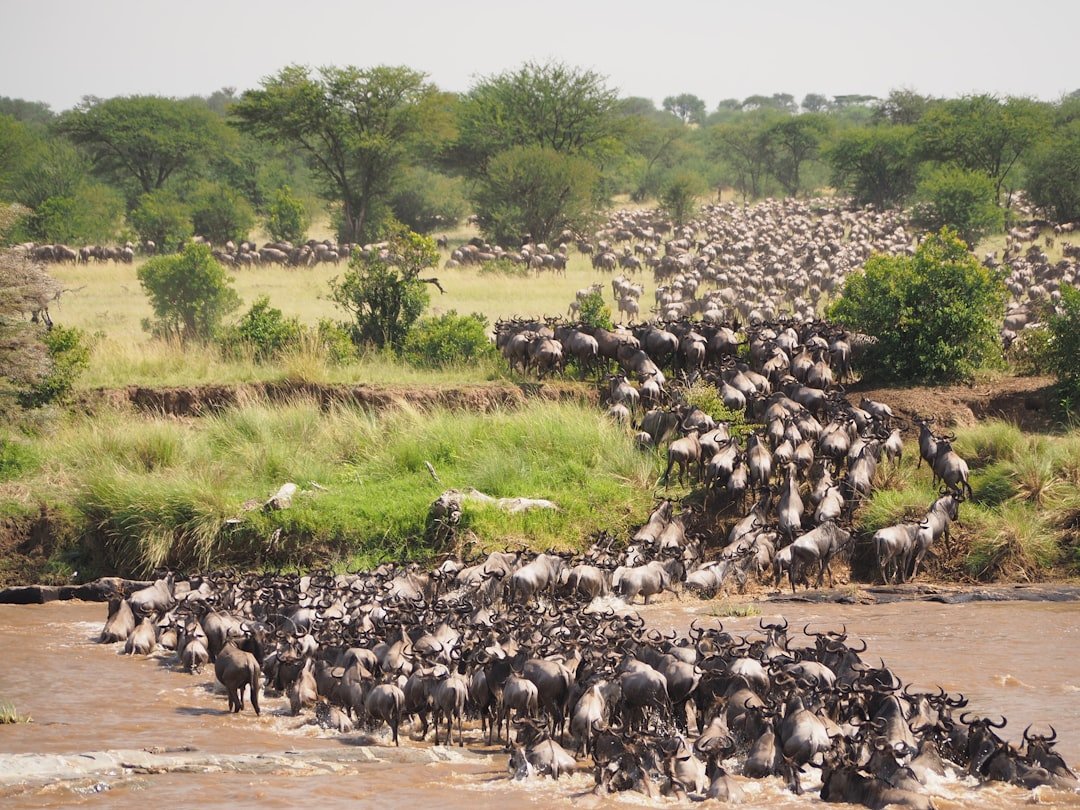
The Great Migration - roughly 1.5 million wildebeest, 400,000 zebra, and several hundred thousand gazelle completing a continuous circuit through the Serengeti–Masai Mara ecosystem - remains one of the most compelling wildlife spectacles on Earth. In 2026, the herd movements are broadly following the patterns that characterise most years, though the exact timing of river crossings always carries uncertainty.
This is an updated tracker based on reports from guides and camp operators across the Serengeti. We will update it as the season progresses.
The Seasonal Pattern
The migration moves in a broad clockwise loop. Understanding the general rhythm helps set expectations:
January–February (southern Serengeti and Ndutu): Calving season. The herds concentrate in the short-grass plains around Ndutu and the Ngorongoro Conservation Area boundary. This is one of the best times to see very young calves, and predator activity is intense - lions, cheetahs, and hyenas all shadow the herds.
March–April (central Serengeti and migration begins north): The long rains arrive across much of Tanzania. The herds begin moving north and west toward the Grumeti River. This is low season for tourism but offers genuine wilderness with far fewer vehicles.
May–June (western corridor, Grumeti River): The western Serengeti sees the first dramatic river crossings of the year as the herds encounter the Grumeti. Crocodile numbers in the Grumeti are lower than the Mara, but crossings still draw predator activity.
July–October (northern Serengeti, Mara River crossings): This is the window most people are targeting when they think of the Serengeti migration. The Mara River - which forms the border between Tanzania and Kenya - becomes the stage for the most dramatic crossings. Enormous crocodiles have been resident in the Mara for decades, and crossings can involve thousands of animals at a single point.
November–December (central Serengeti, short rains): The short rains push the herds back south toward Ndutu, completing the loop.
2026 Season Update
As of August 2026: The bulk of the herds are now established in the northern Serengeti and the Masai Mara in Kenya. Crossing activity at the Mara River has increased significantly through August, with multiple crossings reported at Kogatende in the past three weeks. Moderate water levels are producing strong crossing behaviour — animals are massing rather than spreading across shallow fords.
Predator sightings in the northern Serengeti remain strong. Multiple lion prides and leopard activity have been reported along the Mara River escarpment. Cheetah are active on the more open areas south of the river.
Update July 2026: Reports from northern Serengeti camps indicated the herds were reaching the Mara River corridor with crossing activity sporadic through June but building through July as herds consolidated north of the river.
For August–October visitors: Position yourself in the northern Serengeti (Lobo and Kogatende areas) or just across the border in Kenya’s Masai Mara for the best chance at witnessing river crossings. No guide can guarantee a crossing on any given day — the herds can wait at a crossing point for hours or days before committing. Plan a minimum of three nights in the northern zone to improve your odds.
Planning Tips
- The northern Serengeti camps closest to Kogatende and the Mara River book out months in advance for July–October. If you haven’t booked, availability may be limited.
- Hot air balloon safaris over the Serengeti are a popular way to see the herd concentrations from above; book well in advance as capacity is limited. See our hot air balloon safari guide.
- Park fees in the Serengeti are higher than many expect - see our recent coverage of Tanzania national park fee increases.
- Our detailed Great Migration guide covers the full annual calendar and how to choose a camp based on timing.