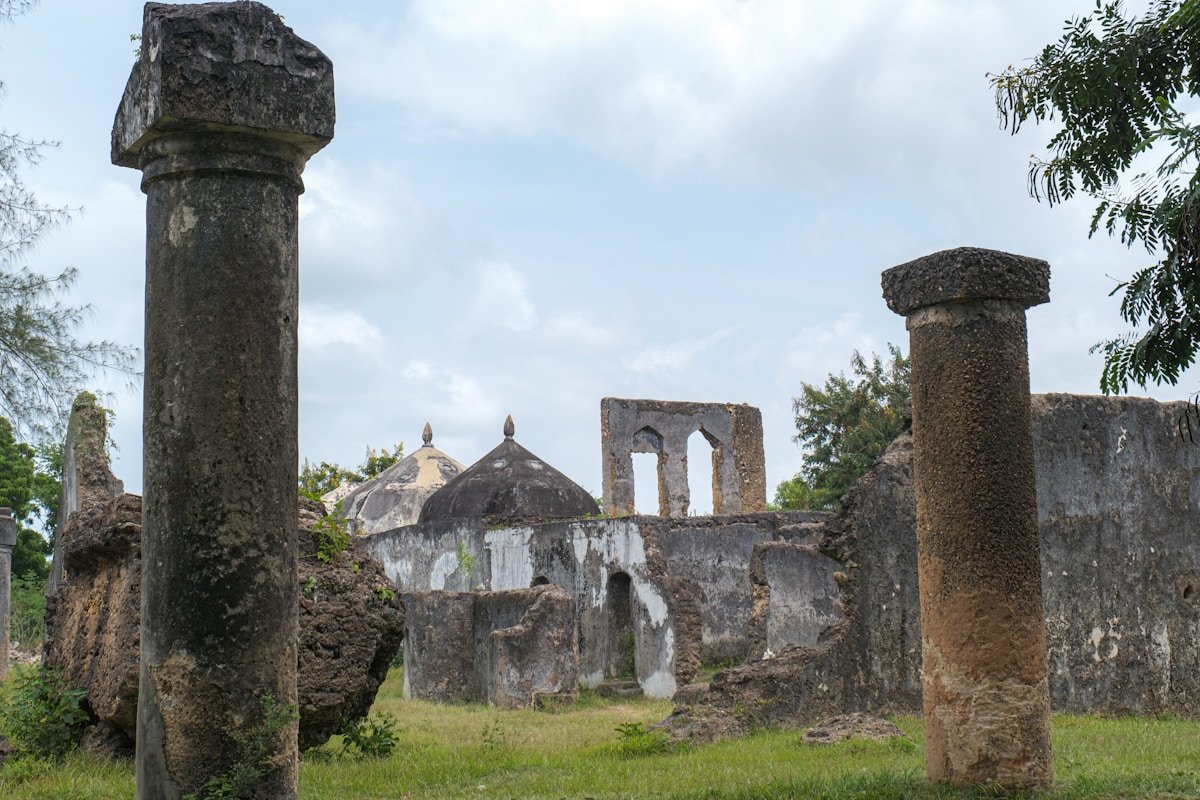
Stone Town - the old city of Zanzibar - is one of the most historically layered places in the Indian Ocean world. For centuries it was a crossroads of Arab, Persian, Indian, Portuguese and African trade. From the early nineteenth century until 1873, it was also the largest slave market in East Africa, through which an estimated 50,000 people passed each year.
Understanding that history is inseparable from understanding Stone Town itself - the carved doorways, the Omani palace architecture, the Anglican cathedral built on the site of the slave market, and the underground chambers where enslaved people were held before auction. These are not peripheral sites. They are the reason the city looks the way it does.
The Historical Background
Omani Sultanate: The Sultanate of Oman established Zanzibar as a trading post in the seventeenth century, but its dominance intensified dramatically after 1840 when Sultan Sayyid Said moved his capital from Muscat to Stone Town. Under his rule, Zanzibar became the leading commercial centre of the western Indian Ocean, its wealth built on two commodities: cloves (planted across the island using slave labour) and enslaved human beings.
The slave trade: Arab and Swahili traders operated caravans deep into the African interior - as far as Lake Tanganyika and beyond - capturing people from the Yao, Nyamwezi and other groups. Enslaved people were marched to the coast, some 1,000 kilometres on foot, before being transported by dhow to Zanzibar for auction. Zanzibar’s slave market at its peak sold between 600 and 700 people every day.
Abolition and British pressure: Britain pressured the Sultanate for decades to end the trade. In 1822, the Moresby Treaty restricted slave exports to Christian countries. In 1845, a further treaty confined sales to the Sultanate’s own territories. Finally in 1873, under intense British diplomatic and military pressure, Sultan Barghash signed the treaty abolishing the slave trade - and in the same year, the Anglican church demolished the slave market and began building a cathedral on its site. The last slave market slave was sold in Zanzibar in 1873.
British Protectorate: The Sultanate became a British protectorate in 1890. Independence came in 1963, followed a year later by the Zanzibar Revolution of January 1964, in which the Arab ruling class was violently overthrown. Zanzibar then merged with Tanganyika to form the United Republic of Tanzania.
Walking Tour Route
Stone Town is compact - most significant sites are within 1 kilometre of each other. Allow 3–4 hours to cover the route properly.
1. Forodhani Gardens (starting point)
The waterfront gardens facing the sea are the natural orientation point. Built in 1936 during British administration, the gardens are the site of the famous night food market (evenings only). The Beit el-Ajaib (House of Wonders) is directly behind you.
House of Wonders (Beit el-Ajaib) Sultan Barghash built this in 1883 as his ceremonial palace - the first building in Zanzibar with electricity and the first to have a lift. Today it houses the Museum of History and Culture of Zanzibar and the Swahili Coast, though the building has been closed for renovation following partial roof collapse in 2019. Check current status before visiting. When open, admission approximately USD 3–5, open 9am–6pm.
2. Old Fort (Ngome Kongwe)
Immediately adjacent to the House of Wonders, this fortification was built by Omanis in 1700 on the ruins of a Portuguese chapel. It served as a military barracks, prison and - briefly - a women’s tennis club during British administration. Now houses craft stalls and a cultural centre with regular evening Taarab music performances. Entry: Free to enter the courtyard, performances have small charges. Open 9am–7pm.
3. Slave Market and Anglican Cathedral
Walk inland from the waterfront (approximately 10 minutes on foot). The Anglican Cathedral of Christ Church, built 1873–1880, stands directly over the former slave market. The altar is positioned where the whipping post stood. The basement contains original slave chambers - low stone rooms where enslaved people were held before auction, deliberately designed to be claustrophobic and degrading.
A memorial sculpture outside the cathedral - by Swedish artist Clara Sörnäs, unveiled in 1998 - shows five figures partially emerged from the earth, their necks bound. It is one of the most affecting memorials in East Africa.
Entry: The cathedral charges approximately USD 5 for entry including the slave chambers. Open 9am–5pm Monday to Saturday. Services on Sundays make morning access difficult - visit the afternoon.
4. Palace Museum (Beit el-Sahel)
A short walk north along the seafront, this former palace of the Sultans contains artefacts from the Omani period - furniture, weapons, photographs and personal effects of Sultan Barghash and his successors. Modest but informative. Entry: Approximately USD 3. Open 9am–6pm daily.
5. Hamamni Persian Baths
Built in the 1870s by Sultan Barghash, these were Zanzibar’s public baths - modelled on Turkish hamam design. Now a ruin, though carefully preserved, with the ornate arched chambers still intact. Entry: Approximately USD 1–2 (caretaker will open). Located on Hammamni Street, 5 minutes walk from the cathedral.
6. Livingstone House
David Livingstone used this colonial-era house as his base before his last expedition into the African interior. The building still stands on the northern edge of Stone Town, though it serves administrative functions today. The exterior is viewable from the street.
7. Narrow streets and carved doors
Stone Town has over 600 traditionally carved Omani and Indian doors - no two identical. The Omani style features pointed arch tops; the Indian style (influenced by trading communities from Gujarat) has a more elaborate decorative vocabulary and often includes brass studs. Walking without a fixed route through the neighbourhoods of Hurumzi and Malindi reveals the domestic architecture of the old city.
Guided Tours
Freddie Mercury Tour - The musician was born in Stone Town in 1946 (as Farrokh Bulsara). Several tour operators run Mercury-specific tours including the building where he was born and early family history. Available as part of the old city walking tours.
Cultural Arts Centre (Old Dispensary) - A beautifully restored building on the seafront with original carved balconies, now housing an arts centre and gift shop.
Licensed guides: Available at the main gate of Stone Town (by the ferry terminal). Fixed rates as of 2026 approximately USD 20–30 for a 2-hour old city walking tour. Using a licensed guide is recommended - the warrens of Stone Town are genuinely disorienting, and guides provide historical context that panels and maps do not.
Getting to Stone Town
From Zanzibar Airport: Approximately 8 kilometres south of Stone Town. Taxis cost approximately USD 15–20 (negotiate before getting in). The journey takes 15–25 minutes depending on traffic.
By ferry from Dar es Salaam: Fast ferries (Kilimanjaro Fast Ferry, Azam Marine) cross in 2–2.5 hours. The main ferry port is at the edge of Stone Town - you walk directly into the old city. Ferries run multiple times daily. Tickets approximately USD 35–50 one-way depending on class and operator, booked at least 1 day ahead online or at the pier.
Where to Stay in Stone Town
Search hotels in Zanzibar on Booking.com
Stone Town’s best accommodation is in the old city itself - several historic buildings have been converted into heritage hotels with original carved furniture, latticed balconies and internal courtyards.
See our Where to Stay in Stone Town guide for full hotel recommendations. Browse Stone Town cultural and history tours to book a guided visit to the slave market and historic sites. For the wider Zanzibar island, Zanzibar tours covers spice tours, beach excursions, and snorkelling.
Practical Information
- Best time to visit: October–March for dry weather, though Stone Town is year-round. The narrow streets provide shade in the heat of the day.
- Dress code: Stone Town is a predominantly Muslim community - cover shoulders and knees when visiting mosques or the slave market memorial. Several mosques are not open to non-Muslim visitors.
- Safety: Stone Town is generally safe during the day. Avoid carrying obvious valuables in crowded markets. The main tourist areas are well-patrolled.
- Food and drink: Forodhani Gardens night market (from approximately 6pm) serves grilled seafood, Zanzibar pizza, sugarcane juice and coconut-based snacks at low prices. Darajani Market (morning only) is the primary produce market - octopus, tropical fruits, spices.