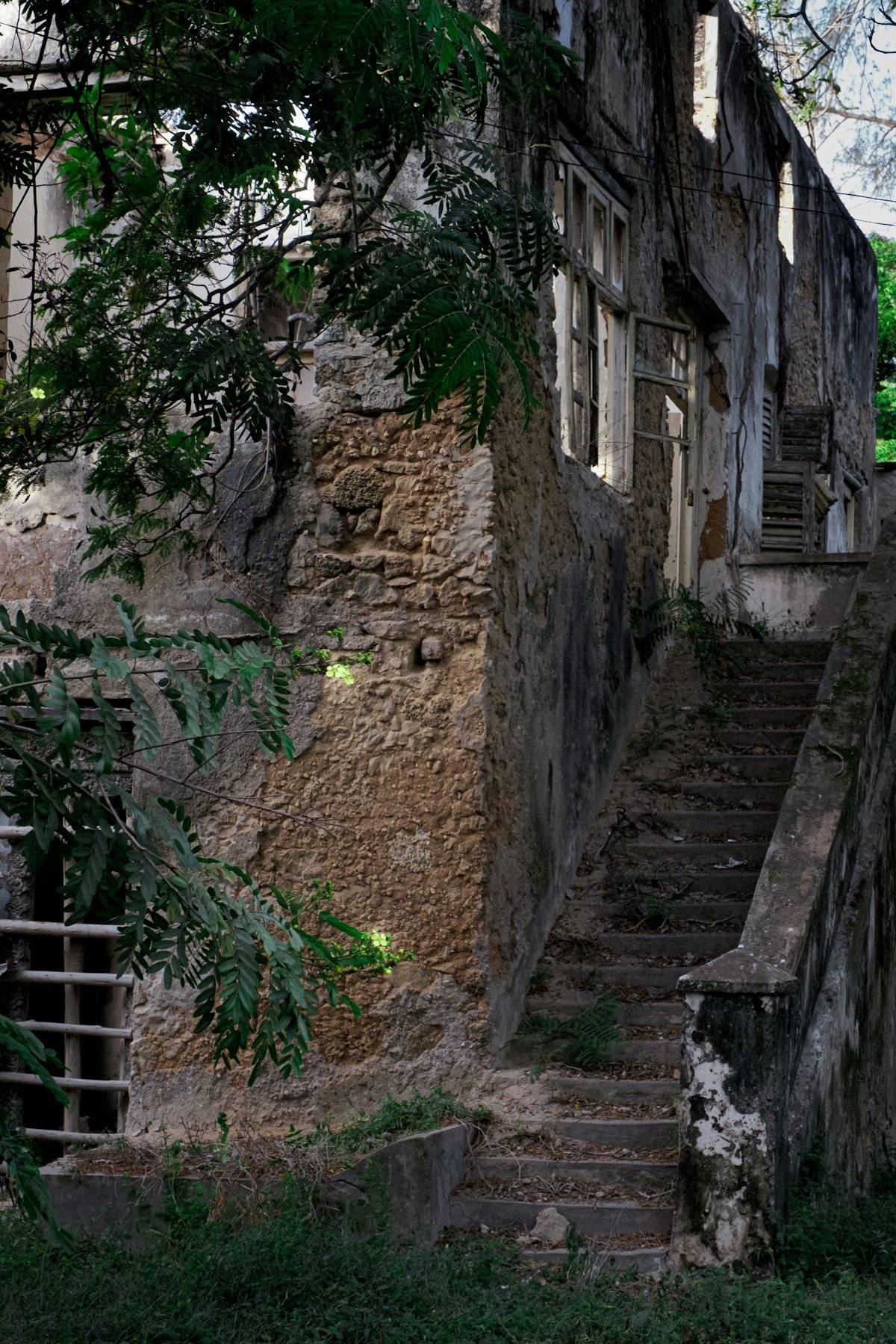
Before Dar es Salaam existed as a city, Bagamoyo was the most important port on the East African coast. For most of the nineteenth century, it was the terminus of the central caravan route from the interior - the same routes that brought ivory, copper and enslaved people from Lake Tanganyika to the coast. It was where David Livingstone’s body was brought in 1874 before being shipped to England. And from 1891 to 1907, it was the capital of German East Africa.
Today, Bagamoyo is a UNESCO World Heritage site in waiting - nominated but not yet listed - with some of the finest colonial-era architecture on the East African coast still standing, though most of it in various states of decay. That very fragility makes it more interesting to visit than a polished heritage site.
Bagamoyo
Bagamoyo is approximately 75 kilometres north of Dar es Salaam, roughly 1.5 hours by road. It sits at the mouth of the Kingani River and faces the open Indian Ocean.
The Name
Bagamoyo is most commonly translated from Swahili as “lay down your heart” - a reference to the despairing acceptance of enslaved people who arrived at the coast and understood that they would never return home, or alternatively of the porters who had completed the long, exhausting march from the interior and laid down their heavy loads. Both interpretations exist in the literature.
Key Historical Sites
Kaole Ruins - Located 4 kilometres south of Bagamoyo town, these ruins are among the oldest on the Tanzania coast, dating to the 13th–15th centuries. The site contains the remains of two mosques (the larger with a mihrab still clearly visible) and several pillar tombs - the distinctive East African coastal tomb style with a vertical pillar at one end. The ruins predate both the Portuguese and the Omani periods and represent the Shirazi culture - Arab-African trading communities who settled this coast from the ninth century onward. Entry: Approximately USD 5. Open 8am–6pm. A caretaker unlocks the gate and provides a basic guided tour. Getting there: Poda poda (motorcycle taxi) from Bagamoyo town, approximately TZS 2,000–3,000 each way.
Bagamoyo Old Town (Mji Mkongwe) - The historic town core has been subject to architectural surveys by the Norwegian Research Council and is remarkable for the density of late 19th and early 20th century buildings still standing. Notable structures include:
-
The German Boma (Fort) - A two-storey building with arched verandas constructed in the 1890s, used as the administrative headquarters of German East Africa until the capital moved to Dar es Salaam in 1891. Now functions as the Bagamoyo District offices. The building is structurally sound.
-
The Old Customs House - A long single-storey German-era building directly on the waterfront. Used to process ivory, copal and other trade goods.
-
Catholic Mission (Holy Ghost Mission) - Founded in 1868 by French Holy Ghost Fathers (now Spiritans), this was one of the first Catholic missions in East Africa. The compound includes the original 1873 church, a freed slaves’ settlement, and the chapel where Livingstone’s body was kept overnight in 1874 before being transported by ship. A small museum is on site. Entry: Approximately USD 3. Open 9am–5pm. Guides available from the mission.
Livingstone’s Tembe (caravan rest house) - A reconstructed traditional rest house near the mission, representing the type of structure where long-distance caravans camped. Modest but adds context to the caravan history.
Bagamoyo Beach - The beach north of town is where dhows still land, continuing a maritime tradition stretching back centuries. Early morning is the most active time - fishermen returning with the night’s catch, dhows arriving from Zanzibar.
Practical Information for Bagamoyo
Getting there from Dar es Salaam:
- Private vehicle: 1.5–2 hours via the Bagamoyo Road (Morogoro Road north, then right at Mlandizi junction)
- Dalla dalla: From Ubungo bus terminal in Dar, take a bus toward Msata, get off at the Bagamoyo junction, then local transport. Total journey 2–3 hours. Not practical for site visits without significant local knowledge.
- Organised tour: Several Dar es Salaam operators offer day trips to Bagamoyo, combining the ruins, mission, German town and beach. USD 60–100 per person depending on group size.
Best time to visit: Early morning or late afternoon to avoid midday heat. The light on old buildings is best at these times.
Accommodation: Bagamoyo has limited accommodation; most visitors come as a day trip from Dar. The Travellers Lodge and Millennium Old Lodge offer basic options if you want to stay overnight.
Search hotels in Dar es Salaam on Booking.com
Dar es Salaam’s Colonial Landmarks
Dar es Salaam was founded in 1862 by the Sultan of Zanzibar as a fishing village and personal retreat. Its name means “haven of peace” in Arabic. The Germans recognised its better harbour (Bagamoyo’s harbour was too shallow for larger ships) and developed it rapidly after 1891.
German Period (1891–1919)
The German colonial administration built systematically in Dar es Salaam. Several of their buildings survive in the city centre.
State House (Ikulu) - Originally the German Governor’s Residence, built in 1891–1922 with a distinctive colonnaded facade and tower. Now the official residence of Tanzania’s President. The grounds are closed to visitors, but the facade is visible from Ocean Road. A beautifully maintained colonial-era building in active use.
Azania Front Lutheran Church - Built by German missionaries in 1898 in a neo-Gothic style. Still in active use as a church. The red-and-white exterior and twin towers are one of Dar’s most recognisable landmarks. Entry permitted during non-service hours.
Old Boma - The original German Boma on Sokoine Drive, now housing the National Museum of Tanzania annexe. The building dates to the 1890s and is one of the oldest surviving structures in the city centre.
National Museum of Tanzania - The country’s primary museum, housing natural history, archaeological and cultural collections. Among the exhibits: casts of Olduvai Gorge fossils, Maasai cultural artefacts, and colonial-period historical collections. Entry: Approximately USD 5–8. Open 9:30am–6pm Tuesday to Sunday (closed Monday). Located on Shaaban Robert Street.
British Period (1919–1961)
Britain took control of German East Africa after World War One, renaming it Tanganyika Territory. The administrative infrastructure was largely maintained and extended.
Ocean Road Hospital - A colonial-era hospital on the seafront, the original building dating to the German period. Still operational.
Karimjee Hall - A gift to the territory from the Karimjee Jivanjee family (Ismaili Indian merchants who played a central role in Dar es Salaam’s development), this hall on Sokoine Drive was the original parliament building before independence. Now used for civic functions.
Kariakoo District - While not colonial architecture specifically, this neighbourhood represents the planned African district that colonial authorities created to house African workers separately from the European and Indian quarters. The market (Kariakoo Market) remains one of the most atmospheric in East Africa.
Combining Bagamoyo and Dar es Salaam
A two-day historical itinerary:
Day 1 (Dar es Salaam): National Museum in the morning (2 hours). Walk to Kariakoo Market. Afternoon drive along Ocean Road past the State House. Visit Azania Front Church. Sunset at the Slipway complex in Msasani.
Day 2 (Bagamoyo): Leave Dar early (7am) to reach Bagamoyo by 9am. Kaole Ruins first (cooler, morning light). Old town walk - German Boma, Customs House. Holy Ghost Mission and museum. Beach for lunch. Return to Dar by 4–5pm.
German East Africa in Context
German control of what is now mainland Tanzania (then called Deutsch-Ostafrika) lasted just over three decades, from the 1880s to 1919. The colonial period was marked by two major uprisings:
The Abushiri Revolt (1888–1889): Led by Arab trader Abushiri bin Salim al-Harthi against the German East Africa Company’s attempts to take control of the coast, the revolt was suppressed by German naval and land forces. Abushiri was captured and hanged in Pangani in 1889.
The Maji Maji Rebellion (1905–1907): A major uprising covering much of southern Tanzania, in which approximately 200,000 people died, most from the famine deliberately engineered by German forces as part of their suppression strategy. The rebellion began in the Matumbi Hills south of Dar es Salaam and spread across eight of the twelve current regions. It is now recognised as one of the bloodiest colonial conflicts in African history and is commemorated annually in Tanzania.
The ruins at Bagamoyo, the administrative buildings in Dar, and the traces of German-built infrastructure (the Central Railway line, constructed using forced labour, still runs Dar–Kigoma today) are the physical legacy of this period.
Browse Dar es Salaam and Bagamoyo historical tours to explore colonial-era sites with a knowledgeable local guide.