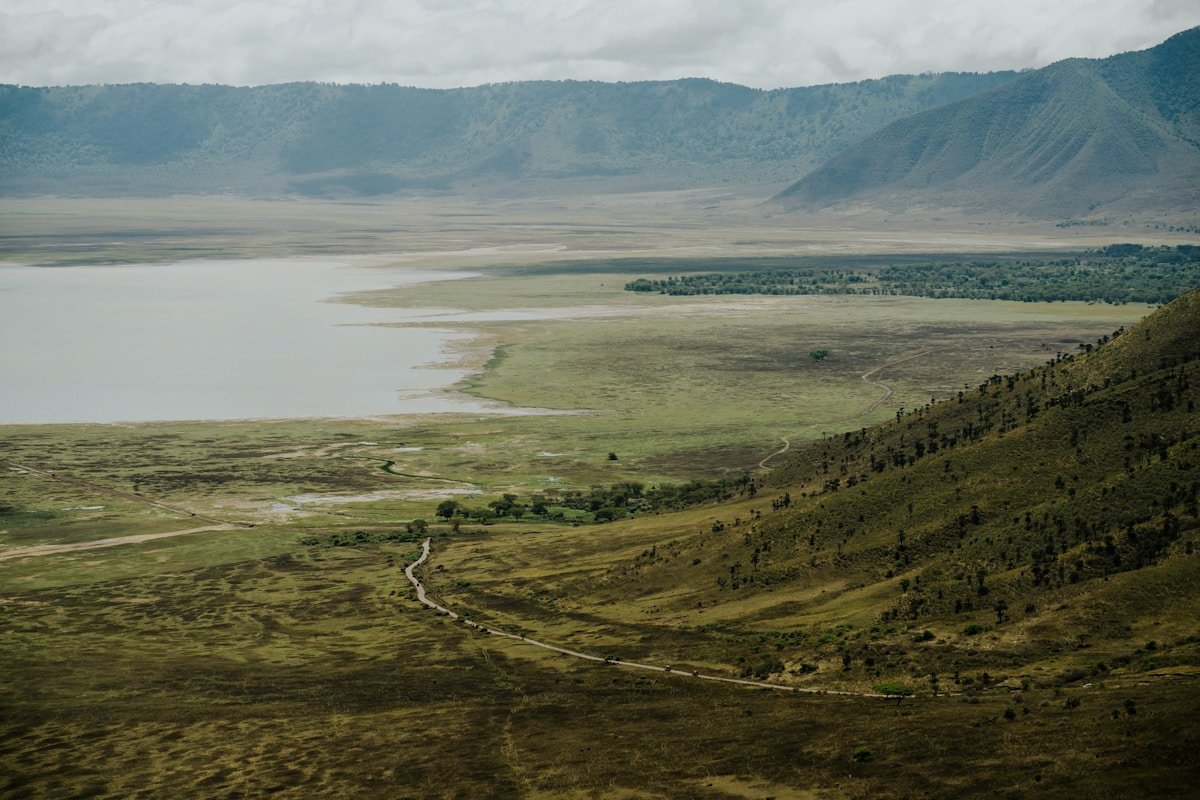
In the Olduvai Gorge - a 48-kilometre ravine cut through the Ngorongoro Conservation Area of northern Tanzania - two million years of human prehistory are exposed in geological strata visible from the viewing platform. It is one of the most significant palaeontological sites on earth, and the discoveries made here by Louis and Mary Leakey fundamentally changed our understanding of where and how humanity began.
What Was Found at Olduvai
1959: Mary Leakey discovered a partial skull belonging to a species later named Paranthropus boisei (originally called Zinj) - a robust hominid with a massive jaw adapted for hard plant material. It was approximately 1.75 million years old. The discovery made international headlines and established East Africa as the cradle of human evolution.
1960: Louis Leakey found fossils belonging to a more gracile species, with a larger brain and evidence of tool use, which the Leakeys named Homo habilis - “handy man” - at approximately 1.9 million years old. This was the oldest member of our genus Homo then known.
Stone tools: The lowest strata of Olduvai contain Oldowan stone tools - the simplest known stone tools in the archaeological record, approximately 2.6 million years old - and gave their name to the Oldowan tool industry recognised worldwide. The tools are simple sharp flakes struck from river cobbles, but their presence indicates that systematic stone tool manufacture was underway nearly three million years ago.
Laetoli Footprints: While not at Olduvai Gorge itself but 45 kilometres to the south, the Laetoli site (discovered by Mary Leakey in 1976) contains preserved footprints of Australopithecus afarensis walking bipedally across volcanic ash 3.6 million years ago. The gorge and Laetoli together form the most complete picture of early human evolution available anywhere.
The Site Today
Olduvai Gorge Museum (Olduvai Museum): A purpose-built museum at the gorge’s viewing area contains casts of the key fossil finds (the originals are held in Dar es Salaam and Nairobi), explanatory panels on the geological history, and an overview of the Leakey family’s six decades of work here. The museum is modest in scale - two main rooms - but the information density is high and the site itself is the real exhibit.
Viewing platform: A platform overlooks the gorge junction, where the main and side gorges meet. This is where many of the key finds were concentrated. The geological layers are clearly visible - different coloured strata representing different geological epochs. A guide explains which fossils came from which layer.
Excavation ongoing: The gorge is still an active research site. Several international teams work in different sections. Visitors cannot enter the active excavation zones but can sometimes observe work from a distance.
Entry Fees and Opening Hours (as of 2026)
- Entry fee: Approximately USD 35–50 per person (fees are set by the Ngorongoro Conservation Authority - NCAA - and include a guided tour of the museum and gorge overview)
- Opening hours: 8am–6pm daily
- Guided tour: Included in entry fee. Duration approximately 45–60 minutes. Tours depart continuously when there are visitors. The guides have typically been trained by researchers from the gorge and provide excellent context.
- Photography: Permitted. No tripod restrictions. The gorge itself photographs well in morning and late afternoon light.
Note: Fees at Olduvai are collected by the Ngorongoro Conservation Area Authority (NCAA) rather than TANAPA. They are subject to change - confirm current rates on arrival.
Getting to Olduvai Gorge
From Arusha: Olduvai lies approximately 175 kilometres west of Arusha, accessed via the main road to Ngorongoro Crater (through Karatu). The drive takes approximately 3–4 hours by road.
As part of a Ngorongoro visit: Most safari operators stop at Olduvai en route between the Ngorongoro Crater rim and the Serengeti. The gorge is directly on this road - it is a logical 1–2 hour detour that adds almost no extra driving.
Practical access: There is no public transport to Olduvai. You need a private vehicle or guided safari. All vehicles driving the Ngorongoro–Serengeti road pass the gorge junction; stopping requires paying the entry fee.
Nearest accommodation: Karatu (approximately 1 hour east) is the nearest town with significant accommodation options. Most visitors visit Olduvai as a day excursion combined with Ngorongoro Crater descent.
Search hotels in Arusha on Booking.com
The Leakey Legacy
Louis Leakey (1903–1972) was born in Kenya to British missionary parents, educated at Cambridge, and returned to East Africa to pursue archaeology. His conviction that human evolution had taken place in Africa (rather than Asia, as some contemporaries believed) drove him to excavate at Olduvai from 1931 onward, though major fossil finds didn’t come until the 1950s.
Mary Leakey (1913–1996) was arguably the more rigorous scientist. It was Mary who discovered the Zinj skull in 1959 and who later found the Laetoli footprints in 1976. Her meticulous excavation records set a standard for the field.
Their son Richard Leakey (1944–2022) extended the family’s work to Lake Turkana in Kenya, later becoming the director of Kenya Wildlife Service and a key figure in African conservation.
The name “Olduvai” comes from the Maasai word for sisal plant - oldupaai - a plant that grows on the gorge’s slopes.
Combining Olduvai with Ngorongoro
Olduvai Gorge sits between the Ngorongoro Crater and the Serengeti - it is almost impossible to travel between them without passing the gorge junction. A logical two-day itinerary:
Day 1: Arrive at the Ngorongoro Crater rim (lodges on the crater rim have extraordinary views). Afternoon rest or crater-edge walks.
Day 2: Descend into the Ngorongoro Crater for a full-day game drive (entry approximately USD 295 for the vehicle plus USD 68 per person entry). The crater floor holds the most concentrated wildlife viewing in Tanzania - lion, rhino, elephant, flamingo and vast wildebeest herds in 260 square kilometres.
Day 3: Drive west toward the Serengeti, stopping at Olduvai Gorge (1–2 hours). Continue to the Serengeti.
What Olduvai Cannot Tell You
The gorge is not a dramatic landscape in the way the Serengeti or Ngorongoro are. The scientific importance is intellectual - the exposed strata represent geological time that is almost impossible to fully comprehend standing at the viewing platform. What you see is a ravine cut through the savanna with clearly visible layers of different-coloured rock. What it means requires the guide’s explanation to become real.
For travellers who engage with the context - the improbability of these specific conditions preserving remains for two million years, the years of patient excavation that preceded each discovery, the fundamental revision to our understanding of human origins that emerged from this specific landscape - Olduvai is a genuinely affecting place. For those who prefer visible spectacle, the hour spent here is better used on the road to Serengeti.
Practical Tips
- Bring water and a hat - the gorge area is hot and exposed.
- The museum’s exhibits are genuinely worth reading - allow time before the guided gorge walk.
- Camera lenses: Wide-angle for the gorge panorama; a 50mm equivalent captures the strata detail well.
- Best light: Morning (8–10am) or late afternoon (4–6pm) for photography; midday is harsh.
- The gift shop sells fossils and replica tools made by local artisans - reasonably priced and unusual souvenirs.
Olduvai Gorge is typically visited as part of a northern circuit safari. Browse Ngorongoro and northern circuit tours to find packages that include the gorge. For the full northern Tanzania safari circuit, Tanzania safari tours covers packages that combine Olduvai with Ngorongoro and the Serengeti.