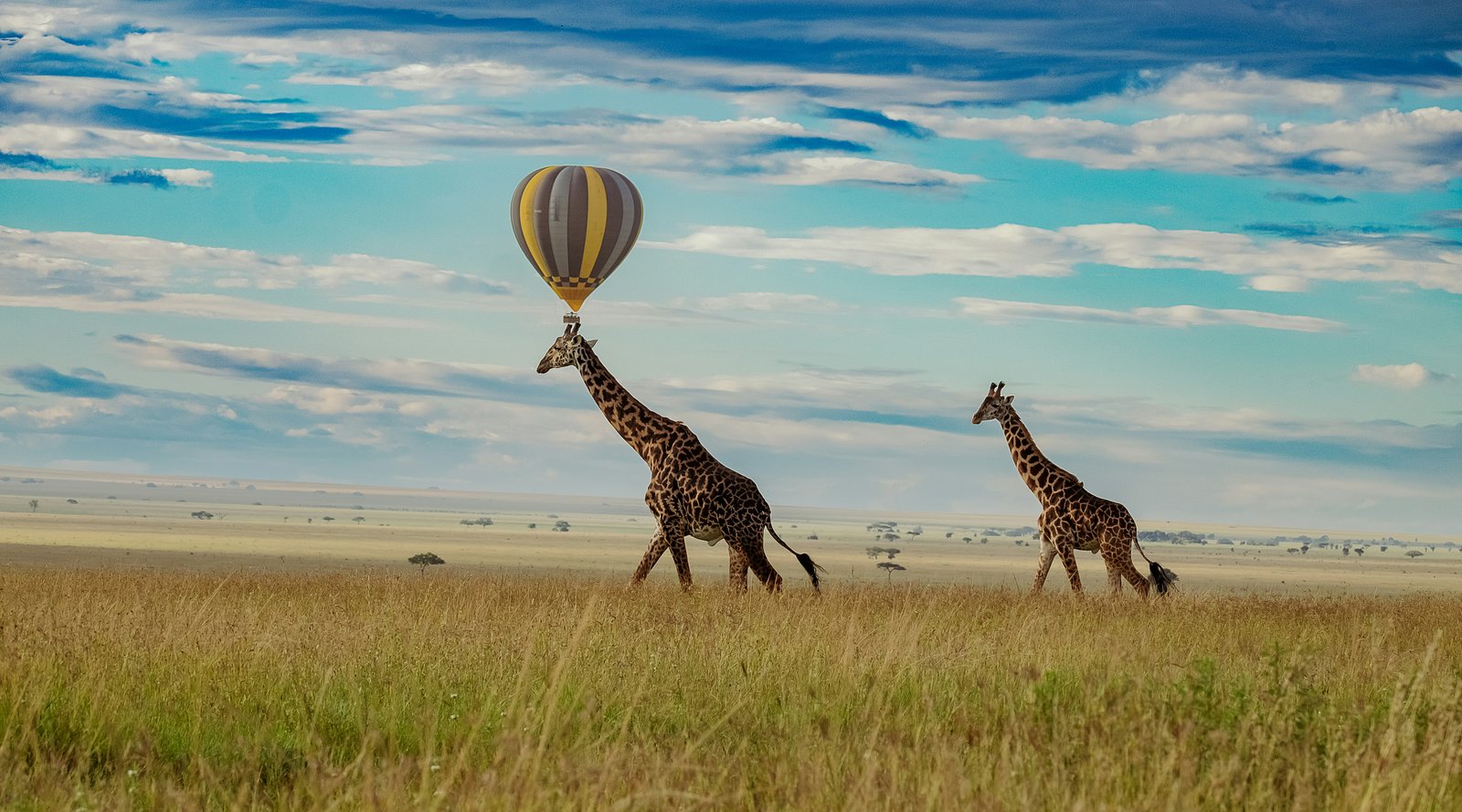
Watching the sun rise over the Serengeti from 1,500 feet is one of those travel moments that doesn’t fade. The plains below shift from charcoal to copper as the balloon lifts silently - no engine noise, just wind and the occasional burst from the burner overhead. Below, the grass stretches in every direction, broken by acacia silhouettes and the distant movement of wildlife that doesn’t yet know you’re there.
A hot air balloon safari over the Serengeti is the most sought-after experience in East African safari travel. Here’s everything you need to plan it properly.
The Main Operator: Serengeti Balloon Safaris
Serengeti Balloon Safaris is the dominant operator and has run flights in the park since 1986. They maintain a strong safety record and operate multiple basket sizes accommodating 12 to 16 passengers per flight. Their team is experienced with the Serengeti’s unpredictable thermals and the specific requirements of flying safely over a national park.
A small number of other operators - including Asilia Africa for guests at their camps - offer balloon experiences, but Serengeti Balloon Safaris holds the broadest access within the park and is the operator most lodges book through by default.
What It Costs
Flights with Serengeti Balloon Safaris start from approximately USD 599 per person as of 2026. That price includes the full flight experience and the champagne bush breakfast that follows. Flights booked through lodges often carry a small surcharge for the booking service.
Children aged 7–12 typically receive a modest discount - check directly with the operator for current rates. The experience is non-negotiable on price, but some camps include the flight as part of an all-inclusive rate during peak season.
Park fees are separate and handled by your lodge or camp as part of your daily conservation fee. No additional Serengeti entry fee is levied specifically for the balloon flight.
What the Experience Includes
Pre-Dawn Pickup
You’ll be collected from your lodge or camp between 04:30 and 05:00, while it’s still dark. The drive to the launch site takes 15–40 minutes depending on your accommodation’s location. Arrive at the launch meadow to find the balloon being inflated - a slow, theatrical process that sets the mood for what follows.
A light pre-flight briefing covers safety procedures: how to brace for landing, how to position yourself in the basket, and what to do if the pilot issues instructions mid-flight. Pay attention. The briefing is short but the information is practical.
The Flight
Flights typically last one hour, though the time varies with wind conditions. You’ll ascend to between 300 and 1,500 feet - the pilot adjusts altitude based on wildlife activity below and prevailing winds. Experienced pilots use low passes above animal herds and slow drifts over kopjes (granite outcroppings) to maximise sightings.
Communication within the basket is easy. There’s no engine roar - just the occasional controlled blast from the propane burner, which is hot and loud but infrequent. You’ll have time to watch, photograph, and simply look.
The Champagne Bush Breakfast
After landing - usually in the bush, wherever the wind has carried you - a ground crew has tracked the balloon’s path and set up a white-tablecloth breakfast in the field. Expect scrambled eggs, sausages, fresh fruit, toast, juice, and champagne (or sparkling water if preferred). The ceremony of popping a bottle in the middle of the Serengeti at 07:30 is part of the experience and worth leaning into.
A four-wheel-drive vehicle then returns you to your lodge in time for the morning game drive.
Best Season: June to October
Balloon safaris run year-round in the Serengeti, but the best conditions are tied to the Great Migration. From June through October, enormous herds of wildebeest and zebra move through the northern Serengeti between the Mara River and Mara Triangle. Viewing a column of wildebeest from above - tens of thousands of animals moving as a single organism - is unlike anything you’ll see from a vehicle.
Outside migration season, the central Serengeti (Seronera zone) maintains dense resident wildlife year-round: lions, elephants, giraffes, hippos at the Seronera River, and leopards in the riverine acacia. January and February bring the calving season in the southern Serengeti - another outstanding period for flights, with predator-prey interactions at their peak.
What to avoid: April and May are the long rains. Flights operate but visibility is often reduced, the ground is waterlogged, and bush breakfasts move under shelter. Some operators reduce frequency during this period.
Departure Zones and Nearby Lodges
Launch sites shift across the park to follow the wildlife. The main zones are:
Central Serengeti (Seronera): The most consistent launch zone, operational year-round. Nearby lodges include:
- Serengeti Serena Safari Lodge - sits above the Serengeti valley, about 20 minutes from the main launch meadow
- Serengeti Sopa Lodge - central park position, often used as a base for non-migration season flights
- Four Seasons Safari Lodge Serengeti - mid-range luxury option with direct balloon booking arrangements
Northern Serengeti (Kogatende / Lamai): Active June–October when the migration reaches the Mara River. Launch points are closer to the river crossing zones. Lodges in this zone include:
- Lamai Serengeti (Asilia Africa) - permanent tented camp with migration views; the operator runs their own balloon flights for guests
- Lemala Kuria Hills - small camp with close access to the northern launch area
- Rekero Camp - long-running Asilia camp near the Mara River, well-positioned for morning flights
Southern Serengeti (Ndutu region): January–March calving season. Some operators run flights from the Ndutu area. Options include &Beyond Ngorongoro Crater Lodge (though technically just outside the park boundary) and Ndutu Safari Lodge for proximity to the calving grounds.
Confirm with your specific lodge which launch zone their balloon partner uses - this affects pickup time and the wildlife you’re likely to see below.
Booking Requirements
Book at least two to four weeks ahead during peak season (July–September). On popular migration dates, flights fill to capacity and cannot accommodate walk-ins. Many operators allow direct online booking; most high-end lodges include balloon booking as part of their pre-arrival concierge service.
A deposit is usually required to secure your place. Cancellations within 48 hours of the flight are typically non-refundable, though credits may apply if the flight is cancelled by the operator due to weather.
Weight Limits and Physical Requirements
The maximum passenger weight is 120 kg (approximately 265 lb) for most flights. Some larger baskets accommodate up to 130 kg - confirm with the operator when booking. Weight is checked on the morning of the flight. If you exceed the limit, you will not be permitted to fly and no refund is guaranteed, so disclose your weight honestly when booking.
Passengers must be able to stand for approximately one hour and move quickly into the landing brace position on instruction. The flight is suitable for most ages and fitness levels; the basket has a solid floor and padded sides. There is no climbing required.
Minimum age is 7 years. Passengers must weigh at least 35 kg to maintain basket balance.
Safety
Hot air ballooning has an excellent safety record in the Serengeti. Serengeti Balloon Safaris’ fleet is maintained to international standards and pilots hold licences issued by the Tanzania Civil Aviation Authority. Balloon flights are weather-dependent - if wind speeds exceed safe limits, the operator will postpone or cancel. This happens infrequently but should be factored into itinerary planning: don’t schedule your flight on the morning of a connecting flight or a tight departure.
What the briefing will tell you: Keep your arms and camera inside the basket during manoeuvres, follow the pilot’s bracing instruction on landing, and do not lean over the edge. The landing is the most physically demanding part - the basket may tip on its side briefly on touchdown in certain wind conditions. This is normal and part of the procedure.
What to Bring
- Camera or phone: The light at dawn is exceptional. A wide-angle lens captures the landscape; a longer lens isolates wildlife below
- Light layers: Temperatures at altitude are cooler than ground level, especially before sunrise. A fleece or light jacket is recommended
- Binoculars: Useful for identifying animals you’re passing over
- Closed-toe shoes: The launch site is uneven ground
Leave valuables at the lodge. The basket has limited space and the bush breakfast table is not a secure storage environment.
Compare Serengeti Balloon Tours on GetYourGuide
The table below lists verified options bookable through GetYourGuide. All include a bush or champagne breakfast on landing.
| Tour | Duration | From (per person) | Book |
|---|---|---|---|
| Serengeti NP: Balloon Safari at Dawn | 5 hours | USD 599 | Book |
| Serengeti: Balloon Safari & Bush Breakfast | 4.5 hours | USD 530 | Book |
| Serengeti: Hot Air Balloon + Champagne Breakfast | 5 hours | USD 643 | Book |
Prices as of 2026. Park entry fees (USD 82.60 per person per day) are separate. Check individual listings for current seasonal rates.
Is It Worth the Cost?
At USD 599 per person, the Serengeti balloon safari is one of the most expensive single activities in East African travel. Whether it justifies the price depends on what you’re there for.
If the ground game drive is your primary interest, the balloon adds a perspective rather than a substitute - you won’t do close-up predator sightings from altitude. But if you want to understand the scale of the Serengeti - the sheer spatial immensity of the plains, the way animal herds look from above, the silence of being that high above something that ancient - it’s worth it. Most people who do it say they’d do it again. That’s as honest an endorsement as any.
Browse Serengeti safari tours to find ground game drive operators, migration packages, and combination itineraries that pair well with a balloon flight.
Ready to book? See our Serengeti balloon safari operator comparison for a side-by-side look at Serengeti Balloon Safaris vs Miracle Experience, including price differences, launch zone access, and booking tips.