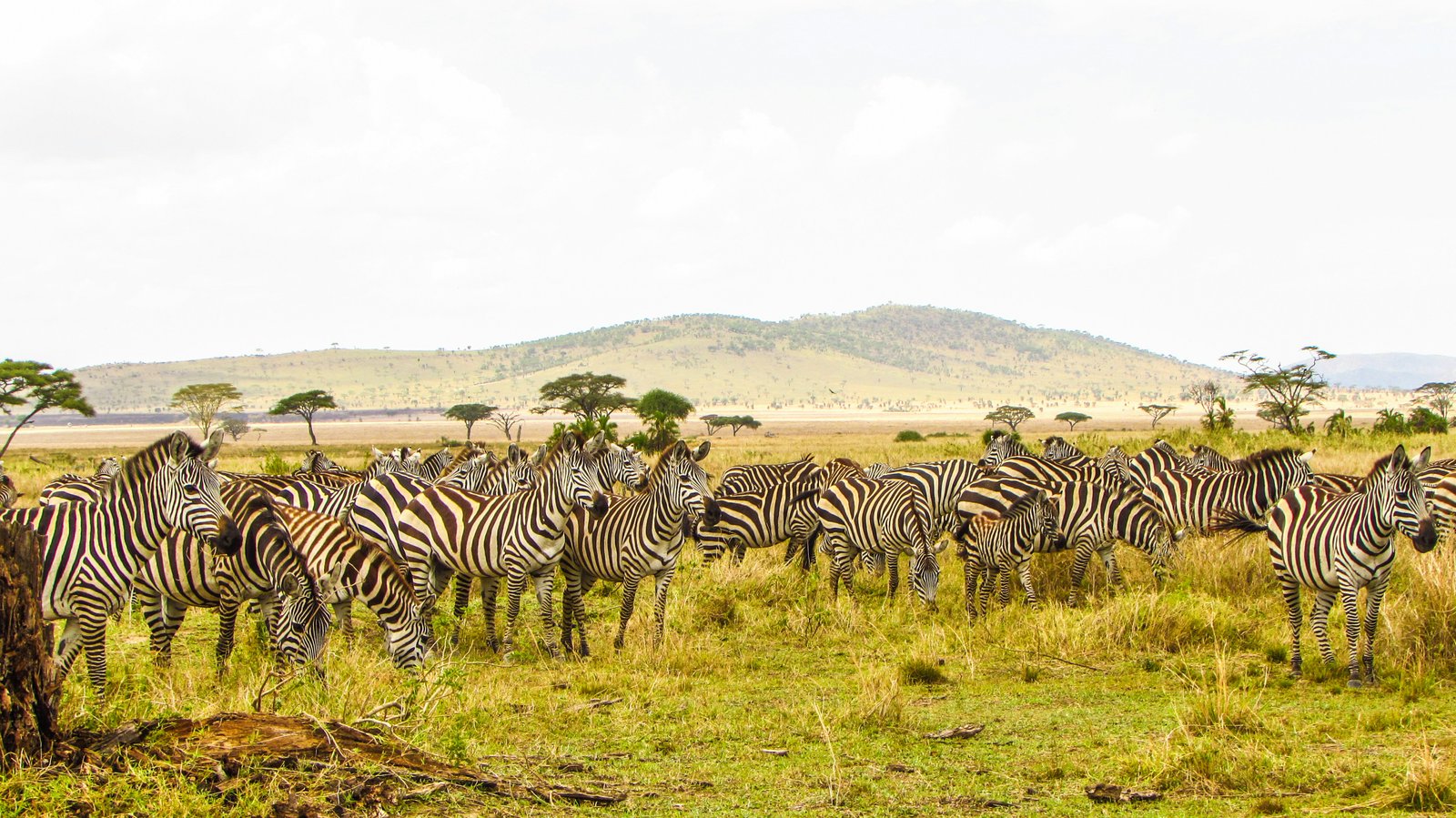
Tanzania’s northern circuit is one of Africa’s great safari routes. Arusha acts as the hub, and from there the road leads into Tarangire National Park, then up to the Ngorongoro Conservation Area, and finally into the vast Serengeti - the destination that gave the word “safari” its meaning. Seven days is the minimum to do the circuit justice; this itinerary makes every day count.
Overview of the Route
Days 1–2: Arusha → Tarangire National Park
Days 3–4: Ngorongoro Crater
Days 5–7: Serengeti National Park → Arusha
Total driving: approximately 750 km (all on graded dirt or tarmac roads with a 4WD safari vehicle).
Budget Tiers (per person, per day, all-in)
| Tier | Accommodation | Game drives | Approx. daily cost |
|---|---|---|---|
| Budget | Permanent tented camps (shared facilities) | Shared game drives | USD 150–200 |
| Mid-range | En-suite tented camps | Private group vehicle | USD 300–500 |
| Luxury | Lodge or private camp, en-suite | Private vehicle + guide | USD 700–1,500+ |
Prices as of 2026. Tanzanian national park fees, guide, and vehicle are typically included in operator packages.
Day 1: Arrival in Arusha
Fly into Kilimanjaro International Airport (JRO) - served direct from Nairobi, Dar es Salaam, Addis Ababa, and Amsterdam, among others. Arusha is 45 minutes west of the airport by taxi (approximately USD 25–35 as of 2026).
Where to stay in Arusha:
- Budget: Arusha Backpackers (from approx. USD 20 per night) - simple dorms and private rooms near the clock tower
- Mid-range: African Tulip Hotel (from approx. USD 120 per night) - city boutique hotel with solid Wi-Fi and a pool
- Luxury: Arusha Coffee Lodge (from approx. USD 400 per night) - set on a working coffee estate with plantation cottages
Use the afternoon to meet your guide, sort equipment, and brief the coming week. Most Arusha operators (Zara Tanzania Adventures, Roy Safaris, Explore Tanzania) run pre-departure meetings the evening before departure.
Search hotels in Arusha on Booking.com
Day 2: Arusha → Tarangire National Park
Departure from Arusha at 07:00. The drive to Tarangire takes about 2 hours (120 km south on the B144). Park entry fees are paid at the gate (approximately USD 59 per person per 24-hour period as of 2026).
Tarangire is famous for its elephant population - some of the largest concentrations in East Africa gather here during the dry season. The park’s baobab-dotted landscape is visually unlike anywhere else in Tanzania. Afternoon game drive returns to camp by 18:00.
Where to stay:
- Budget: Tarangire River Camp (from approx. USD 80 per person) - basic tented camp outside the park boundary
- Mid-range: Tarangire Sopa Lodge (from approx. USD 250 per person full board) - thatched rooms inside the park with Tarangire River views
- Luxury: Oliver’s Camp (from approx. USD 700+ per person all-inclusive) - small private camp in a private conservancy; excellent walking safaris
Day 3: Tarangire → Ngorongoro (via Lake Manyara)
Morning game drive in Tarangire before departing at 10:00. The drive northwest to Lake Manyara takes 1.5 hours. A brief stop at the lake viewpoint is free; entering the national park for a game drive adds the standard park fee (approx. USD 59 per person). Lake Manyara is worth it for flamingos and tree-climbing lions.
Continue northwest to Ngorongoro: a further 1.5 hours. The road climbs steeply to the crater rim at 2,300 m - evenings are cold, so pack a layer.
Where to stay on the rim:
- Budget: Simba Campsite (approx. USD 30–50 per person) - basic campsite on the rim; bring your own gear or rent through your operator
- Mid-range: Ngorongoro Wildlife Lodge (from approx. USD 250 per person full board) - classic lodge with unbeatable crater views from the terrace
- Luxury: Ngorongoro Serena Safari Lodge (from approx. USD 500+ per person all-inclusive) - designed to blend into the rim with stone architecture and forest setting
Day 4: Full Day in Ngorongoro Crater
A 07:00 descent into the crater floor is essential - descent takes 45 minutes on a steep gravel road. The crater fee is approximately USD 295 per vehicle per day as of 2026, paid in addition to the per-person conservation fee.
The Ngorongoro Crater holds around 25,000 large mammals within its 260 sq km floor. You can expect lion, elephant, black rhino, hippo, buffalo, hyena, and flamingo on the Gorigor Swamp. This is one of the few places in Africa where you are almost guaranteed a black rhino sighting.
Picnic lunch at the hippo pool, then afternoon game drive before ascending at 16:00.
Day 5: Ngorongoro → Central Serengeti
Depart the rim at 06:30 for the 3.5-hour drive northwest to the Serengeti (approximately 145 km). Pass through the Ngorongoro highlands and the Olduvai Gorge - a stop at the Olduvai Museum (entry approx. USD 30 as of 2026) adds an hour and covers over 2 million years of hominin history.
Enter the Serengeti via the Naabi Hill Gate. Standard park fee: approximately USD 70 per person per 24 hours as of 2026.
Afternoon game drive in the Seronera Valley - the central Serengeti’s permanent water sources make this a year-round big cat hotspot.
Where to stay in central Serengeti:
- Budget: Seronera Public Campsite (approx. USD 30 per person) - bring all food; cooking on open fire
- Mid-range: Serengeti Sopa Lodge (from approx. USD 320 per person full board) - thatched lodge near Seronera with good big cat guides
- Luxury: Four Seasons Safari Lodge Serengeti (from approx. USD 900+ per person all-inclusive) - pool, spa, and serious big five tracking
Day 6: Full Day in the Serengeti
Full-day game drive from 06:00 to 18:30. The Serengeti holds about 3,000 lions, the world’s largest cheetah population, and the annual wildebeest migration - the movement of approximately 1.5 million wildebeest and 500,000 zebra between Tanzania and Kenya.
Migration timing guide:
| Month | Migration location |
|---|---|
| Dec–Mar | Calving season, southern plains (Ndutu) |
| Apr–May | Moving north through central Serengeti |
| Jun–Jul | Western corridor; dramatic river crossings |
| Aug–Oct | Northern Serengeti near Lamai/Kogatende |
| Nov | Heading south again |
Optional: sunrise hot air balloon over the Serengeti plains (from approx. USD 600 per person; book well in advance through Serengeti Balloon Safaris).
Day 7: Serengeti → Arusha
Final morning game drive from 06:00 to 09:00. Depart by 10:00 for the 5-hour drive back to Arusha (or a 1-hour light aircraft flight to Arusha or Kilimanjaro Airport - Coastal Aviation and Air Excel operate scheduled charter routes from USD 200–350 one-way).
Fly-out day: most international connections from Kilimanjaro leave in the evening, giving enough time for a comfortable return.
Key Booking Tips
- Book the full circuit together. Booking accommodation and vehicle through one operator is cheaper and simpler than piecing it together separately.
- Park fees have increased sharply since 2022. Get a written quote that specifies whether fees are included - some budget operators exclude them.
- Private vs. group safari. For two to four people, a private vehicle costs roughly 20–30% more than joining a group safari but gives you total flexibility on timing and pace.
- Travel insurance is non-negotiable. Medical evacuation from the Serengeti to Nairobi or Dar can cost USD 15,000+. Travel insurance for Tanzania with evacuation cover is available online - buy before departure.
- Yellow fever vaccination. Not required for Tanzania, but required if you transit Kenya. Carry the certificate regardless.
To book the full northern circuit, browse Tanzania safari tours and Arusha-based tours for operator comparisons. If you’re searching for flights to Kilimanjaro International Airport, compare flights to Tanzania to find the best international connections.
Transport Summary
| Leg | Distance | Time | Approx. cost (in safari vehicle) |
|---|---|---|---|
| JRO Airport → Arusha | 45 km | 45 min | USD 25–35 (taxi) |
| Arusha → Tarangire Gate | 120 km | 2 hrs | Included in tour |
| Tarangire → Ngorongoro | 150 km | 3 hrs | Included in tour |
| Ngorongoro → Serengeti | 145 km | 3.5 hrs | Included in tour |
| Serengeti → Arusha (road) | 330 km | 5 hrs | Included in tour |
| Serengeti → Arusha (flight) | - | 1 hr | USD 200–350 |
Book Your Trip
- Flights - Find the best fares to Tanzania
- Travel Insurance - Get covered before you go
- eSIM - Stay connected from landing
- Airport Transfers - Pre-book your transfer from Kilimanjaro or Dar es Salaam
- Car Rental - Compare prices across providers
- Tours & Activities - Browse Tanzania tours on GetYourGuide