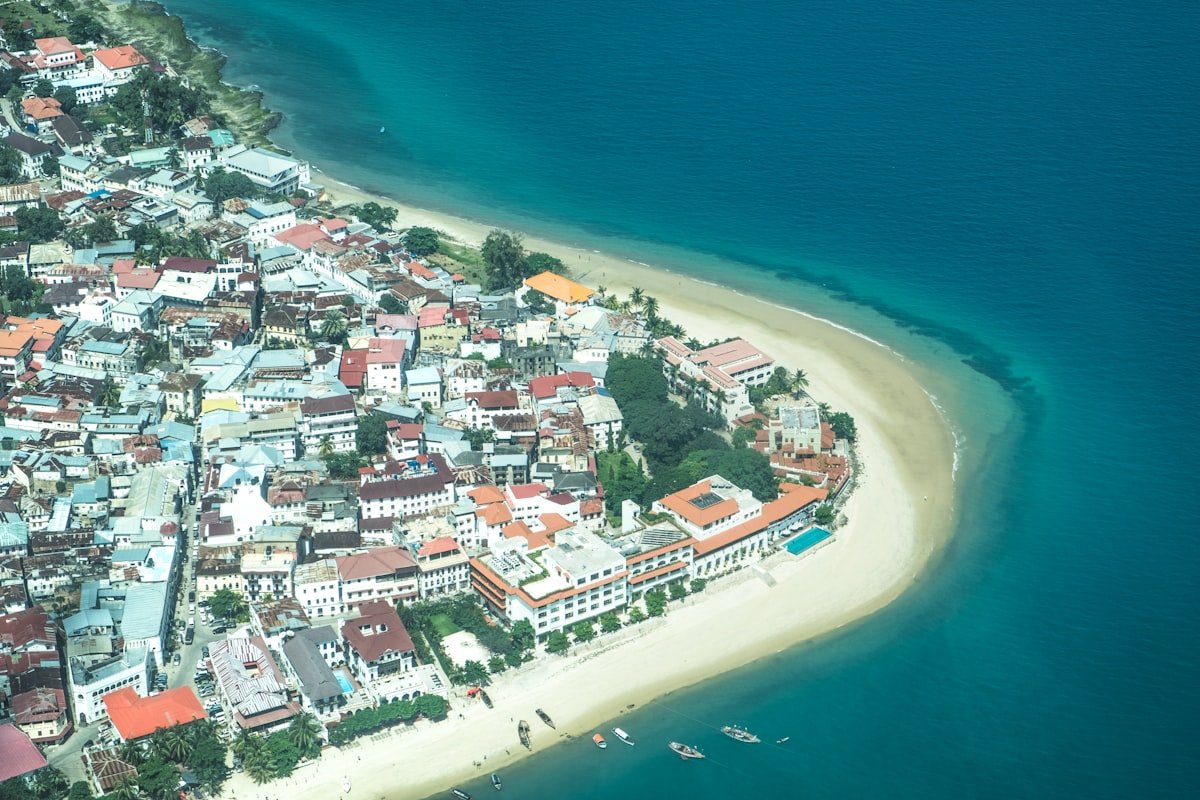
Zanzibar’s coworking infrastructure has grown meaningfully in the past few years, driven by the same global shift that’s made East African cities more attractive to remote workers. Stone Town leads on pure connectivity - fibre arrived years ago and several spaces now offer genuinely professional setups. Paje lags behind on internet reliability but compensates with the kind of working environment that’s hard to find anywhere else: a beach, a community, and the rhythm of kite season.
This guide covers the main options in both locations, with honest assessments of what each suits.
Stone Town Coworking Spaces
ZanSpace (Stone Town)
ZanSpace is the closest thing Stone Town has to a professional coworking operation. Located in a restored Swahili house near the Forodhani area, it offers hot desks and private offices with dedicated fibre connections running at 100 Mbps+ download.
What to expect: Standing desks, a mix of open-plan and booth seating for calls, air conditioning throughout, strong espresso, and a rooftop terrace for lunch breaks. The space attracts a mix of local professionals, long-stay tourists, and international remote workers.
Pricing (approximate, as of 2026):
- Day pass: $15
- Weekly access: $70
- Monthly hot desk: $220
- Monthly private desk: $320
Best for: Professional workers who need reliable connectivity and a distraction-free environment during working hours.
Hours: Monday–Friday 8am–7pm, Saturday 9am–2pm.
Hub Zanzibar
Hub Zanzibar takes a more community-oriented approach. It operates from a larger ground-floor space in the central medina and hosts regular nomad meetups and skills-exchange events. The setup is less polished than ZanSpace but has more of a community feel.
What to expect: Open-plan hot desks, meeting rooms bookable by the hour, a small library of guides and city maps, and a communal kitchen. WiFi runs on fibre at approximately 80–100 Mbps download. Slower in peak hours (9am–noon) when the space is full.
Pricing (approximate):
- Day pass: $12
- Monthly hot desk: $180
- Events and workshops: often free for members
Best for: Nomads who want to meet people, attend events, and build a local network. Less suited to those who need guaranteed quiet focus time.
Hours: Monday–Saturday 8am–8pm.
Café Working in Stone Town
For those who don’t need a dedicated desk every day, Stone Town’s better cafés function as reliable working spots. The standard to expect has improved significantly - proper espresso machines, power outlets at most tables, and aircon are now the norm at the established places.
Emerson Spice Café (rooftop): Best view in Stone Town, strong espresso, reasonable WiFi for browsing but not video calls. Better for half-day working than a full day. Budget approximately $8–15 for coffee and a light lunch.
The Lighthouse Coffee: Popular with the local young professional crowd and nomads. Ground floor with reliable WiFi (around 30–50 Mbps), good filter coffee, and a calm atmosphere in the mornings. A reliable all-day option - budget $6–10 for coffee and a snack.
Jafferji House & Spa café: Quieter than the main tourist cafés, with solid WiFi and a leafy outdoor courtyard. Well-suited to focused work if the rooftop terrace is too hot. Reasonable food menu at mid-range prices.
Practical note: Stone Town’s older buildings were not designed with power outlets in mind. Coworking spaces have resolved this; cafés have adapted but not uniformly. Bring a multi-port USB charger and expect to share wall sockets.
Paje Coworking Options
Paje’s coworking scene is less formalised than Stone Town’s. The model here leans toward coworking-accommodation hybrids - guesthouses and small beach resorts that have invested in good connectivity and a dedicated workspace as part of their proposition for long-stay guests.
Search hotels in Zanzibar on Booking.com
Airbnb & Guesthouses with Coworking Packages
Several Paje guesthouses offer explicit work-from-Paje packages. These typically bundle:
- A private room or bungalow
- A dedicated desk area with fibre or 4G connection (20–50 Mbps)
- Breakfast included
- Access to communal areas for calls
Pricing for these packages ranges from approximately $600–900/month, which compares well to renting accommodation and coworking separately. Search for “remote work package Paje Zanzibar” in booking groups and Facebook communities - most of these deals are advertised outside OTAs to keep margins workable for the hosts.
Important: When evaluating a Paje coworking-accommodation package, always ask the host to run a speed test and send you a screenshot. The gap between “we have WiFi” and “we have 50 Mbps fibre” is wide in Paje. A WhatsApp speed test screenshot from Speedtest.net is a reasonable request.
Hakuna Matata Beach Lodge (Paje)
One of the more established options explicitly targeting the nomad market on the east coast. Hakuna Matata offers monthly room-and-workspace packages with 4G connectivity and backup power for outages.
What to expect: Beach bungalows with dedicated desks, a communal workspace pavilion for morning hours (when beach glare makes outdoor working impractical), pool access, and a reliable morning coffee setup. The community is a mix of kite surfers and remote workers - social rather than heads-down productive.
Pricing (approximate): $750–950/month for room + workspace access depending on season.
Best for: Nomads who want the Paje beach lifestyle but still need to show up to their jobs. Not ideal for those requiring the high-uptime connectivity of Stone Town.
Kite Paje Beach Resort (Paje)
The most established resort in Paje with a long-stay remote work offer. The WiFi infrastructure is stronger than most Paje options due to the resort’s scale. Monthly packages that include accommodation, coworking access, and all-day café use run approximately $900–1,400/month depending on room type.
The resort’s proximity to Kite Paje’s kitesurfing school means the atmosphere is more energetic than a traditional work-focused coworking space. Strong option for nomads who kitesurf or want to learn.
The “Paje Office Hours” Informal Circuit
Experienced Paje nomads typically rotate between a handful of spots during the day:
Morning (6am–10am): Work from accommodation before the beach heat builds. Best focus hours.
Mid-morning (10am–noon): Move to a café or resort lobby with aircon and good WiFi for calls and collaborative work.
Afternoon (noon–4pm): Beach or kite time. Most Paje nomads structure their days around the afternoon kite wind window.
Late afternoon/evening (4pm–7pm): Return to desk for focus work, taking advantage of lower temperatures and quieter beaches.
This rhythm means you rarely need to be in one spot for eight straight hours - useful when permanent coworking options in Paje are limited.
Stone Town vs. Paje for Remote Work
| Stone Town | Paje | |
|---|---|---|
| Internet reliability | High (fibre 100 Mbps+) | Medium (4G 20–50 Mbps) |
| Dedicated coworking | Yes, 2+ established spaces | Limited (accommodation bundles) |
| Café working | Strong | Limited |
| Lifestyle | Urban, cultural | Beach, kitesurf |
| Food options | Wide range, affordable | Limited, pricier |
| Accommodation cost | Lower | Higher (per-night) |
| Community of nomads | Growing | Active |
| Best for | Consistent high-output work | Flexible lifestyle workers |
Many nomads split their time: two to three weeks in Stone Town for the working weeks, a long weekend in Paje for the lifestyle hit. The journey between them takes approximately 45 minutes by scooter or an hour by shared transport.
Practical Tips for Coworking in Zanzibar
Always test internet on arrival. Don’t assume. Run a Speedtest.net or Fast.com check within the first hour of arriving at any new accommodation or workspace.
Download a local SIM as backup. Vodacom has the best island-wide coverage. 20GB of data for $12–20/month gives you a reliable backup when fixed connections drop - which they occasionally do, particularly during the rainy season.
Factor in prayer times. Zanzibar is a predominantly Muslim island. Friday midday (approximately 12:30pm) brings a quiet hour as many businesses observe Jumu’ah prayers. This affects cafés and some coworking spaces. Not disruptive for most work patterns, but worth knowing if you’re scheduling calls.
Book coworking directly. Before you leave home, set up a Tanzania eSIM - you’ll want data as soon as you land. Stone Town’s dedicated spaces don’t have active marketing budgets. Contact them via WhatsApp or email before arrival to confirm availability and current pricing - it changes faster than their websites update.
Community: The Facebook group “Digital Nomads in Zanzibar” and Nomad List’s Zanzibar forum are the most active hubs for current accommodation recommendations, coworking updates, and nomad meetups. Both are worth joining before arrival for up-to-date ground truth.
Zanzibar’s coworking scene rewards the curious rather than the systematic. It’s not a destination where you arrive, open an app, and book your desk from the airport. The best options are found through the community, negotiated directly, and discovered over the first week of being on the island. For nomads who enjoy that process, it’s a genuine advantage - the barrier is low enough to keep it relatively uncrowded.