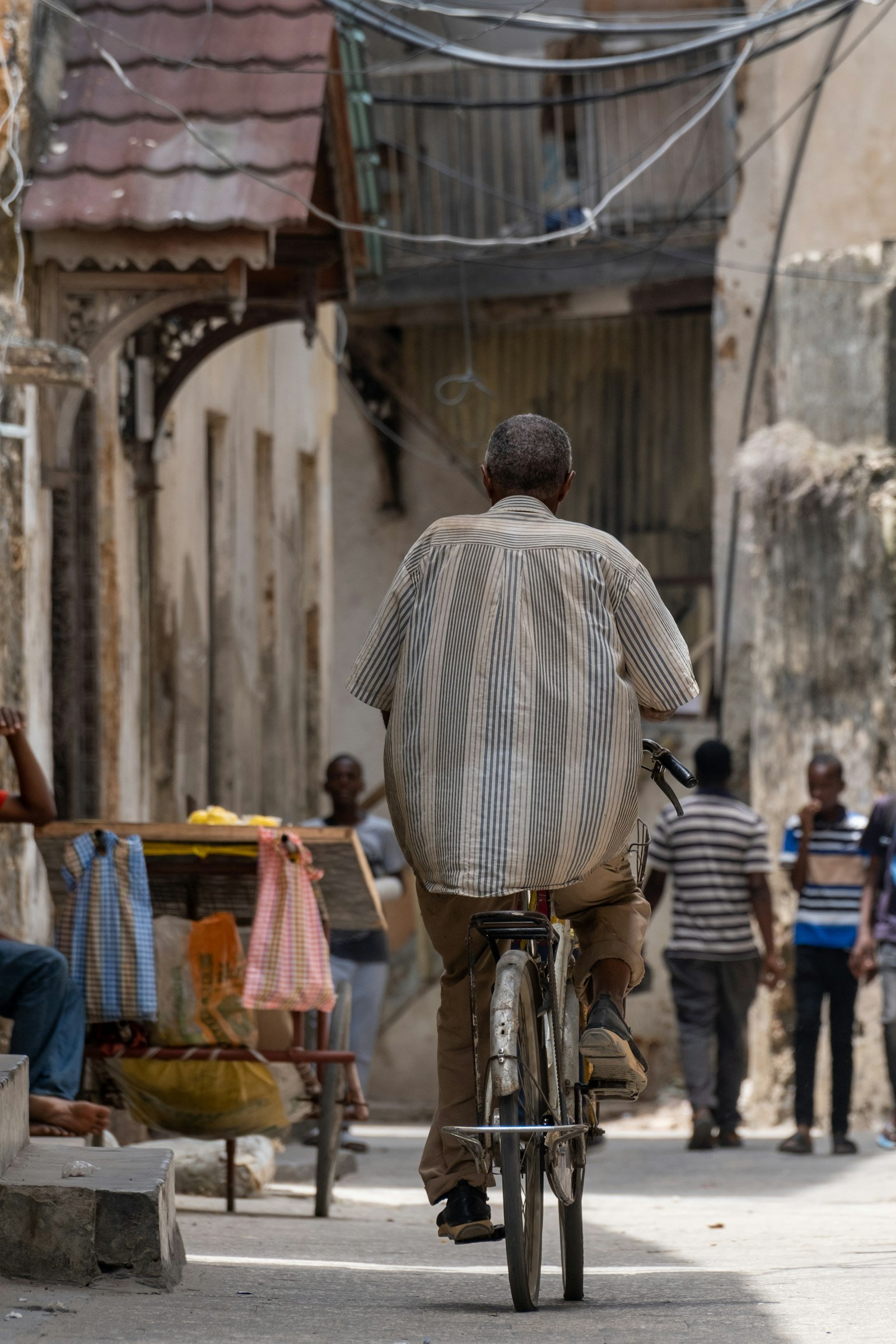
Stone Town’s historic centre is small enough to walk entirely in an hour, but the maze of alleys, dead ends, and covered passages means you will rarely walk in a straight line. This is the appeal and the challenge of navigation here. Most visitors get lost at least once - it is worth embracing rather than fighting.
Walking the Old Town
The honest assessment: Stone Town is best experienced on foot and the alleys are too narrow for vehicles in most of the historic core. Many of the most interesting streets cannot be accessed any other way.
What to expect: The main tourist circuit - Old Fort, House of Wonders, Palace Museum, Anglican Cathedral, Forodhani Gardens - can be covered in a 2–3 hour loop from any central guesthouse. The alleys between these sites are where the real Stone Town exists: carved doorways, merchant houses, small mosques, spice shops, and local tea houses.
Navigation: Street signs are inconsistent and Google Maps is useful but imperfect in the narrower alleys. The most reliable approach is to use major landmarks as reference points:
- Forodhani Gardens (the waterfront park by the Arab Fort) - northwest corner of the historic centre
- Darajani Market on Creek Road - eastern boundary
- Kelele Square (Freddie Mercury’s birthplace) - southwest corner
- The Anglican Cathedral - central landmark
Most alleys lead eventually to one of these reference points. If you emerge at the waterfront, you have gone too far west.
Footwear: Stone Town’s alley surfaces are uneven, often wet, and sometimes cobbled. Closed shoes or sandals with grip are better than flip-flops for extended walking. The alleys around the fish market area near Darajani can be slippery in the morning.
Safety: Walking at night is generally safe within the main tourist and residential areas of the historic centre. Stick to lit alleys and the waterfront. The areas east of Creek Road (beyond Darajani) are less visited and less lit - not dangerous, but not the standard tourist circuit.
Dala Dalas: Shared Minibuses
Dala dalas are the backbone of public transport across Zanzibar. They run fixed routes and depart when full (or nearly full), not to a timetable.
The Stone Town terminal is on Creek Road near Darajani market. This is the central interchange where all island dala dala routes originate.
Main routes from Stone Town:
| Destination | Route Number | Approx Fare | Journey Time |
|---|---|---|---|
| Nungwi (north beaches) | 116 | TZS 5,000–7,000 | 1.5–2 hours |
| Paje / Bwejuu (east coast) | 309/310 | TZS 3,500–5,000 | 45–60 min |
| Jambiani (southeast) | 324 | TZS 4,000–6,000 | 60–75 min |
| Matemwe | 118 | TZS 4,000–6,000 | 1–1.5 hours |
| Airport (Abeid Amani Karume) | No fixed route - take a taxi | TZS 15,000–25,000 | 15–20 min |
Practical notes: Dala dalas can be crowded, especially in the morning and late afternoon. Bags go on your lap or between your feet. There are no stops as such - flag one down on the road and tell the conductor (the person who takes fares, not the driver) your destination. The conductor will tell you where to alight and will also collect your fare during the journey.
Fares for tourists are occasionally quoted higher than the standard rate. Observing what other passengers pay is the best guide. The posted route numbers are on a sign in the windscreen.
Taxis
Stone Town has a reasonable taxi supply, mostly concentrated around the main hotels, the waterfront near Forodhani, and Creek Road by Darajani.
There are no meters. All fares must be agreed before getting in.
Approximate taxi fares from Stone Town (as of 2026):
- Stone Town to Airport: TZS 15,000–25,000
- Stone Town to Nungwi: TZS 60,000–100,000
- Stone Town to Paje: TZS 50,000–80,000
- Short trips within Stone Town: TZS 5,000–10,000
- Evening hire (2–3 hours): TZS 40,000–70,000
The higher end of these ranges is what drivers will initially quote; the lower end is closer to what you should aim to pay after polite negotiation. Evening trips and airport pickups at unusual hours attract a premium.
Booking a taxi through your hotel or guesthouse usually results in a fairer rate than flagging one on the street, because the hotel has an ongoing relationship with the driver.
Apps: Bolt operates in Zanzibar with varying coverage in Stone Town. Worth checking - when it works, the pricing is transparent and negotiation-free.
Bicycle Rental
Stone Town is genuinely bikeable if you have patience for the alley traffic and surface conditions. Bicycles are a good option for:
- Reaching Darajani market from a hotel in the Shangani area
- Day trips to nearby attractions (Kidichi Persian Baths: 8km north, Mangapwani beach: 20km north)
- Exploring the outer edges of Stone Town away from the tourist circuit
Rental prices: TZS 10,000–20,000 per day for a basic bicycle. Higher-end rental shops near the Forodhani area rent better-quality bikes with functional gears for TZS 25,000–40,000 per day.
What to expect: Most rental bikes are basic single-speed or three-speed. The alleys within the historic core are best navigated on foot - bicycles become genuinely useful once you are on the wider roads east of Creek Road and heading toward the spice farm areas north of town.
The condition of rental bikes varies. Test the brakes and gears before paying. The road to Nungwi (the main north-south highway) is paved and flat - reasonable for an easy-fitness rider.
Boat Trips: Prison Island and Changuu
The most popular short boat excursion from Stone Town is the 20–30 minute crossing to Changuu Island (commonly called Prison Island), where the ruins of a former quarantine facility sit alongside a colony of giant Aldabra tortoises.
Departure point: The Dhow Harbour, which sits just north of the Old Arab Fort along the Stone Town waterfront.
How to arrange it:
- Shared boat: Find a group at the harbour and negotiate a shared rate. TZS 20,000–35,000 per person return, plus entry fee to the island (TZS 10,000–15,000 per person as of 2026).
- Tour booked through hotel or operator: USD 20–40 per person, usually including the entry fee and return transport.
- Private charter: TZS 80,000–150,000 for the boat (1–8 people), excluding entry fees.
At Changuu Island: The tortoise sanctuary has around 100 giant tortoises, some believed to be over 100 years old. The old prison building is accessible to walk through. A basic café sells drinks and snacks at tourist prices. The beach on the island’s eastern side is shallow and swimmable.
Dolphin tours also depart from the Dhow Harbour area - most head to Kizimkazi on the southern coast (1.5–2 hours by speedboat). These are a full-day excursion and are better arranged through a reputable tour operator rather than approached informally at the harbour.
Getting to and From Stone Town
From Zanzibar Airport: The airport is 7km south of Stone Town. Taxis only - TZS 15,000–25,000, depending on negotiation. The journey takes 15–25 minutes depending on traffic. There is no airport bus service. Bolt sometimes works at the airport - check before negotiating with drivers.
From the Zanzibar Ferry Terminal: Stone Town’s ferry terminal is in the heart of town, roughly 400m south of Forodhani Gardens. Ferries arrive from Dar es Salaam (approximately 2 hours on a fast ferry; TZS 25,000–40,000 for economy class). Walking to most hotels in the historic centre takes 5–15 minutes from the terminal. Touts at the exit will offer taxi rides to guesthouses a 3-minute walk away - your hotel address is enough to walk from the terminal in most cases.
From mainland Tanzania: The ferry is the standard route. Air Tanzania and Coastal Aviation fly Dar es Salaam to Zanzibar in 20 minutes several times daily. The Zanzibar Airport is a 15-minute taxi ride from most Stone Town hotels.
Browse Stone Town walking tours and boat excursions to book guided old town walks or arrange a Prison Island trip with a vetted operator.