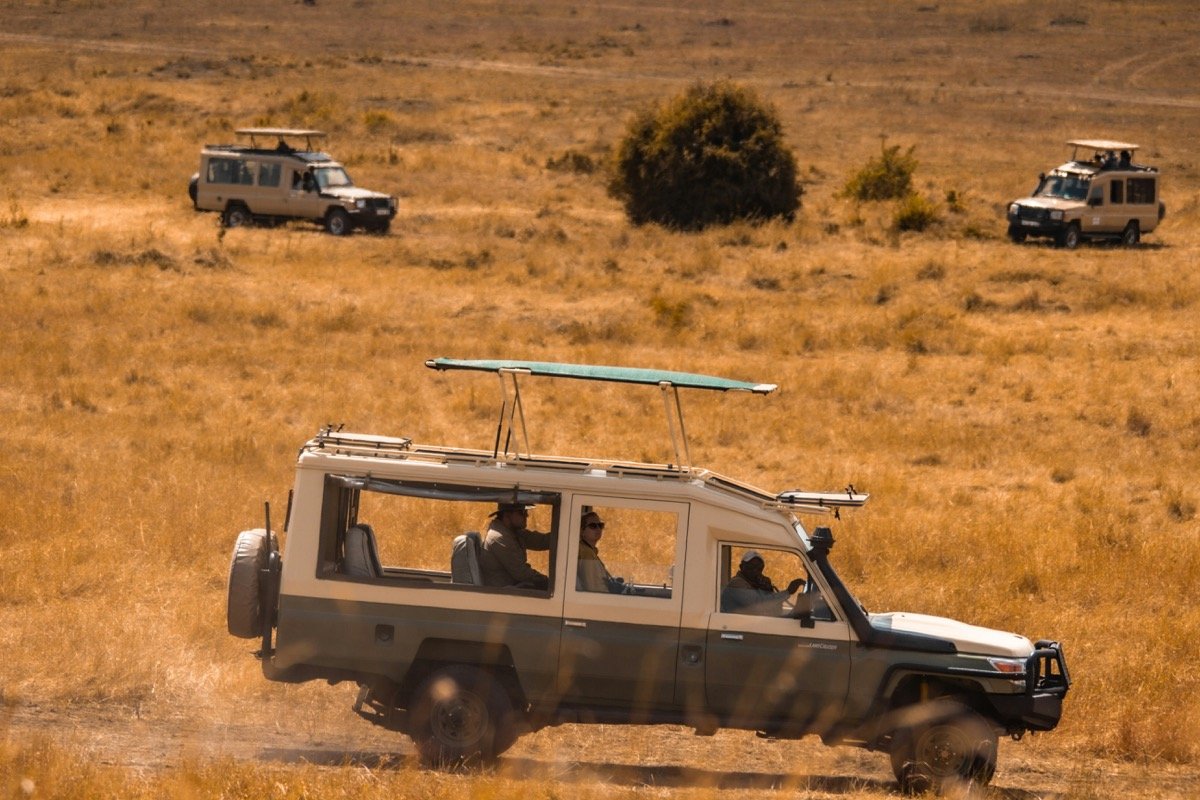
The Serengeti is Tanzania’s most famous national park and one of the most remarkable wildlife ecosystems on Earth. At 14,750 square kilometres, it covers more land than Northern Ireland and contains the largest overland animal migration in existence. Over 1.5 million wildebeest, 400,000 zebra, and 300,000 Thomson’s gazelle move in a continuous loop through the Serengeti and Masai Mara ecosystems in Kenya, following the rains. Around them: 3,000 lions, 1,000 leopards, 1,000 cheetahs, 500 wild dogs, 9,000 hyenas.
Planning a Serengeti safari well requires understanding the migration cycle, the park’s ecosystem zones, and the significant difference between budget, mid-range, and luxury experiences.
The Great Migration: When and Where
The wildebeest migration is not a single event but a year-round cycle. The key phases:
| Month | Location | What to see |
|---|---|---|
| January–February | Southern Serengeti (Ndutu area) | Calving season - 8,000 calves born per day at peak; cheetah, lion, wild dog all converge |
| March–April | Central/Western Serengeti | Herds moving north-west; fewer tourists, green landscape |
| May–June | Western Serengeti (Grumeti area) | Grumeti River crossings - crocodile ambushes in a smaller but spectacular river crossing |
| July–October | Northern Serengeti (Kogatende area) | Mara River crossings - the most dramatic event; herds cross the flooded river under crocodile and hippo pressure multiple times per day |
| November–December | Eastern/Southern Serengeti | Herds moving south; good predator sightings on open plains |
Important: The migration does not follow a precise calendar. Rainfall patterns shift year to year and herds can be several weeks early or late. When planning around a specific event (calving, river crossings), build flexibility into your dates.
Park Zones: Which Area to Stay In
The Serengeti is divided into distinct zones, each with different characteristics:
Southern Serengeti (Seronera and Ndutu)
The most visited and most accessible area, centred on Seronera village (the park headquarters). The permanent Seronera River attracts year-round game - particularly leopards in the riverine fig trees (the Seronera leopards are among the most reliably spotted in Africa) and lions on the open kopjes. The adjacent Ndutu area (technically in the Ngorongoro Conservation Area but adjacent to the Serengeti) is the calving ground: mid-January to mid-March, the density of wildebeest, zebra, and predators here is extraordinary.
Best for: First-time visitors, leopard sightings, year-round game (Big Five reliably seen), good road access.
Central Serengeti (Lobo and Seronera)
Transition zone between the south and the migration-heavy north. The Lobo area in the north-east has dramatic kopje (rocky outcrop) formations and good lion prides year-round. Better value than the north in July–October when northern prices peak, but less convenient for river crossings.
Western Corridor
The Grumeti River runs through the western corridor and hosts a smaller but spectacular June–July river crossing. Less visited, lower prices, and the Grumeti ecosystem has excellent bird life (over 500 species recorded). The Grumeti Game Reserve (private land adjacent to the park) has exclusive wildlife without the Serengeti vehicle concentrations.
Northern Serengeti (Kogatende)
The most remote area of the park and where the migration concentrates in July–October for the Mara River crossings. The density of animals and predators during August–September is exceptional. However:
- Access is by light aircraft or a very long drive from Arusha
- Accommodation is limited and premium-priced (USD 600–1,500+ per night per person)
- The vehicle concentration at popular crossing points can be heavy in August
If seeing the river crossings is your primary goal, plan for a minimum of three nights here to increase the odds of timing a crossing correctly - herds can hold both sides of the river for days before crossing.
Getting to the Serengeti
By road from Arusha: 335km via Ngorongoro and the Naabi Hill Gate entrance (south). The drive takes 5–7 hours on a mix of tarmac and graded dirt road. This is typically how budget camping safaris operate.
By light aircraft: The fastest option. Arusha Airport (ARK) to Seronera (SEU), Kogatende (TKQ), or other Serengeti airstrips with safari airlines including Coastal Aviation, Auric Air, Air Excel, and Grumeti Expeditions. Flight time approximately 45–60 minutes depending on destination. Charter costs approximately USD 200–400 per person each way in a shared charter; private charters considerably more.
For luxury lodges, flying in is standard - the lodges arrange the airstrip transfer.
Where to Stay
Budget (Camping Safaris, USD 100–200/night per person)
Public campsites in the Seronera area are available for those on organised camping safaris. The camp itself is basic (shared ablutions, tents pitched by the operator), but wildlife can walk through the campsite at night. Organised budget group camping safaris including all meals, guide, 4WD vehicle, and park fees: from approximately USD 300–400 per person per day.
Notable affordable camps:
- Serengeti Kati Kati Tented Camp: central location, good value, basic but clean. From approximately USD 200 per person per night.
- Simba Campsite (public): used by budget safari operators. Basic facilities.
Mid-Range (USD 300–600/night per person)
Permanent tented camps in the private areas adjacent to the Serengeti, or mid-tier lodges within the park. Better guiding, private vehicles, and smaller group sizes than budget options.
- Nasikia Camps (Seronera area): mobile during migration season, relocated from south to north. Approximately USD 350–500 per person per night all-inclusive.
- Serengeti Serena Safari Lodge: established mid-range lodge near Seronera with pool and reliable service. USD 300–500 per person per night.
Luxury (USD 600–1,500+/night per person)
Top-tier options include mobile camps that track the migration and private concession camps with exclusive wildlife and no vehicle limits:
- &Beyond Serengeti Under Canvas: luxury mobile camp that moves to track the migration. USD 700–1,000+ per person per night.
- Singita Grumeti (Western Corridor): exceptional wildlife experience, exclusive reserve. USD 1,200–1,500+ per person per night.
- Four Seasons Safari Lodge Serengeti: the most amenity-heavy option, with a pool, fitness centre, and full service. USD 700–1,100 per person per night.
Park Fees and Practical Costs
Park entry: USD 82 per person per 24-hour period (as of 2026). Paid via the TANAPA electronic card system.
Vehicle fee: USD 40 per vehicle per entry.
Guide service: Included in all organised safari packages. If arranging independently, TANAPA-registered guides charge approximately USD 50–100 per day.
Tips: Tipping is expected and important - USD 10–20 per person per day for the driver-guide; USD 5–10 per day for camp staff. Budget an additional 10–15% of your total safari cost for tips.
Total realistic budget for 3 nights:
- Budget camping safari: USD 900–1,200 per person
- Mid-range tented camp: USD 1,500–2,500 per person
- Luxury lodge: USD 3,000–6,000+ per person
What to Bring
- Binoculars: 10x42 is the optimal specification for safari; 8x32 works for smaller animals
- Camera with a long lens (minimum 300mm equivalent for big cat detail shots)
- Neutral-coloured clothing (khaki, olive, brown) - bright colours are not banned but are unnecessary
- Layers: early morning game drives in the open vehicle can be cold even in July (temperatures at 5:00 can be 10–15°C on the Serengeti plateau)
- Dust protection for equipment: the dry-season roads generate significant dust
- Personal medication and any prescriptions - medical facilities in the park are extremely limited
- Sunscreen, lip balm, and eye protection for open-vehicle drives
Serengeti Safari Packages on GetYourGuide
The tours below are bookable directly through GetYourGuide. Prices are per person, vary by group size and season, and are listed as approximate starting rates as of 2026 — check the live listing for current availability.
3 Days Serengeti & Ngorongoro Group Camping Safari — from approximately USD 800 per person. Shared group vehicle from Arusha covering both Serengeti National Park and the Ngorongoro Crater. Camping accommodation, meals, guide, and park fees included. Best value route for first-timers on a budget.
From Arusha: 3-Day Tarangire and Serengeti Safari Adventure — from approximately USD 900 per person. Adds Tarangire National Park (known for its enormous elephant herds and baobab-dotted landscape) to the Serengeti circuit. Three days, small group format from Arusha.
4-Day Tanzania Safari: Serengeti & Ngorongoro — from approximately USD 2,725 per person. Four days covering the full Northern Circuit: Tarangire, Lake Manyara, Serengeti, and Ngorongoro. Lodge accommodation throughout. The step up from camping safaris — smaller groups, better guiding, and private vehicle.
Serengeti Balloon Safari at Dawn — from approximately USD 599 per person. Pre-dawn departure, one-hour flight over the plains, champagne bush breakfast on landing. Best June–October when migration concentrates wildebeest in the northern Serengeti. Book at least four weeks ahead during peak season.
Ngorongoro Crater Day Trip from Arusha — from approximately USD 280 per person. Full-day game drive into the crater floor, home to around 30,000 animals including all of the Big Five. Suitable as a standalone day trip or as the final day of a longer safari circuit. Departs Arusha at approximately 5:00am; returns by evening.
Booking Recommendations
Book 6–12 months ahead for July–October northern Serengeti stays and for the calving season (January–February in Ndutu). These windows sell out early. The shoulder periods (March–May, November–December) can be booked closer to travel with more flexibility and significantly lower prices.
Use a TATO (Tanzania Association of Tour Operators) or ATTA (African Travel and Tourism Association) registered operator. Check that guides hold KINAPA (Kilimanjaro/NCA) or TANAPA certification. Ask for specific references from recent travellers. For a quick start, browse Serengeti safari tours and read recent traveller reviews before contacting operators directly.
For Serengeti National Park–specific activities, Serengeti National Park tours lists vetted options. If you’re flying into the region, compare flights to Tanzania to find the best connection through Nairobi, Addis Ababa, or Kilimanjaro. Travel insurance with medical evacuation cover is essential - see travel insurance for Tanzania.